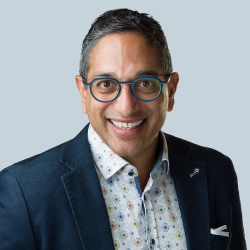
 Dr. Trevor Miranda is an optometrist and practice owner specializing in dry eye care and aesthetics, serving the Cowichan Valley on Vancouver Island for over 30 years. He is the Founder of Cowichan Eyecare, mydryeye, and MyRetina, and has built five successful practices from the ground up. Recognized as a key leader and brand ambassador in the eyecare industry, he is committed to advancing optometric care, especially in dry eye disease management. He is the newest addition to the Cleinman Connect Podcast as he hosts a special monthly edition of Optometrist Unleashed!



Here’s a glimpse of what you’ll learn:
- [03:47] Dr. Trevor Miranda talks about how medical retail elevates patient care and profitability
- [05:08] Why picking a niche can supercharge your practice
- [07:01] The secrets behind scaling from one clinic to five
- [14:32] Why dry eye care is transforming into a booming specialty
- [18:06] The future of optometry with AI and smart eyewear
- [22:57] The irreplaceable value of human connection in patient care
In this episode…
Building a thriving optometry practice takes more than clinical skill. It requires a clear vision for growth, a deep commitment to people, and the discipline to build systems that support both. So what does it really take to scale successfully while keeping culture, care, and consistency intact?
For Dr. Trevor Miranda, sustainable growth begins with a relentless focus on the patient experience. Drawing from his years as a seasoned optometrist and practice builder, he explains that every patient interaction is an opportunity to create trust, loyalty, and long-term impact. From thoughtful recommendations to seamless handoffs and empowered teams, his approach shows how culture and process can drive sustainable growth far beyond a single clinic.
In this episode of Optometrist Unleashed, a Cleinman Connect Podcast, Kim Carson is joined by Dr. Trevor Miranda, Founder of Cowichan Eyecare, to discuss building thriving optometry practices and fostering a standout team culture. They explore scaling through cold starts, creating systems that balance medical care with retail, and why culture is a measurable growth driver. Dr. Miranda also shares advice on leadership, specialization, and maintaining joy in practice as your business expands.
Resources mentioned in this episode:
- Kevin Wilhelm on LinkedIn
- Marketing4ECPs
- Cleinman Performance Partners
- POD Marketing
- Dr. Trevor Miranda on LinkedIn
- Cowichan Eyecare
- MyRetina
- mydryeye
- Dry Eye Summit
- Optometrist Unleashed
- “[Marketing] Search Engine Optimization: What Really Matters” with Claire Laurie on the Cleinman Connect Podcast
- “[Transitions] The Basics of Planning Your Exit From Optometry” with Al Cleinman and Megan McCarthy on the Cleinman Connect Podcast
- “Ep 12: Shawn Kanungo – Dare to be Bold and Reinvent the Future of Your Business” on Optometry Unleashed
Quotable Moments:
- “It’s process over perfection.”
- “The only constant is change. We’re going to change. You’ve got to be ready.”
- “Our biggest asset, the thing I’m most proud of, is our team and the people we’ve cultivated this culture.”
- “I still have like a joy to interact with my patients and a joy to come and see my staff.”
- “I think the secret is implementation, and that’s not always easy.”
Action Steps:
- Obsess over the patient experience: Focusing on every touchpoint builds trust, loyalty, and organic growth through word-of-mouth referrals.
- Build systems before chasing scale: Strong processes create consistency, reduce burnout, and make growth repeatable across locations.
- Invest intentionally in team culture: A healthy culture drives engagement, retention, and a better experience for both staff and patients.
- Choose one or two areas to specialize: Developing true expertise differentiates your practice and elevates the level of care you provide.
- Track metrics and close performance gaps: Measuring results helps identify weaknesses early and guides targeted training and improvement.
Sponsor for this episode…
This episode is brought to you by Marketing4ECPs!
Working with them is like hiring a full-time marketing professional who knows the industry and understands your goals. Except, instead of one experienced marketer, you get a whole team in your corner.
Whether you’re an optometrist, ophthalmologist, or optician, they can help you grow your business with a plan that’s completely customized for you. Learn more here.
Episode Transcript
Intro: 00:00
Welcome to Optometrist Unleashed, a Cleinman Connect Podcast with Doctor Trevor Miranda, a monthly doctor-led discussion about everything surrounding the business of optometry. Hello, I’m Kim Carson, hosting Dr. Trevor Miranda on this episode of the Cleinman Connect Podcast. Past guests on this show include the CEO, expert and team lead at POD Marketing, Claire Laurie, and Cleinman’s very own Vice President of Operations, Megan McCarthy. You can listen to those episodes now at Cleinman.com or wherever you like to get podcasts. This episode is brought to you by Marketing4ECPs. Working with them is like hiring a full time marketing professional who knows the industry and understands your goals, except instead of one experienced marketer, you get a whole team in your corner.
Whether you’re an optometrist or ophthalmologist or optician, they can help you grow your business with a plan that’s completely customized for you. Learn more at marketing4ecps.com. I am joined today by Dr. Trevor Miranda, who earned his Doctor of Optometry degree from the University of Waterloo and has been proudly serving the Cowichan Valley on Vancouver Island with comprehensive eye care for three decades. He has five cold start thriving practices and is the Founder of mydryeye and MyRetina Dossier, as well as the Dry Eye Summit.
Outside of the clinic, he enjoys playing golf, hockey and pickleball, coaching soccer and spending time with his wife Cheryl and their three children. Thank you so much for joining me today.
Dr. Trevor Miranda: 01:28
Oh, it’s a pleasure, Kim. Thanks for having me.
Kim Carson: 01:29
Yay! This episode is actually a little introduction because you have so graciously let us shake off the binds and the constraints that you had on, and you are now the optometrist unleashed under the Cleinman Podcast network. How do you feel?
Dr. Trevor Miranda: 01:47
I’m super pumped, Kim. Like this is great. I want to just bring all the excitement and hunger to improve to the Cleinman Podcast listeners, and I’m really excited to get started. And thanks for having me. Great.
Kim Carson: 02:02
Yeah, absolutely. Well, I would like to start off with a bit of history about yourself. What made you kind of initially pursue optometry?
Dr. Trevor Miranda: 02:12
Yeah, it’s funny, I wanted to be a dentist when I was a kid. And then I thought, well, maybe not. I think I used to pull my siblings teeth for fun. So that’s how it started. Kind of like one of those that elf from from Rudolph that wanted to be a dentist.
Yeah. I went to a University of Guelph in undergraduate biochemistry, and I realized I didn’t want to work in a lab and not talk to people. I really wanted that interaction with people. And I thought, should I do med school dentistry? And then I thought, optometry is kind of cool fashion and business.
And you can you can set your hours. You don’t necessarily need to be on call. So I thought it was a really good profession. I wear glasses, I’m wearing contacts today. But, you know, I have an experienced care from an optometrist and I thought, what a cool opportunity to sort of merge business, fashion, medical medicine all together with, with a patient interaction.
So lucky enough, I got into optometry school and the rest is history.
Kim Carson: 03:18
Wow. Yeah, I think that that’s a very interesting dynamic that I am learning. Being with Cleinman now is that there is this retail side to a healthcare practice, and it’s finding that balance of… you’re literally a doctor. You prescribe things to people, they come to you for care. But then also there’s this whole retail side and then medical niches as well.
How do you kind of navigate some of that stuff in the five practices that you have?
Dr. Trevor Miranda: 03:47
Yeah, I like to say we’re medical retail and that’s a little bit of a higher sort of recommendation. Right. We’re taking into account your health and not just your health today, but the future health of your eyes and overall wellness. When we make these recommendations so they have a little bit more power. And I know some of my colleagues struggle with that.
They struggle with how do we make recommendations and then sort of profit on the retail side. And I think really it’s really a collaboration with your patient that’s right there in front of you, is allowing the patient the opportunity to understand and be educated on the opportunity in front of them. What’s the best solution all the way down to what’s an entry level solution? So the patient gets to decide. You don’t hide solutions because you’re worried about, you know, being too salesy.
You really present opportunities for the patient. And then the, you know, having a process to do that is what makes you successful on both sides, medical and retail.
Kim Carson: 04:49
Okay. And how do you kind of decide, you know, there’s so many routes that someone could go with their medical niches that they choose to have in their practice. There’s so many products that, you know, maybe do similar things. How do you kind of determine which ones you want in your practices?
Dr. Trevor Miranda: 05:08
Yeah, I think you can’t be like a pharmacy that has absolutely every drop. At least especially if you’re just starting out. You’ve got to partner with some companies that you believe in, the products that are therapeutic in their efficacy, and then decide where you’re going to go. What what niche you’re going to be in. It’s hard to be an expert at everything.
Really learning deep dive. For me, it’s dry eye. I’m lucky enough with five clinics that we have practitioners that are myopia management specialists that are that have we have a vision therapy doctor. We have an AMD wellness macular degeneration wellness clinics, and we have specialty doctors within those clinics. So we can refer between our our colleagues in our own offices.
And that’s really effective. So finding if you’re just starting out and actually my daughter is going to graduate optometry school in, in the spring. So she’s a fourth year student graduating from Neco in Boston. And when she comes out, she wants to, you know, make sure she can care for the general population of patients. And then I think looking to what you want to specialize in, what grabs you.
Is it specialty contact lens fittings. Is it dry eye. Is it medical glaucoma specialty. But doing as many things as you can is good. But deep diving into 1 or 2 areas where you’re the expert, where you’re going, extra courses, you’re learning.
I think that’s really powerful.
Kim Carson: 06:36
Okay, so the five cold start clinics without maybe like giving away all of your secrets, how would you be able to share how some of those starts happen? Like what what metrics what goals were you using that led to more openings. Like I feel like five is a is difficult. That’s that’s a lot of hard work on your part. And I would love to just know how it happened.
Dr. Trevor Miranda: 07:01
Yeah, that’s a great question. I didn’t start out with the intent to have multiple clinics. I started with one one office, just me and one staffer, and now we’re, you know, 11 doctors and five locations and a team of, you know, 60 plus. What happened is just an insatiable desire to impress that patient and have him locked in, in their mind space to never think of anything else when it came to eyecare, eyewear, products, anything to do with their eyes. They think of us first.
So that’s an obsession with the experience, making sure that every little interaction, every touchpoint with that patient is world class. And they would tell their friends and we’d grow and grow and grow. So we grew so fast, we decided to open another clinic not too far away, actually, in another neighboring town. And then after a while we realized, okay, we have a good recipe that is successful. Our latest cold start is 3600ft² in an area that we’ve never been.
So, you know, we built four exam rooms right off the top, and that’s an expensive endeavor. But it’s proven this is the start of year five at the newest cold start. And it and it’s booming. You know, there’s always that angst you feel when you first open the doors. You realize, oh my goodness we overbuilt this.
And then you look like a genius. Five years later. Oh wow. It’s good. But I think it’s it’s process over perfection.
It’s having systems like I’ll give you an example, Kim. Just we do a handoff in the exam lane so that handoff and then out into the eyewear gallery so everybody gets, you know, quote unquote a free consultation so they can go through the doctor’s recommendations. That’s just a part of the process that we’ve established, we know that the process is effective, because the other thing that we really do great is managed by the numbers. We have a metric based business so that we can look at the stats and understand any gaps that are there, and then train them up. Hey, can we train our staff better on multiple pairs?
Can we train our doctors better to be aware of the subspecialties and recommend solutions for those patients that are good candidates?
Kim Carson: 09:16
Okay, so 11 doctors, 60 plus staff members. How do you like how do you manage all that? How do you manage all those people. Are you in each practice like during the week? Like do you have people assigned to do that.
Dr. Trevor Miranda: 09:35
Yeah. So we have a leadership team. We have two managers for the five locations. We have a director of wellness and experience. And that’s a unique that’s probably a podcast all on its own, because to me the culture is key.
So our biggest asset, the thing I’m most proud of is our team and the people we’ve cultivated this culture. I know at Marketing4ECPs, you know, I know Kevin very well, Kevin Wilhelm. I mean, he really believes in in culture. And it’s important who you hire, how you state your, your your your operating mandate. How are you going to act with each other?
How are you going to act when nobody’s watching is very, very important. We build on that over time, and I think that attraction with our team has allowed our patients to be attracted to our offices and be sticky and stay with us over time, and helped fuel our growth. We’ve double digit growth for 30 years.
Kim Carson: 10:34
Yeah, yeah, I think that’s something I’m learning at Cleinman and at POD that that Kevin is the founder of. But you know, it’s it’s not necessarily who you. like. It’s in the job postings. It’s in the culture.
It’s in everything that you do, all the actions you take. And like you said, what you do when no one is looking is just as important as when somebody is. And then you make, you know it a great place to work. People want to stay, people want to grow there.
And I like what you said too, about your customers. They feel that too. If, if, if your optician is grumpy, people might not want to come back to them. So if you have a happy optician, you happy clients I bet.
Dr. Trevor Miranda: 11:16
Yeah. We survey every single patient, back him and we address every single, you know, concern suggestion. We do what we do that we obsess with that experience. I think that’s really important to your point with Marketing4ECPs. We created a culture book with our with our representative for Marketing4ECPs.
So, you know, you know, we’ve done a lot and we’ve done a lot of that to kind of continue to build. We have a fun committee. We have a slack channel that you can things that make you happy. Slack channel, for instance. So there’s a lot of culture building pieces that we have in our our director, wellness and experience.
Her specific job is to ensure the wellness and the experience of the staff, the doctors and the patients. So you don’t forget about your team because it’s very, very important. We call out counterculture activities. So one example, one easy, quick little example is, you know, it’s okay to be frustrated, but it’s not always okay to show your frustration, right? Why are you showing your frustration?
Is that just to make yourself feel better, or are you actually thinking on a bigger picture? How can we close these gaps with training? How can we, you know, help somebody be better, enjoy their job better, and and and manage frustrations or mistakes a little bit better? It’s also okay to make mistakes. Guess what.
Mistakes are going to happen. So again I always say process over perfection. You just have to manage through mistakes with great service, recovery and a great attitude and joy. Right? Who doesn’t want to go to a place where it’s fun?
Where you. I still like this is 31 years in in optometry and I still have like a joy to to to interact with my patients and a joy to come and see my staff and interact with them every day.
Kim Carson: 13:04
Yeah. Well, I’m so glad that you made the choice for optometry instead of working in a lab or or dentistry or something. It definitely shows that you care about people, whether they are your staff or your patients.
Dr. Trevor Miranda: 13:18
Yeah. Thanks. And it’s I mean, what a great profession, right? Where you actually get to manage or care for somebody’s eyesight, which is such a precious sense. You know, we know that sorry sense, not sense.
It’s such a precious sense that we want to protect it. And you’re going to see that patient over years. You’re going to maybe see their parents or their kids and sort of manage the whole family. You get to know them, you get to learn from your patient. So I’m really bullish.
I’m excited for my daughter and her colleagues that are just starting out in optometry. What a great profession. The science, the technology that’s coming in eyecare is really powerful, really exciting. And I think as opposed to a lot of people have said optometry is going to die, you know, get out. I don’t believe that at all.
I think there’s a lot of eyes out there, and there’s a lot of people that can really take the level of care to a higher level, and I think there’s opportunity.
Kim Carson: 14:15
Yeah. Well, you also are a founder of my dry eye and retina. Okay. What do you kind of hope to accomplish with those communities. You know you created them outside of your practices.
So yeah. What what do you hope to accomplish with those.
Dr. Trevor Miranda: 14:32
Yeah. So for instance, my dry eye when we started that, you know, over a decade ago, dry eye wasn’t really a disease. It was like, hey, here, take some drops and see you in a couple of years. And now we have a lot of our clinics have dry centers. We have two sort of world class dry centers out of our five.
And we’re really managing ocular surface as a disease rather than just a side bit. That is annoying to the patient. So we’re getting referrals in. It’s it’s fairly big business for us actually. We do more revenue in dry eye care than we do in contact lenses, for instance, at eyecare.
So it’s fairly big business for us. And I think there’s a lot of opportunity there. So we went, we decided, hey, let’s make a community. Let’s, let’s present to the public. This is a place where we have a doctor locator at Magika.
We had a summit to train practitioners and what we call ocular hygienists. These are the technicians who are brilliant. My ocular hygienists are very, very well trained. Like they can insert amniotic membranes, for instance. They do all the treatments.
They have a slit lamp biomicroscope. So they they it’s a closed circuit. They do the they do the diagnostics and they do the treatment in consultation with the, with the optometrist doctors to manage a treatment plan. So it’s interactive. But I have primary eye care going on and in parallel I have dry eye services.
So back to the the the money discussion. I’m profitable because I have this this system going where I can, you know, multiply myself by having very skilled and trained staff to, to manage patients alongside of me.
Kim Carson: 16:14
Yeah. You have so many things going. I just am curious to know why did you kind of initially start the Optometry Unleashed podcast?
Dr. Trevor Miranda: 16:35
So I started listening to a podcast. It was, you know, some students that that were in optometry that really were just stream of consciousness. They were just talking about their thoughts. And I think that’s great sharing their thoughts. And I kept thinking, oh my gosh, no, this is a good like we have solutions for their thoughts, right?
And I and I realized, wait a second, maybe I should share some of those thoughts. And I as you said at the top, Kim, I have no secrets. Actually. I love sharing our successes. I don’t I don’t really hoard these solutions.
I think the secret is implementation, and that’s not always easy. Change management is also tough. You know, 30 years I’ve seen things change like on diagnostics to to generational, you know, what does what do our team want. What kind of work they do. They want.
What are they. What are their expectations in the workplace to digital marketing, to everything has changed. The the only constant is change. We’re going to change. You’ve got to be ready.
We’re we we’ve created a change mentality a change culture. And I think that’s super important. So yeah I don’t know. It’s it’s it’s it’s there’s a lot going on out there. But I, I’m excited for it all.
Kim Carson: 17:55
Yeah. What do you think is going to be you know if all the research that I’m certain you’ve done, what do you think is coming up next for optometry in 2026.
Dr. Trevor Miranda: 18:06
Yeah I think a lot of trends. I think AI is going to play a role in all of our lives, including optometry. Again, that’ll be, I’m sure, another whole podcast, I think, a future guest. Yeah. We’re going to talk a little bit about AI, but there’s AI is a big trend.
Wearable technologies with AI, I think they say EssilorLuxottica says, you know, 60% of they say in the future will be some kind of smart eyewear. I think you’ll have advances in customization. Everything’s customized so you’ll know, you know, from what frames that we’re going to choose for you. They’ve been customized based on your frame shape, your color palette.
Genetics are going to play a role in how we manage future threats to your vision. Macular degeneration treatment at an optometric setting, which we’re doing already, we’re treating dry eye sorry, dry AMD dry age related macular degeneration in our optometric settings. So there’s a lot of cool science that’s coming, I think more interdisciplinary collaboration with physiotherapists and concussion recovery, managing even interacting with kids, maybe teaching them how to use their eyes before they learn the words. Maybe there’s things to to help people be better at that in in terms of vision therapy, using your eyes appropriately and then understanding comprehension of the word. So lots of things there I think that are that are opportunities sports vision.
There’s a lot my my second daughter is a professional soccer player as well. And you know the the the number of high level athletes that shoulder checked, the more shoulder checks you do, the the better a soccer player you are, the more elite you are. So it’s really interesting. We have vision and how can we use that to optimize our, our surroundings, our our activities, our sports and just our lives?
Kim Carson: 20:07
Yeah. Oh my gosh. Wow. Okay, well, I just have one last question for you. And before I ask it, I will point people to our sponsor’s website again.
That’s marketing4ecps.com. And I guess my final question could actually be a little two parter. But in all of the podcasts that you’ve hosted and the years that you’ve been practicing in optometry. What are two pieces of advice, like one from each experience, or things that you’ve learned that surprised you, or that you carry with you to this day?
Dr. Trevor Miranda: 20:39
Oh good question.
Dr. Trevor Miranda: 20:43
Yeah, I think to always have the hunger to improve and to have, you know, calm your ego so that you realize you were whatever you are, if you’re starting or you’ve been in practice for 30 years, there’s always room to improve and you can learn from other people. You, you know, listen to other people. When I started, I learned from great practitioners, had big practices, and I, I started extremely humbly and I integrated and implemented those strategies. And they were effective because they were already proven. So your colleagues out there, a lot of them are doing things really well.
Learn from them. They’re always that’s the cool thing about optometry, they’re often willing to share. And I know Marketing4ECPs can help you too. They have a lot of knowledge. Ask them what are best practices?
What are the what are people doing out there, and how can I do that to be better? So constantly be learning and constantly be a hunger to learn and don’t have an ego to not compare yourself. So benchmarking. Compare yourself to others in a financial way, in a in a cultural way, you know, survey your staff, survey your patients. You know, don’t be scared at a comment or a review.
That’s that’s not great. You know, the one star reviews, you know, thank them for it and try to turn it around to a five star review. How can you recover? How can you be better? We’re not all perfect, but we can aim to be better all the time.
So that’s that’s step number one. In practice you can be better. And slowly, slowly, incrementally you can be world class okay.
Kim Carson: 22:22
Right. Amazing. And yeah there is there’s opportunity in every single one star. I’m a very big believer in that. You know, it’s great to have a five star review.
But there’s opportunity in a one star.
Dr. Trevor Miranda: 22:33
There is opportunity. Can you turn it around? You know can you turn that frown upside down. So yes. So the other question was what was that again.
Kim Carson: 22:43
So that’s maybe what you’ve learned when you’ve been practicing. But maybe in your podcast journey, is there something that one of your guests said that you were like, lightbulb. Wow, I didn’t I didn’t ever think of that that way.
Dr. Trevor Miranda: 22:57
Yeah. There’s been so many times where I’ve, I’ve thought, wow, that’s very interesting. I, you know, I had a futurist, Shawn Kanungo, talk about AI in the future, and I thought he really stressed the human touch will be so much more important. So in the world that’s becoming more digitized and with AI, will will will lose a little bit of that having all the keeper of information, right. So will be less paternalistic because the information will be available.
What won’t replace is just, you know, caring for that patient. I had my last patient of the day yesterday was 85 year old. And you know, her husband sick. They had to move out of their their house into the city. So she’s no longer going to be my patient.
And she was super upset and just, you know, she cried for a little bit and just, you know, she’s worried about her macular degeneration and just the, the, the, the turmoil going through. She needed a human that could listen and sit there for a few minutes. And she even said, like, I don’t want to go. I don’t want to leave your room. I just want to stay.
I said, let’s just stay and chat. So we just chatted for ten minutes and I think nothing’s going to replace that, right? The caring. So for me, I still care for the patient and I think I care. Can’t be replaced by AI.
Now AI is trying, but I don’t think you can. You can really replace that human touch, that feeling that I’m listening and I’m here for you. And if you ever need anything, let me know. Often I’ll give. I’ll give my patient my cell phone, you know, on the weekend.
Do you need, if you have any questions, especially if I’m managing a, you know, a particular acute case, you know, text me and text me an update. And they, they really feel profoundly cared for when they know that they, they don’t abuse it, by the way, they they don’t text me at all times. And I think that’s important. That’s sort of the old school doctoring mentality where that that local doctor would come to your house and take care of you. And I think that’s sometimes missing because we want to we want to avoid, you know, work when we’re at home.
But for me, it’s just being part of your local optometrist in your community. And I’m caring for eyes for all my patients.
Kim Carson: 25:25
Okay, well. Thank you. That’s that’s honestly so sweet. I wasn’t expecting, that, I’m, maybe a little teary right now. That’s very sweet.
Dr. Trevor Miranda: 25:33
Yeah. You know, we we giggled and cried at the in the same ten minute period. It was it was beautiful and sorrowful at the same time. And I kind of that’s that’s how life is in a lot of ways. So optometry takes you down those journeys emotionally as well.
Kim Carson: 25:49
Amazing. Well, thank you, Trevor, for your insight and your time. That is our show for today. If you want to hear more of the podcast, you certainly can at Cleinman.com and wherever you like to listen. Thank you for joining us.
Dr. Trevor Miranda: 26:02
Thank you.
Kim Carson: 26:03
Thank you for listening.
Outro: 26:04
At Cleinman, we take pride in helping our optometrists unleash their full potential. Subscribe to get the newest episodes or visit us anytime at Cleinman.com.