


Here’s a glimpse of what you’ll learn:
- [02:41] Why reversing type 2 diabetes became Dr. Jeffrey Hockings’ mission
- [04:17] Find out what makes Diabetes Reversal Group’s (DRG) supplement formula unique
- [06:42] How optometrists can help prevent severe vision complications caused by diabetes
- [09:36] How DRG built credibility with patents and clinical evidence
- [13:47] A step-by-step look at the patient onboarding experience at DRG
- [19:48] Why accountability coaching supercharges patient success rates
In this episode…
Turning real-world experience into something that holds up under scrutiny is challenging. Plenty of ideas work in practice, but very few make the leap into something provable, repeatable, and defensible. So what does it take to transform hands-on results into evidence strong enough to earn a patent?
For Dr. Jeffrey Hockings, the answer starts with relentless testing in the real world. Drawing from his experience as a long-time natural health practitioner, he explains that the breakthrough came from years of refining one system, watching outcomes closely, and removing anything that didn’t consistently work. By treating every patient’s results as data, he built a process that could be documented, defended, and eventually patented. The big lesson is that innovation isn’t just inspiration; it’s discipline applied over time.
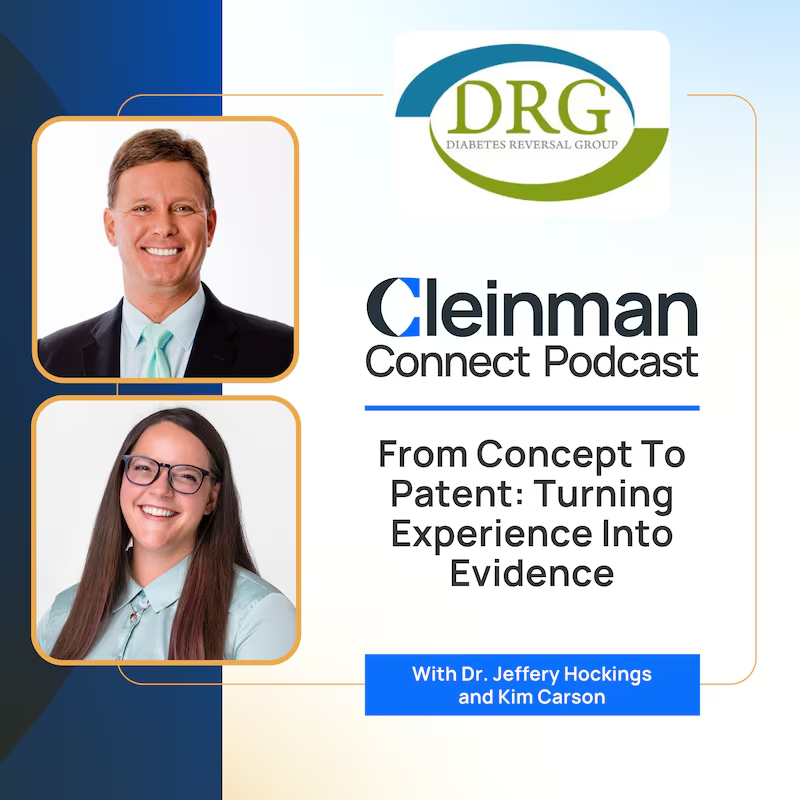
In this episode of the Cleinman Connect Podcast, Kim Carson is joined by Dr. Jeffrey Hockings, Founder and CEO of Diabetes Reversal Group (DRG), to discuss turning lived clinical experience into a patented system for reversing type 2 diabetes. They explore why proof matters more than promises, how long-term consistency led to credible results, and what it took to protect the process legally. Dr. Hockings also talks about scaling impact through licensing and partnerships.
Resources mentioned in this episode:
- Kevin Wilhelm on LinkedIn
- Cleinman Performance Partners
- Dr. Jeffrey Hockings on LinkedIn
- Diabetes Reversal Group (DRG)
- DRG Licensing Program
- “[Leadership] Ways To Empower Managers Into Leaders” with Wade Horb on the Cleinman Connect Podcast
- “[Growth] Why You Should Consider Doctor-Driven Dispensing in Your Practice” with Michelle Kelley on the Cleinman Connect Podcast
- “[Growth] The Importance of Tracking Data, Using KPIs, and Having Accountability in Your Practice” with Meagan Staab on the Cleinman Connect Podcast
Quotable Moments:
- “When someone joins the program again, we give them what we call our enjoy-avoid list.”
- “We never use the word ‘cure’ because you’re not curing type 2 diabetes. It’s not a cure for it, but you can reverse it.”
- “When people follow this program, they get results consistently.”
- “The neat thing is that we don’t step into the primary care role.”
- “The compliance and sticking with it at the end, that’s the whole ball game.”
Action Steps:
- Document real-world results consistently: Turning lived experience into evidence requires tracking outcomes carefully so patterns can be proven, not just observed.
- Test and refine one system over time: Focusing on continuous improvement helps eliminate what doesn’t work and strengthens what delivers repeatable results.
- Build accountability into any program: Regular check-ins create commitment, improve follow-through, and significantly increase long-term success rates.
- Seek independent validation early: External studies and patents add credibility, protect innovation, and make results defensible at a larger scale.
- Design solutions that are easy to adopt: Simplifying implementation removes barriers, allowing partners and patients to focus on outcomes rather than logistics.
Sponsor for this episode…
This episode is brought to you by the Diabetes Reversal Group themselves, or DRG, as we might refer to them. The Diabetes Reversal Group was founded to provide a natural diabetes treatment non-drug approach to helping people with metabolic and nutritional imbalances. Diabetes Reversal has the only patented system in the world that reverses type two diabetes, and they have a 16 year track record.
They also offer a licensing program where optometrists can offer their patented program in their practice, and you can learn more about that at diabetesreversalgroup.com.
Episode Transcript
Intro: 00:07
Welcome to the Cleinman Connect Podcast, where we discuss marketing, ownership, growth strategies, and everything else surrounding the business of optometry. Cleinman is Optometry’s trusted business partner for over 35 years.
Kim Carson: 00:28
Hello, I’m Kim Carson with Dr. Jeffrey Hockings, the Founder and CEO of Diabetes Reversal Group, on this episode of the Cleinman Connect Podcast. Past guests of this show include Wade Horb, President of marketing for Smile Dental Marketing, and Cleinman, as well as Michelle Kelley, the Director of Ophthalmic Materials and Services at the Southern College of Optometry. Those episodes are available at Cleinman.com. And this episode is brought to you by the Diabetes Reversal Group themselves, or DRG, as we might refer to them as the Diabetes Reversal Group was founded to provide a natural diabetes treatment non-drug approach to helping people with metabolic and nutritional imbalances. Diabetes reversal has the only patented system in the world that reverses type two diabetes, and they have a 16 year track record.
They also offer a licensing program where optometrists can offer their patented program in their practice, and you can learn more about that at diabetesreversalgroup.com. So I’m joined today by Dr. Jeffrey Hockings. He is a board certified doctor of Chiropractic and has been a wellness expert for 35 years. Dr. Hockings is the inventor of the only patented system in the world that reverses type two diabetes.
He has presented over 430 seminars, which is so many on reversing type two diabetes in six countries. He’s seen over 70,000 patients in his career and is an internationally recognized expert in natural health. So thank you for joining me on the podcast today and also joining the Cleinman Performance Network.
Dr. Jeffery Hockings: 02:02
Yeah, it’s great to be here. Thanks for the nice introduction.
Kim Carson: 02:05
Yes of course. I mean, there’s a lot of big numbers in there. 70,000 patients is a lot of patients.
Dr. Jeffery Hockings: 02:12
That’s what happens when you’ve been practicing 35 years.
Kim Carson: 02:15
Yeah, I’m like, I can’t quickly do the math on that. I’m not that talented. But 70,000 over 35 years is still a lot every year. So, you know, we I touched on the fact that you are a chiropractor. You’re a have a doctor in chiropractor.
So how did you make that kind of jump from chiropractor to helping people treat their type two diabetes? Can you let people listening know how you got started and maybe what inspired you to make the shift?
Dr. Jeffery Hockings: 02:41
Yeah, well, my wife and I, we’ve been married 33 years, and our first 18 years we did the traditional, you know, chiropractic clinic where we had medical doctors and chiropractors working together, pain management, wellness centers. And we helped a little bit of people with diabetes, but really just don’t eat this. Don’t eat that, but it wasn’t really a structured program. And after 18 years of building and selling four clinics, we decided, you know what? We really want to tackle this type two diabetes epidemic because it runs in our family.
I had an aunt who died of it, and my wife’s dad just passed away a couple of years ago from it. So this is a very personal mission for us. And 16 years ago, as we talked about before, there was no program somebody could join what showed them exactly what they should eat and not eat with no BS, what supplements they should take again with no BS, what exercise to do and provide ongoing coaching, training, accountability. And so we created it. And it’s been a 16 year journey and it’s just going great.
And we’re expanding into India next month. And we’re on Dr. Phil’s show last month. It’s going to go national starting next week. So just a lot of cool things happening right now. But really now it’s all about how do we get this in front of more diabetics?
Because it’s just a nasty disease and we have the solution. So it’s really cool.
Kim Carson: 03:57
Yeah, absolutely. My next question was, do you have a personal relationship with, you know, the disease? And the answer is obviously yes. I’m very sorry to hear that. But also, I’m very happy to hear that you have this patented system.
It could help a lot of people. So I do wonder, how does the drug plan work?
Dr. Jeffery Hockings: 04:17
Yeah. So when someone joins the program again we give them that specific we call it our enjoy avoid list where here’s a list of foods you can enjoy. Here’s what you got to avoid. So we make it very simple. They can’t screw up because it’s either on the enjoy list or it’s not.
So there’s no like well what about this? What about that? Like it’s if it’s not there, you can’t have it. So they eat the right foods. We provide our patented supplements as well.
And the supplements that we provide, there’s 87 different nutrients in them. So it’s very robust. It’s not some little bottle with like 4 or 5 ingredients. It’s really it took us a long time to figure out what combination formulation that people needed. And so that’s what we got patented was the list of foods you can eat and not eat, and the ingredients and dosages of our supplements.
So again, so they eat the right foods, take the right supplements, the blood sugar starts gradually coming down. And they have a coach that they’re responsible to report to at least once a week. And when that blood sugar gets below about 105 in the morning, the coach tells the patient it’s time to call your primary doctor so they can reduce the dose of your medication because your sugar’s getting too low. So that’s the cool thing about this, is that we don’t step into the primary care role. We’re not diagnosing anybody.
We’re not prescribing meds or taking people off their meds. We’re just coaching them through our program. When the blood sugar comes down, it’s their primary physician that takes them off the meds when they think it’s safe to do that. And so the game plan is after our three, 5 or 7 month program that somebody goes into, the goal is they’ve been weaned off of all their diabetic meds and their a1-c is now 5.9 or lower. So that’s what we classify as someone being reversed.
Is that A and C 5.9 or lower taking no meds. And that’s what we do. It’s so it’s really really awesome the program.
Kim Carson: 06:02
Yeah. That’s such a I think I said in a previous episode of this podcast, the term like science will save me, but I feel like this is there’s almost like two prongs now in a science, you know, you could have someone that’s on type two medication, whatever medication their, their doctor prescribes to, to handle their condition. Or you could have this prong of science, which is more of a proactive upstream kind of look at what you have and like, how do we how do we instead of prescribing you more down the road, we prescribe you less down the road. So the science will save me. But in a, in a much different way than I’ve ever thought of it.
So thank you.
Dr. Jeffery Hockings: 06:42
You know, and the other cool thing too is, you know, everyone watching this, they know like the, the nasty side effects that can happen in complications from diabetes. And of course, for optometrists, they see it with the eyes and people getting blurry vision because of that which can lead to diabetic retinopathy. And then, of course, blindness. And we want to make sure obviously that doesn’t happen. So there’s a really cool synergy with optometrists being able to identify somebody who’s kind of on that border of getting some damage caused by the high blood sugar.
And, you know, at this stage, you know, there’s really nothing they do they can do to help that because they’re not most optometrists don’t have any kind of program to kind of help reverse type two diabetes. So.
Kim Carson: 07:21
Well, I mean, that’s a that’s a great lead into another question of why are you offering this licensing program to optometrists, and are you offering it to any other healthcare practitioners?
Dr. Jeffery Hockings: 07:35
Yeah, so that’s the cool thing. It’s really good for any healthcare practitioner, whether you’re a medical physician, optometrist, dentist, chiropractor, podiatrist can be a pharmacist, an audiologist, a med spa owner like anybody who sees people coming in for any kind of a health care problem. Obviously a lot of diabetics are going in there, but none of them are doing anything to reverse the type two diabetes. So that’s where we can come in. But yeah, optometrists are such a great fit because they do have that personal relationship with their patients.
They can identify people that are getting some damage because of the diabetes. And now we have a solution that they can offer inside their clinic too, which is really cool.
Kim Carson: 08:14
Yeah. Well, why should an optometrist bring DRG into their practice?
Dr. Jeffery Hockings: 08:19
Well, it’s just I mean, the simple fact is to provide another service that they’re currently not providing. Like, a lot of optometrists are also sell glasses and contact lenses as another revenue stream. Right. In addition to just doing the eye exams. And so this is something where they they can become a licensee and they can enroll their patients into our program, and they can actually earn some extra revenue from that, an average of $1,500.
And we do all the work. So it’s kind of a partnership where they’re an official licensee. So it’s compliant in all 50 states. And it’s a very, very simple program to implement because they just plug and play it. And we do the work in partnership with them.
So that’s that’s really the biggest reason, is adding another service that they’re currently not doing and to earn an extra revenue stream, which is really cool.
Kim Carson: 09:02
Yeah. Another medical niche? Yeah. Into their practices. Yeah.
I am wondering, you know, not not to to sound like a skeptic with a podcast, but in the early days of putting the diabetes reversal group together, how was getting the word out about this patented system? Like, like what was it like? Did you face a lot of skepticism? Did you like, face a lot of, you know, people being like, I don’t think it works. I think this is like a snake oil salesman.
Like, did you encounter any of that?
Dr. Jeffery Hockings: 09:36
Yeah. When it’s brand new, like it was 16 years ago. We didn’t have our patent yet. So this was just something we just kind of went into. But again, the neat thing is, is that we didn’t discover that you can reverse type two diabetes.
It’s been reversible forever. And we have on our website over a dozen medical References that shows different things, showing that, hey, it’s reversible with proper lifestyle changes. So that’s why that’s where we’re tapping into, like we never use the word cure because you’re not curing type two diabetes. It’s not a cure for it, but you can reverse it. Or in other word is putting it dormant or into remission.
And that’s what we do. And so there wasn’t really that much skepticism when we first started. It’s obviously better now that we have the patent. And now we have our independent study proving the effectiveness. But we had to, you know, get the program cranking and off the ground first to get some data before we could get patent approval and before we actually had, you know, enough of a track record to do a study to.
So now we have all that, like all the science is done, right. We have the patent took us three and a half years to get that. You know, we just got that back in 2020. We have an independent study proving the effectiveness 16 year track record with thousands and thousands of testimonials. So all that’s done now, it’s just how do we get this in front of more diabetics to help them?
Kim Carson: 10:51
Yeah, yeah. How do you get the word out? How did you kind of get that start? I know that a lot of the Cleinman members are early adopters of things. You know, they’re always kind of looking for more medical niches that can help their patients, you know, long term and in the practice.
But, you know, what was that kind of like? How did you how did you get the word out? How did you start? Where did you look for early adopters to to kind of get that data for yourself?
Dr. Jeffery Hockings: 11:21
Well, initially it was all direct to consumer. So the first nine years, as you kind of mentioned in the introduction, the first nine years of our company, I did a seminar every week in a different city all over the world. So I did 48 events per year, took four weeks off for nine straight years. So it’s about 430 seminars I did. So that’s where we went direct to the diabetic.
We didn’t try and get any clinics or licensees enrolled in it. That’s when we were basically doing all the mad scientist stuff, like cracking the code, like taking away this food. Let’s see what happens. Let’s add this supplement. Let’s see what happens.
And after nine years of doing all that tweaking, we finally cracked the code where, hey, when people follow this program, they get results consistently. So that’s when I said, okay, now we’re ready to apply for a patent. And because obviously the patent they want to see, can you do what you say you do? We have to show them the evidence of that. So we applied for a patent back in 2017, and I got off the road doing seminars.
And then we started opening up brick and mortar clinics because we had previous experience with opening clinics. Right. So we knew how to do that. So we opened up 17 brick and mortar clinics over the next 20 months in 2018 and 19, with Lisa signed on 13 more locations. And then, as we all know, March of 2020 Covid hit and we were not considered essential for the shutdown.
All of our clinics, that was rough. So that kind of, you know, made us have a pivot to where we have now, which is 100% telemedicine program. People don’t have to go to a clinic for anything. It’s all done online. So it’s very, very simple.
And now with this licensing program that we’re just launching and Cleinman is only the second company we’re talking to about getting some licensees for this. That’s going to be the next thing, because as you know, all optometrists and dentists, chiropractors, podiatrists have all got their own brick and mortar clinic. So now we can sort of have a licensing arrangement with all these clinics across the country where we’re still getting that credibility in the marketplace, but we don’t have to own the clinics like we did before. So it’s made it really easy for us to expand and grow and get this into thousands of provider offices right now, which is really going to be cool.
Kim Carson: 13:26
Yeah. I’m curious to know what the kind of onboarding is like for, I guess this is a two parter question for someone who wants to serve or needs the services of DRG, and also for someone who wants to become a licensee. Could you I mean Taco one and then the other. But yeah. How was it like for a patient?
Dr. Jeffery Hockings: 13:47
Everybody goes through our funnel where they register for one of our free webinars. And the webinar is about an hour long. And that’s just me kind of going over the entire program, how it works, how bad diabetes is, etc. at the end of that webinar, they get to book a consultation with one of our consultants here in our office, and they do that by zoom. So it’s very, very convenient. And we customize the program for them based on their health, history, form, how severe their diabetes is, and we put them into a three, a five or a seven month program.
It’s all based on their severity. And so once they’re on board and they pay, you know, for the service, they get passed off to a support coach. And the support coach does about a 45 minute onboarding call with that patient to kind of just lay the groundwork. Here’s what to expect. And they go over the enjoy avoid list.
And then we dropship the supplements directly to their house and all of that. And so then that patient, once they’re enrolled, then they have to start checking in with their coach at least once a week. And we have it all set up now with our app. or there’s a mobile version of it as well, where they put in their blood sugar, their blood pressure and their weight and what they ate for the day inside the app. And that goes right to their coach.
And that’s how we’re monitoring and holding the patient accountable. And as I said, as the blood sugar starts gradually coming down, the coach says, hey, it’s time to call your doctor. And after that, 3 to 7 months there, the goal is they’re off all their medications and their blood sugar is normal. And then once they’re done with our program, they graduate. They don’t get the coaching anymore, but they do have to keep eating the right way six days a week with one treat day.
And that’s going to maintain that reversal. So they can’t go back eating, you know, drinking soda and having, you know, Haagen-Dazs and pizza all day long anymore. So they have to lifestyle change. So that’s how it works. So it’s very, very, you know smooth.
It’s elegant. We’ve got it all figured out. Very easy for the patient to do. And that’s what the patient experience is. And it’s really, really fun.
Kim Carson: 15:43
So yeah reversal not a cure. Yeah.
Dr. Jeffery Hockings: 15:45
Correct. It’s a reversal. Yeah. Yeah. For the for the licensees.
Now for the docs that want to come on board. They just go. You mentioned in the beginning is that drglicensee.com and that’s like a we have like 18 or 19 minute really short little webinar they can watch and explains how the licensing program works. And then they’ll have the documents they have to sign a licensing agreement and an onboarding form intake form. They do that and there’s a phone number there to any questions they have.
But it’s very simple onboarding to for the actual docs to come on board as a licensee. You know, there’s a one time $495 onboarding fee just to kind of get them in the system and get them going, but then that 495 gets refunded to the doctor on the first patient they enroll. So it really ends up costing them nothing. But we do have that 495 upfront just to kind of get them in our system. So yeah, so it’s very simple.
I can go into way more details on it. But that’s how they kind of learn about it and kind of, you know, have that opportunity to put in their clinic.
Kim Carson: 16:45
So yeah. Yeah. very easy for both.
Dr. Jeffery Hockings: 16:48
Yes.
Kim Carson: 16:49
I am also curious to know. So you said the program is three, five and seven months? Yes. Do you like how tailored is it to individual people? So if someone you know is is right at the cusp of being diabetic type two, they maybe go into the three month program.
But if you get to the end of the seven months with somebody and they still are on their medication or they still are, you know, needing DRG, do you extend?
Dr. Jeffery Hockings: 17:16
Well, here’s the thing. If they’re okay when they go through the consultation and we have this diabetes score that we figure out with them based on the severity and it’s based on five criteria. So it’s what their a1-c is, how many diabetic meds they’re taking, how many total meds are taking their age and their weight. So those five things get put into a score and they get a point total. And that’s what puts them into the three 5 or 7 month okay.
So that’s very objective how we do that. But if they’re so if they get recommended a five month plan, at the end of that five months, they’re still not reversed. It’s because they didn’t follow the program. Yeah. That’s just that’s just the facts, right?
Now if they need to extend it, then that’s on them. If they want to, you know, pay a little bit more to keep having the coaching. But they don’t just get like two years worth of one on one coaching. If they only paid for five because they didn’t follow the program. Right.
There’s this there’s a end point to what they pay for, for the services that we provide with all the supplements and the coaching, etc. but it’s pretty rare. Like when someone gets to the end, you know, they’re they’re they’re committed when they join this program because it’s not an inexpensive program to join, which we get into. So they’re pretty they’re we’re not getting any tire kickers because it’s like a $50 program. Right? I’ll give it a shot, see what happens.
These are committed people that are diabetic that feel horrible. You know, they got low sex drive. They’re scared of getting going blind or having an amputation or going on dialysis. So these are very motivated people when they join the program. So But yeah, but we do offer a maintenance program at the end of it too when they graduate.
So there’s a lot of cool things we do to help maintain them because as you kind of mentioned, right. It’s, you know, the compliance and sticking with it at the end, that’s the whole ball game with this right that we and so we do whatever we can to help them stick with it.
Kim Carson: 19:01
Yeah. I do also like the weekly accountability check ins that you have. Like obviously it’s a it’s more of a daily thing. But then they speak to somebody or have this communication with somebody every week. And in a previous episode of this podcast, Megan Staab, who is our like data queen here at Cleinman, she had mentioned that, you know, even as far as Cleinman members go, our practices that input their benchmarking numbers monthly are 8% behind in growth compared to the ones that do it weekly.
So it’s, you know, it’s it’s all about that accountability. I wonder if that’s, you know, the patent and all the research that you’ve clearly done aside I think accountability is probably one of the biggest aspects of this program.
Dr. Jeffery Hockings: 19:48
Yeah, 100%. I mean, they and they sign an agreement to patients, right, where they agree to check in at least once a week, but they get access to their coach five days a week. So they’re there to hold their hand and, you know, be their encourager when they’re doing great. And if they’re falling off the wagon, we give them a kick in the butt like, hey, what’s going on? That’s what a good coach does, right?
And so it’s really fun. And they have that same coach all the way through their program. So they get to build that relationship with them, which is nice as well. And I bounced around the five different support coaches. I told John last week that, you know like none of that happened.
So that’s what’s really nice too. So again, we’ve kind of we’ve learned a lot of things making mistakes over the last 5 to 10 years that we fixed now to make this really, really smooth. And you know, where we can do this at scale now, where we can start to see here in about six months, literally over a thousand new patients a month, we can start seeing in our system because we have the capabilities of doing that without losing that one on one connection.
Kim Carson: 20:46
Well thank you. Thank you so much for your time today, Dr. Hockings, before we wrap up the show, could you let anyone listening know that website again or how they can contact you?
Dr. Jeffery Hockings: 20:57
Yeah. So again it’s DRGlicensee.com and remember there’s two E’s on the end of licensee license E. Yes. Not three.
Easy. Yeah. Yeah. So it’s DRGlicensee.com.
And that’ll kind of get them their feet wet with going in there and just watching that quick little webinar. And again we this is designed by doctors for doctors because most doctors I know are very busy in their practice. And they don’t want to have to try and implement something that’s going to make them have to hire more staff and buy a bunch of expensive equipment and do a lot of marketing and all this inventory and everything else. This is literally a plug and play for them. We’ve designed it to make it.
We’re like, wow, why would I not do this? This is like so easy and I can help more diabetics earn some extra revenue. It’s, you know, we’ve designed it like that. So that’s where they go. And be happy to speak with anybody that has any questions on it.
Kim Carson: 21:47
Amazing. Well, stunning. And of course we will be seeing you at the next Cleinman Performance Network meeting. So I’m looking forward to that meeting you in person. These visuals are great, but it’s always nice to meet somebody.
So I do have just one final question for you before we wrap up. I would love to know, what was your biggest contributor in getting the DRG patent plan out to people? And maybe what advice you would give to anyone in the healthcare and wellness space if they’re feeling, you know, maybe discouraged, like you, you hustled. It sounds like that. That was the main thing that got DRG to the place.
It is, is that you were boots on the ground hustling. So what advice would you have for anyone that is currently in that hustle?
Dr. Jeffery Hockings: 22:34
Yeah, I mean, initially it was all all the hard work that I did myself. Right. Doing the seminar every week. But obviously that’s not a scalable model. So as I think even optometry practice as they grow, you know, getting an associate on or that’s another way because you can only see so many people in a day, right?
There’s only so many hours of eight hour a day I can see X amount of people. So how do you grow your practice then? Well, hire another hiring another optometrist to kind of be like an associate with you. And that way now you can double your capacity and offer more services, earn more revenue, and then, you know, do a lot of networking with other doctors because, you know, you can have a network with dentists. We used to do that all the time, like a cross referral program where, you know, we had a deal with dentists that we went to.
They would recommend their patients to our clinic. We recommend our patients to theirs. Right. Because it’s non-competing. So get some friends with other like for optometry, get friends with podiatrists, with dentists, with chiropractors.
You know, all these different professions that are non-competing and go to lunch with them and have make your own little networking group. And that’s a huge way because that’s a way to just network with other people without competing because that’s the that’s the biggest thing, right? Is how do you get that network where you’re going to be getting referrals in from other people, and it’s all relationship building. So that’s my biggest advice is really, you know, take that time, you gotta eat. So, you know, invite somebody, invite the dentist to lunch, you know, invite a podiatrist to lunch and just go out and make friends with them.
And I think that’s one of the biggest things that helped us grow. Was that networking part of it?
Kim Carson: 24:03
Yeah. Amazing. Well, thank you so much. That’s our show. If you want to hear more of the podcast, you certainly can at Cleinman.com and wherever you like to listen.
Thank you for joining us today.
Dr. Jeffery Hockings: 24:13
Thank you.
Outro: 24:19
Thank you for listening. At Cleinman, we take pride in helping our partners unlock their full potential. Subscribe to get the newest episodes or visit us anytime at Cleinman.com.