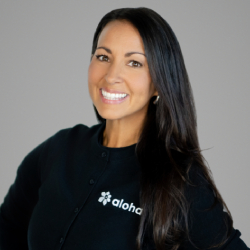
 Jenn Denham is the Chief Growth Officer at Aloha, a Healthcare SaaS company that helps private practices grow by automating patient communication, boosting retention, and capturing more revenue through technology-driven solutions. Under Jenn’s leadership, Aloha has supported thousands of healthcare practices nationwide, driving staff efficiency and delivering a modern, seamless patient experience with impressive adoption of AI-powered tools. Jenn is also a national keynote speaker and workshop facilitator, known for her focus on tech stack efficiency and data-driven growth strategies in healthcare.

Here’s a glimpse of what you’ll learn:
- [01:59] Jenn Denham discusses how Aloha transforms staff efficiency and the modern patient experience
- [03:12] Identifying hidden friction points in your current patient journey
- [06:06] The art of using social proof to attract new patients
- [13:14] How flexible online scheduling rules simplify booking for patients and staff
- [24:25] Automating patient education and follow-up to increase retention
- [26:14] The power of personalized, timely review and referral requests
- [32:57] Jenn gives real-world automation tips to delight patients in 2026
In this episode…
A great patient experience rarely starts in the exam room. It often begins days — or even weeks — earlier, when someone searches for a provider, reads reviews, and decides whether booking an appointment feels easy or frustrating. So what actually makes a patient experience feel seamless from start to finish?
Drawing from her experience helping healthcare practices scale with smarter systems, Jenn Denham explains that the ideal patient journey is about removing friction points at every step. She points to practical touchpoints like excellent online reviews, mobile-friendly scheduling, and automated communication that keeps patients informed before and after their visit. When those pieces work together, practices not only attract more patients but also create a smoother experience for both staff and the people they serve.
In this episode of the Cleinman Connect Podcast, Kim Carson is joined by Jenn Denham, Chief Growth Officer at Aloha, to discuss creating a seamless patient experience for modern practices. They explore the role of social proof in attracting new patients, how mobile-friendly online scheduling removes booking friction, and why automated texts and digital intake forms improve efficiency. Jenn also shares advice on using automation to strengthen patient retention and referrals.
Resources mentioned in this episode:
- Kevin Wilhelm on LinkedIn
- Marketing4ECPs
- Cleinman Performance Partners
- POD Marketing
- Jenn Denham on LinkedIn
- Aloha: Website | Book a Demo
- “[Marketing] Search Engine Optimization: What Really Matters” with Claire Laurie on the Cleinman Connect Podcast
- “[Transitions] The Basics of Planning Your Exit From Optometry” with Al Cleinman and Megan McCarthy on the Cleinman Connect Podcast
Quotable Moments:
- “We know that we live with our phones in our hands, and your patients are no different.”
- “Sit in their shoes as we kind of go through the experience that they have.”
- “We want to enhance that patient experience to make sure they’re showing up in a really exciting way to do business with your practice.”
- “What we know is that if you have to play a bunch of phone tag, like if I really wanted to go with your recommendation.”
- “Those things in 2026 are happening in a text message.”
Action Steps:
- Audit your patient journey from the patient’s perspective: Walking through every step — from online search to post-visit follow-up — helps uncover friction points that quietly discourage new patients from booking or returning.
- Strengthen your social proof with consistent online reviews: Strong, recent reviews build confidence for prospective patients who are comparing several practices before scheduling.
- Make online scheduling simple and mobile-friendly: Allowing patients to book appointments quickly from their phones removes barriers and prevents them from choosing another practice.
- Automate appointment confirmations and intake forms: Sending texts and mobile-friendly forms ahead of visits saves staff time and ensures patients arrive prepared.
- Use follow-up messages to reinforce care and build loyalty: Sharing educational content and requesting feedback after visits strengthens relationships and encourages referrals.
Sponsor for this episode…
This episode is brought to you by Aloha, a platform that helps private practices grow by automating patient communication, boosting retention, and capturing more revenue, all without extra work for your team. Aloha includes smart scheduling, automated marketing and real time insurance verification built specifically for healthcare practices. Getting started is simple, with no setup fees or long term contracts. Just choose what fits your office and they will handle the rest. Learn more at getaloha.com.
Powered by Rise25 Podcast Production Company
Episode Transcript
Intro: 00:07
Welcome to the Cleinman Connect Podcast, where we discuss marketing, ownership, growth strategies, and everything else surrounding the business of optometry. Cleinman is Optometry’s trusted business partner for over 35 years. Hello, I’m Kim Carson hosting Jeff Denham on this episode of the Cleinman Connect Podcast. Past guests of the show include the SEO expert and team lead at Pod Marketing, Claire Laurie and Cleinman founder and namesake Al Cleinman. You can listen to those episodes now at Cleinman.com or wherever you like to get podcasts.
This episode is brought to you by Aloha, a platform that helps private practices grow by automating patient communication, boosting retention, and capturing more revenue, all without extra work for your team. Aloha includes smart scheduling, automated marketing and real time insurance verification built specifically for healthcare practices. Getting started is simple, with no setup fees or long term contracts. Just choose what fits your office and they will handle the rest. Learn more at getaloha.com.
I’m joined today by Jenn Denham, the chief growth officer at Aloha. She works with executive teams to develop and implement growth strategies while fostering alignment between marketing, business development, sales, customer success and dev teams to drive sustained and profitable growth. Jenn is a national keynote speaker and workshop facilitator and is a huge fan and advocate for tech stack efficiency and data driven growth strategies. Welcome to the show.
Kim Carson: 01:40
Thanks so much. I’m appreciative to be here.
Jenn Denham: 01:43
Yay! Yes. Thank you so much for coming on today. You know, me reading a blurb about Aloha and about you is always great, but I would love to hear from you what it is that Aloha strives to do and how you ended up with this company?
Kim Carson: 01:59
Yeah, absolutely. Well, thanks for having me. I’m really excited to be, you know, a premier partner with Cleinman and, and really get to know a lot of the membership here. Just this next year as we come in, we came in last year. Aloha.
We’re really focused on not only that staff efficiency, but the modern patient experience, which we’ll really dive into today. We know that we live with our phones in our hands, and your patients are no different. And we really want to enhance that patient experience to make sure they’re showing up in a really exciting way to do business with your practice. And then as we look at all of the automations in AI that are happening within the industry, that’s so exciting, right? Especially on the diagnostics side and the medical side, we also look at tools that we can empower our staff with.
We want to uplevel our staff as well, and take away some of those bottlenecks and points of friction to help them become the next best version of themselves in your practice.
Kim Carson: 02:56
Yeah. Perfect. Yeah. Sounds great. I’m really excited for that.
So in this patient experience, could you kind of walk us through that? Like how do you decide or how do you, how do you even begin this process of, of kind of auditing the patient experience?
Jenn Denham: 03:12
Yeah, I love that. And I think that’s where, you know, I came into this company about, oh my gosh, almost three years ago from another tech company that was in eye care. And obviously we’re in a couple different verticals here. But I think as we look through, you know, what we really want to help practices empower is again, that staff efficiency and patient experience with automation and AI. And I’m a tech nerd at heart, right?
You’ll see me at a lot of conferences, you know, talking about efficiencies and adopting technology. And I think we have some really great key opinion leaders in the industry that are bringing AI not only into obviously medical and diagnostics, but on the staff side as well. So I’m just really excited to see how we can help those staff members adopt some really cool technologies. So as we dive in here, I’m going to share a couple slides. And if you’re listening on the podcast, don’t worry, we’re going to be really descriptive as we go through and there’ll be some really easy takeaways for you.
We started in reputation management really just because we knew that that’s how practices got more patients, right. They saw that social proof and then quickly moved to online scheduling and then intake forms. And we’ll go over a lot of those things as we dive in kind of into this mini workshop that we usually do live, which is fun, but we’re going to do it here on this podcast. So again, where I really want you to set your mindset as we go through these next few minutes of this patient experience is either put your hat on of a brand new patient or put a hat on of one of your beloved staff members, right? Sit in their shoes as we kind of go through the experience that they have.
And let’s identify points of friction, right? I think we talk a lot at the beginning of the year when I’m talking to practices about? What are your goals for 2026? And everyone usually has the same type of goal, but maybe just phrased a little bit differently. And that’s we want to see more patients.
We want to have more impact in our community. We want better patient outcomes. Right? And that is amazing. But sometimes when I pull these practices together in a live workshop, kind of like what we’re going to go through today and say, great, let’s say we’re going to see 20 more patients a day on average.
I want to open up the forum for the staff to be able to say, hey, Doc, the wheels are going to fall off at like ten more patients a day and let’s have a conversation about it. Right? So if you’re listening to this podcast, go ahead and take notes. You’ll have access to the workshop worksheet. Excuse me, that we’re kind of going through that we would do live in person, but what I love is where people will take notes and then take this back to their team meeting and say, hey, I listened to this podcast.
I watched this webinar, and I think there’s a couple points of friction in our patient journey that we can iron out. So we can crush that goal of seeing more patients having better outcomes. Having, you know, higher revenue per patient this year for our practice. Sound good?
Kim Carson: 06:05
That sounds great. Let’s do it.
Jenn Denham: 06:06
All right. Let’s do it. So if we think about the beginning of that patient experience, it’s really as we see kind of on this left hand side, we see kind of people walking towards and out of an optometry practice. What we’re really doing in the beginning for that new patient, if you’re thinking about your new patient experience, is we’re trying to attract new patients and build confidence that you’re the practice that they want to book an appointment at. And how that really happens is not a brand new concept.
It’s social proof, right? So if we even thought before the world of websites, before the world of social media and Google reviews, people would ask a friend, right? Like, I need to go see my eye doctor. Like who do you go to? Right?
So social proof has always been a way to attract and build confidence with acquiring a new customer or new patient. But how do we do that? Is a little different now in the digital world, right? And so even if someone says, hey, Kim, I need to go see a new eye doctor, I’m in your area, who should I go see? Nine times out of ten, if not higher, I’m still going to look up that practice.
And what subconsciously patients are looking for is that social proof. And that usually starts with your Google reviews, right? So one thing that we like to have people do is this kind of first step is if I Google optometrist, South Jordan, Utah, that’s where I’m at. Where do you fall within that first part of a Google search? We all know that the first couple are the paid ads, right?
Then we see the map, and that’s going to kind of show us that where we’re searching area. And as we look at those top results, then we’re looking for that social proof, right? So I want you to do this on a local level. I want you to look. Is that Denver, Colorado?
Is that somewhere in new Jersey? Is that a rural town in Missouri? But I want you to look at kind of that top five and say, where do I sit in this rank? Right? Obviously, you’re going to have some corporate locations, you’re going to have some ads.
But if you put yourself up against the other independent practice owners that are in your area where people will drive one. Do you have that social proof right outside of this? You know, a referral I got from a friend. Do you have reviews that kind of stack up against the other practices? And then how recent are those reviews and how automated is that process?
Right. So social proof is really that first point. That point of potential friction for those patients. Hey, I got this, you know, great referral. Kim says they’re great, but I went to their Google reviews and they only have two and they’ve been open for 20 years or they only have 50.
But all the other practices are in the thousands and they’re really old and dated, right. So our social proof starts to deteriorate a little bit there, even though we really trust Kim and her recommendation. And so if you put on your, you know, if you put on your scarf hat and you think about it, they’re usually saying, well, we try really hard. We have a QR code up at the front. We ask people to leave a review.
But that’s a point of friction, right? There’s probably a lot of other things they’re trying to do with that, patients walking out the building. So again, that is a point of friction. If you one don’t have reviews that stack up against your local competitors within a relative range of the same amount of reviews. And if they’re consistently coming in, right, if I see a practice that hasn’t had a review in two years, I want to know where the wheels fall off.
Right? And again, I don’t think that I’m a very super tech forward. Like I appreciate that people have reviews, but I think all of us now are kind of like, hey, I want to see something recent, especially with maybe I’m going to go in for dry eye or myopia management with my child. I’m going to want to see some things around where I’m actually going into, right? And then from your staff perspective, if they’re like, hey, we try, but we’re constantly asking people, it’s awkward.
It’s not convenient, then that’s a point of friction for the staff side. So take a note down if you feel like you one, don’t have an automated process down. And two, those reviews are looking a little dated and not really indicative of the amazing service we know we have. Right.
Kim Carson: 10:04
Yeah.
Jenn Denham: 10:05
All right. So let’s say we jump over that barrier and we get to the next barrier, which is your website, right? So they find you. Kim gave us a great review. We feel confident about those reviews that we see.
And now we’re clicking on to their website. Now I’m a mom. I have an eight year old and a ten year old. And even though it’s not eye doctor approved, I do most of my list making and checking the box of all the things I need to do on my phone at night in bed. Right?
Kim Carson: 10:32
So oh no.
Jenn Denham: 10:35
I know. Take me as a typical mom that’s trying to get it all done right, and I’m on my phone and I’m like, hey, I got a book appointments, right? They need their annual exams to go in. My boys are in school. They play sports.
They want to make sure we’re keeping up on all of those things. And so I’m on my phone now. If one, I don’t have the ability to book that, I don’t want to request an appointment. I don’t want to fill out your contact form. Like I need this to do to be done right.
I’m a busy mom. We all are, and we can do almost any of these things with any other local business, right? I can make a reservation book a hotel appointment. It’s extremely rare that I have to call or complete a contact form to be able to get done what I need to done with do with a local business, right? So if you take out your phone right now, after this podcast and go through what I usually have us do in our live workshop is book an appointment, go to your website and within three clicks, that’s kind of the, the point of friction, right?
If they can’t find where they need to go within three clicks on a mobile device on your website, we’re starting to deteriorate a little bit there, right? So within three clicks, I find the appointment I want to schedule as a new patient. I can see those available slots, I can add my kiddos and I can book that appointment, right? That is a huge win. That’s what we expect in 2026.
And again, we expect it from our mobile device. So this is usually the first point where even my rock star practices that are super tech forward, you know, it’s been a minute since they’ve booked an appointment on their phone for their own practice. And so they’re realizing, oh, yeah, we, we allow online scheduling. We a ton of our patients know to go there. But when was the last time you actually completed that entire process?
Sometimes they’re like, oh, we didn’t realize you can’t scroll all the way to the left to, to add a child or, oh, when we scroll, it goes to the footer and there’s some friction there. We can’t actually hit like confirm appointment. So again, in 2026 with the goals that we want to scale up, like, are there points of friction for these new patients and being able to schedule that appointment?
Kim Carson: 12:35
I think too that we need to consider and sorry if I’m jumping ahead here, I’m not certain what’s next in these slides. It’s a surprise for me too. Yeah, but we also have to consider the barrier for entry. Like, are we asking for their first name, last name, email address, their insurance. If they have insurance, their, you know, are we asking all these questions that maybe could be clarified through an email that confirms their appointment and says, hey, can you check these details?
Are they still correct? Or, you know, is it just your name, your phone number, email? And let’s book this appointment. Like, how easy is it to actually book that? And are there details that you can maybe take out of that initial step to, to decrease the barrier for booking an appointment?
Jenn Denham: 13:14
Yeah, 100%. And what I think that we’ve found doing, again, this for thousands of practices upward of five thousands of practices nationwide is that every practice is a little different. And so when I get to online scheduling, I usually start with like, raise your hand if you feel like you’re if this, then that is too complicated for online scheduling, meaning, Oh. Our new associate doctor sees myopia management patients, but only on Thursdays. And we don’t see any patients over 65 after 2:00.
And and the if this, then that is sometimes what they think is a is a barrier to entry for online scheduling when that may have been the case, you know, five, ten years ago. But now it’s really just within those configuration settings, right? So at Aloha, we’ve done a great job with the help of some actually some doctors within the industry to guide us to where, how can we get as, as granular as we need to be for your scheduling rules, but allow patients to be able to schedule online. And that’s where the magic happens, right? So if you want them to hit, I’m a new patient.
First available first name, last name, date of birth, email address, phone number. Check out if you want them to fill out a whole bunch, and even take a picture of their insurance card front and back. We can capture that for them, right? So it really comes down to practice preferences of, hey, we’re a new cold start. We just want bodies in the door.
We need as many people as we can, but we want to be protective of that show rate. And we don’t want a bunch of people scheduling that are actually committed, right? Or we’re booked three months out, but we’re trying to fill, you know, myopia management patients. And we want to do that. We want to run Facebook ads to drive to one type of, you know, scheduling configuration that’s just around, you know, dry eye, right?
Then that’s great. So I also want people to know that technology has advanced and if this, then that all of those rules that the front office manager has in their head, like, oh, we don’t schedule those types of patients until Thursdays, right? All of that can be set into settings. And then again, really help that staff. What we know is that if you have to play a bunch of phone tag, like if I really wanted to go with your recommendation, Kim and I called and left a voicemail because it was after six, and then I filled out the contact form and then they emailed me.
But I’m on this podcast with you and they call it a missed call. I’m probably going to go to the next practice where I can just schedule online, right? So reducing that friction for your patients, especially if you’re trying to build a new specialty or fill up a new doc, we really want those frictions to be removed for that, for that patient. But also your staff, I mean, how much time are they wasting playing phone tag? You know, with moms like me trying to get me scheduled with my kiddos.
So again, sit down, go through the entire process of booking an appointment and really think like, are we causing more friction than it’s necessary for us to try and hit our goals? And a lot of the things that you said are really important, right? We want to get as much information as possible. So that appointment sticks. But then we also want, you know, to be able to have people just be able to schedule online really quickly.
And I think the, the next great segue into that is what happens after you schedule that appointment, right? So the patient fills out the information you require. They schedule that appointment. What we love at Aloha is immediately sending that confirmation text. But not all text messages are created equal, right?
We want the text message to come from your practice number and in a relative amount of time from when you book that appointment. So what we know right now is sometimes people can schedule the appointment, but it actually goes to the practice as, hey, someone requested this, you can confirm it. And now it’s waiting on a human to confirm, put it in the EHR and then potentially get that text message automated and hopefully from the practice number, right. So again, shameless plug here, but in Aloha, as soon as they schedule, we write that into the EHR. And again, we push that confirmation text to them.
And then at a cadence in which, you know, you set whether that’s within the hour, immediately 24 hours, we’re sending in that text message. A mobile intake form because it is 2026. It is not a great patient experience to show up at the practice and have a clipboard full of papers to fill out, right? If I’m coming with my eight, my ten year old, I really try to not use iPads and devices right with my kiddos. But if you just handed me eight pieces of paper to fill out all three of us, I’m going to wish maybe I brought it right.
Kim Carson: 17:53
So yeah.
Jenn Denham: 17:54
Making it super easy. And again in 2026, if you fill me out, if you text message me a form to fill out and I click on that link and it’s mobile friendly, most of that information is just auto populating from my phone, right? Like you are, you are easily making my life so much better and I’m going to show up like very appreciative, right? If I’ve gotten this far with your practice and I found you saw social proof. Schedule the appointments easily with my kiddos.
You text message me. It’s confirmed. Now you’re sending me a mobile form that’s easy for me to fill out on my cell phone before I even show up. Like you, you’ve already sold me. Like you’ve already got me.
Like, all right, this doing business with this practice is going to be efficient. It’s going to be modern. I’m going to show up. I’m going to be able to just walk right in or wait a few minutes, but I’m not going to be sitting there with a clipboard. Like this is the this is happening subconsciously with your patients right now, right?
And we want them to show up excited and feeling like this is a great business to do to have, you know, take care of my kids. So again, where have we gotten so far with points of friction? If you’re taking notes, was it easy with that social proof? Could I schedule online? And now are those forms easy for me to fill out on my phone?
Again, I’ve had a lot of your staff right now is thinking, man, if if nine out of ten patients walked in the door with everything completed because we made it easy for them, that would be like, sure, doc, let’s see 20 more patients a day, right? Yeah. But if we haven’t kind of fixed the cracks in the foundation yet, I think 20 more patients a day could feel daunting. Even just on the hill and trees and clipboard front right of how many more we’re going to need.
Kim Carson: 19:35
So yeah, for sure. And if I get texted something, I’m actually going to do it as well. It’s, it’s on the receiving end of it as a consumer because you’ve made it easy for me and also your staff, I’m actually going to do it. You’re going to get the information from me and my honestly, my personal favorite is when I go into a practice and it’s not a paper that they hand me, but it’s like a laminated one so that they can clear my answers after and reuse it like that always is. So like, I’m like, oh man, like, yeah, please hand me like the, the kind of dirty and penned up thing that someone’s used a hundred times.
And, you know, I’m going to scuff it and my answers are going to go away before you can even enter them into your system. Like you’ve made it harder for all of us now.
Jenn Denham: 20:17
Yeah, yeah. Or, or we’ve gotten almost there with like a QR code to fill out the form, whatever. Like I would have loved if you would have just sent this to me two days ago, when again, I would have been laying in bed being like, all right, tomorrow the boys have an eye doctor’s appointment or two days, I’m going to just, you know, get it done on my phone right now. I think for your staff, if you have your staff hat on right now as a friction point, you’re thinking the amount of time it’s going to take me to turn all of our forms into mobile friendly forms is daunting, right? And so shameless plug again, that’s where Aloha uses AI.
So you can give us all of your 1995. I’m no judgment. I’ve seen them all. But your 1995 intake form that has not been updated in a very long time, right? I think you even asked for like your personal fax number.
Like I’ve seen them. All right. We will take those in. We use AI to turn that into a mobile friendly form, which then you can manipulate and add and subtract things that you want. So it doesn’t have to feel like this overwhelming task of like, where do we even begin converting these into mobile friendly forms?
Right? So again, technology has advanced and your practice should advance with it too. And it doesn’t need to be this overwhelming task if you have your staff member. You know who’s using Aloha, obviously. Just say, hey, here’s the ten, 15 different forms that we have patients fill out, whether it’s, you know, glaucoma, dry eye myopia, just an annual exam, whatever it may be.
These are our forms. We could just turn them into mobile friendly. And again, based on we do a lot of like if this, then that. If they schedule this a type appointment, send them this form. If they don’t fill out this form within 24 hours, text it to them again, right?
All of these things are just automations and settings that we’ve put to make it really easy for your staff to not have to remember any of these things. It’s just happening on the back end, right? All right, so let’s go to the next point. Obviously, we’ve gotten this patient all the way almost all the way through their appointment, right? What we’re really focused on what happens outside the four walls of the practice.
They found you. They scheduled. They showed up. Prepared. Forms are done.
Kids get seen. Mom gets seen. Now we’re walking out of the practice. And so a little more on the on the forms side. A lot of times when I’m leaving practices and different businesses, you’re handing me a folder of papers, right?
We’re killing some more trees, which I completely understand. Patient education is huge, especially if you, you know, identify something with my kiddo. And I need to remember device usage and, you know, glasses and that we’re not coming in every year, but maybe twice or three times a year, right. So I understand that all of that education is important, but I promise you, as probably your typical mom, that file folders is going to sit on the counter in the entryway and then like in a month, it’s probably going to go in the trash, right? And I’m going to just going to say, hey, I think I know that we need to see each other every three months.
However, back into this like mobile friendly first world. If in about 24 hours after I leave that appointment, you text message me a video of hey, here’s what we went over with myopia management and three things I need you to do before your next appointment. That’s already been scheduled, right? I’m going to watch that video. I’m going to peruse through that PDF.
Right. Because you’ve made it really easy for me to do so. So on the outside of, of being that appointment when they’re walking out, if your staff is typically putting some things into a folder or organizing some flyers, those are also things that we can say, hey, what are like the top? What’s up with the top three? What are the top three folder of paper you’re handing people as they’re walking out the door?
And is it more appropriate for us to turn those into an automated text message, an automated email that goes to them once they’ve left the practice? And a lot of times they’re like, that would be amazing, right? So again, just removing those points of friction. But then also as they’re walking out the door, the most beneficial time for us to ask for a review and for a referral is within that first 24 hours. But again, the QR code at the front desk, there’s a lot happening.
If I have my eight, my ten year old, I’m just trying to get out the door. However, if you text message me to leave some feedback, right? Again, going all the way back now full circle to that social proof new patients need to see. Then I’m most likely going to do that the same day or the next day after I’ve been to that appointment. I do it constantly now.
I mean, if a practice does that to me, I’m like, oh great, you’re using automation. You’re asking me for a review. But on the practice side, right? If I leave three stars or below, it’s actually going to go to a different page that asks me to provide what, what could have done better? Like what happened to the practice can address it 4 or 5 stars.
The practice can decide if they want that to go to Google or Facebook. So again, even though it feels like kind of an old school thing of business, we still want to maintain social proof consistently, right? As you look at those five practices within your area that new patients are choosing from. Do you have that social proof that’s so important for us?
Kim Carson: 25:33
Do you have an opinion on. I’m just thinking of some of the like from the consumer side of it, from putting my my hat on, on the patient experience. Do you have an opinion on, you know, if someone is seeing you two, three times a year in changing that, that follow up for them. So it’s not. Hey, how was your experience at the practice today?
But you could maybe even like pinpoint parts of it. So how was your appointment with Doctor Denim? How was your appointment with, you know, in this special in niche, like in the myopia care clinic? What is your opinion on that? Like changing it for what someone has come in to instead of a general?
How is your experience at the practice today?
Jenn Denham: 26:14
Yeah, absolutely. And again, this gets all into settings, right? Whether it’s a different cadence you want to send it or hey, this patient’s been with us for a really long time. So instead of Google on the second request, we want it to go to Facebook, right? So a lot of those things can be changed up in the way that you request those reviews.
I think a lot of times practices just rely on the old school method of a QR code or, you know, an email every once in a while of, hey, refer a friend and get X. But I think if we just, again, look at what we ideally would want for our patient from step zero of not knowing us to showing up to their appointment, what are all the things that we would want them to be prepared and show up, right? Like these things are happening subconsciously. And I promise you, if patients have this great tech experience with you. I mean, if you really think about it, a lot of times practices think like, all right, when the patient walks in the door, when they’re walking in, how are we greeting them?
Right. And we almost subconsciously think that that’s the first interaction with the practice when it actually happened potentially weeks or months ago, right? When they tried to find you, tried to book the appointment, they tried to fill out those forms, right? There’s so many digital touchpoints that they’ve experienced with your practice before they’ve even walked in the door. So I just want us to be very aware of those things, especially in an age where technology has made it so easy for us to make that a wow experience.
And then when they walk out the door, right? So once they’ve had that amazing experience with our staff, now they walk out the door and now it’s about retention and referrals. How do we make sure that that mom shows up again in a few months with that kiddo for myopia, right? Or how are we making sure that this family that is a big part of the community is referring other families to us, right? I mean, that’s the biggest thing that we also sometimes miss is that we run a brick and mortar business within a local community, and we want to make sure that we maintain that source of referrals because it’s going to be a great part of growth for our practice.
There are new patients hidden right under our nose, not only with referrals to friends and family, but within those other family units. And that’s something I’ll also touch on with our insurance verification tool. But we’ve found that customers of Aloha have actually been seeing higher rates of family units, right? Not all parents know that we should be seeing kiddos at such a young age, right? And so we want to make sure not only we’re seeing those friends and family referrals consistently every month.
If you’re not seeing those, we should definitely talk, but also that we’re seeing our family units come in, right? More kiddos coming in in your local community. So as we kind of wrap up this patient experience that we kind of went through, the easiest thing for you to do if you’re listening to this podcast is go to your next team meeting that you have and say, hey guys, we’re going to take five minutes and we’re all going to get out our phones and we’re going to pretend we’re a new patient and we’re going to go through this whole process and try to book an appointment. Yes, it’s probably going to get messy. You’re gonna have to delete yourself as a patient.
But the moments that happen from that experience, even for my rock star practices, right? I know Clinton has an amazing group of rock star practices that are definitely always focused on that patient experience and their staff. I see so many practices bring staff members to the events, which is awesome. But I think even then there’s some moments either on the patient side or the staff side saying, yeah, if we didn’t have to print all of these things and have them in folders ready to hand to these patients as they’re leaving, it’s even a more seamless like, hey, get that? Let’s get that next appointment on the books.
See you later. You’re going to get a couple text messages from us and some videos that the doc wants you to watch on myopia management. Like just such a better experience, right?
Kim Carson: 30:03
And I mean, you talked a bit about the education piece of it as well, and having someone those papers on the way out. But if I get sent a three minute video. I am watching that I am. I’m not gonna sit and maybe, you know, read and retain everything that I should. From a flyer, but I am going to watch that video.
So it’s very important.
Jenn Denham: 30:22
Yeah. And we’re also building that relationship, right? I mean, our, our eye doctor is he’s to our eye health and, and other, you know, potential signs that they can find. And so again, as we walk out that door, again, I’m a mom at eight and a ten year old. I walk out that door.
I probably have text messages from the school once for what’s for dinner. We got karate tonight. Like everything you told me is there ish, but I’m already on to like, the next couple ten tasks that I have to do before the end of the day. Right? But if you send me that video and I can see you and I’m listening to you and I’m, you know, understanding what I need to do before I see you again, that relationship is growing stronger in between those exams, right?
I’m really seeing you as our health professional for my family’s, you know, eHealth. And that video means a lot, right? And you can create this content really easily. And then we can text it out in these campaigns. So the setup doesn’t need to be daunting anymore like it may have been in the past.
So that is kind of our full high level. It’s not definitely not the workshop setting, but if you can take that back to your team and you can kind of go through where these points of friction we didn’t know were there. And hey, staff, big question, like, have this transparent conversation with your team. Where do the wheels fall off? If we saw 20 more patients a day, and sometimes they’re really small, little things like the intake forms or insurance verification or I, these folders of printing out things as they’re walking out the door, if that was a text message I knew was happening based on their appointment type, like one last thing, right?
Then we can focus more on that patient experience while they’re in the office.
Kim Carson: 32:01
And you said something to me too before we started recording. That was definitely like a light bulb moment for me, but it’s not necessarily even just about the appointment that you can text them about, but, you know, if there’s construction happening on the sidewalk outside of your building, you could send a message that’s like, hey, you can’t park in the lot today or you can’t access X, Y, Z that you need to get to the appointment today. So like, here’s another plan, or at least just be aware that you can’t park in the usual place that you could park in and something like that. I like as again, a consumer that goes so far with me because I’m like, oh, okay, great. That means there’s construction.
I’ll make sure that I have an extra five minutes as I’m going to my appointment today to make sure I can find parking. So stuff like that is really important to communicate with your patient base as well. And it’s not only another touchpoint, but it’s helpful to them, which makes me feel like makes them feel good and good about you.
Jenn Denham: 32:57
Yeah. No, 100%. And, and the text messages are huge and there’s, there’s just fine tweaking, right? Like, is it coming from your practice number? I get really weird spam texts all the time, but if it’s coming from my practice number and I can reply to it super easy and great, right?
If you’re telling me, hey, just a reminder, our parking lot’s full. Allow ten minutes. Here’s the best place. Best places to find parking. And again, all of these things can be set up automated on a campaign, right?
So you can say, hey, I want one day schedule, appointment confirmation an hour later, intake form 24 hours prior. Hey, here’s the parking instructions. Please bring your glasses, bring your contacts. Right. All of the things again, that question is how what is what would be the best way to get our patients set up for success?
So they show up ready and excited for this appointment, right? Those things in 2026 are happening in a text message. I’m sorry if your voicemail goes to voicemail. I may read the transcript. You’re probably buried in a few emails, so I hope I see it before I get in.
But if you send me a text message at an appropriate time based on when that scheduled appointment is or when that happened, and things I need to watch after. We’re going to watch it, right? We’re definitely going to get that content. So again, at Aloha, we’re not new to the industry excited to be a part of the Cleinman preferred partners. We can handle.
You know, a lot of the things that we talked about today online scheduling, your intake forms, team chat. So a HIPAA compliant way to be able to create chats within your team. Two way texting from your practice number. Again, it’s a small nuance, but it’s huge, right? If I can’t text message that back or it’s coming from a short code, it just doesn’t build that, that trust.
We want that social proof with automated review generation and we have some new exciting products I’m excited to bring to the spring event. We have an AI receptionist. It was another point of friction for staff. When we talked to staff members, they were saying, man, after lunch on Monday morning, I’m trying to play phone tag with all of these missed calls. So our AI receptionist integrated with the system, integrated with your EHR.
Can schedule a new patient and existing patients onto your schedule. And again, kick off those automations to make it easy. And also help reschedule. So Charlie is huge. If you are a practice that comes back from lunch or Mondays and is trying to play phone tag with people who left a voicemail.
What we find is a lot of times they just went to the next business that they could schedule with. And then we also released VoIP so we can manage your phones as well, which is huge. We will be at the spring conference. A lot of people know about our insurance verification tool, but the power of insurance verification is obviously looping it into a lot of the other automations we talked about, right? We want want to make sure that our patients, when scheduling are eligible across multiple different plans, we want to search, right?
So if your team is still manually searching, just make sure, right, that if they go to log in to VSP, find a plan that they don’t stop, right? About 15% of your patients have multiple plans, right? VSP under one, and maybe I met or spectra with another with your partner. And those patients deserve to use those benefits and your practice can use that revenue. Maybe contact lenses for one frames and lenses for another.
But again, we want to utilize those benefits. Benefit utilization is really why we want to use the insurance verification tool. Again here at Aloha. We automate all of that for the vision plans. VSP emits bacteria superior Davis involve MVA and also for medical.
We’ve talked to you a lot of practices in 2026 that are in increasing in their medical billing, which is great. We want to make sure we can see all of that at the time of scheduling and then also see those dependents. So if you can’t see this on my screen, we want to make sure that when patients come in, they’re eligible. If not, we can tell them when they’re next eligible And we’re getting more of those family units scheduled again. A huge ROI point for Aloha users is increasing family units and maximizing.
Across multiple vision plans. But the power of that with Aloha’s patient engagement. Is that we can do one order ready campaigns. I hear staff say all the time, if we did not have to answer the phones to tell people that their order was ready, that would be huge. Again, we can automate that with a text message and then expiring benefits campaigns based on their eligibility.
We want to be able to let patients know what benefit is actually about to expire, right? A use it or lose it blanket email usually is pretty standard for practices. We want to go a level deeper and actually say what is about to expire and then across that whole family unit. So we can really maximize those benefits.
Kim Carson: 37:47
Yeah. Amazing. So more people or people can get more information at getaloha.com. Is there anywhere else you want people to go check you out Jenn?
Jenn Denham: 37:57
We will be at the spring Cleinman event, so we hope to see all of our Cleinman members there. We are excited to announce that we have just integrated with iCloud Pro as well, to add that to all of the other top EHR integrations. So there really isn’t any reason to be able to add Aloha into your practice to, again, automate a lot of those things that patients are expecting in 2026 and really help our team, right? If you think of all the things we talked about today from scheduling online intake forms, automating insurance verification, if you could take those different manual tasks off your staff’s plate, what else can they do to be able to help increase the ROI for that practice? What can they do to even make it a better patient experience when patients walk in the door?
And I think that’s where we really sit is, hey, let’s look at the foundation, fill in those cracks. So when you say we want to see X amount more patients, your team is like, we can absolutely do that. We have automation to help us scale. And then your patients really feel just a modern experience, which is awesome.
Kim Carson: 39:02
And like you said, your, your staff is there to help take care of them better in person as well. So it’s kind of a win win all around.
Jenn Denham: 39:09
Yeah, absolutely. So on this QR code, and I’ll have Kim drop a link to for our team and members. We can’t wait to see you at the spring event. If you’re going to miss us there, you can go ahead and grab this QR code or link to book a demo to learn more about our offer for Cleinman members, and also grab a little Starbucks gift card for for your time. But we’re excited to be a part of Cleinman and to see you in.
When is the next event happening? I think we’re right around the corner, right?
Kim Carson: 39:35
Yeah, yeah, it’ll be April 8th and ninth. We’re super excited to have you there. And for all of our members to come out to Austin, it should be a really great time. So thank you for your time today. And also I look so forward to seeing you in person.
Jenn Denham: 39:51
Me too Kim. It’s always really fun. And again, we are a fun company here at Aloha. Our whole team is in McKinney, Texas office building. We love.
You know, helping practices scale and, you know, really empower their team and make that patient experience so much better. So we look forward to chatting with all of you and upleveling that experience in 2026.
Kim Carson: 40:11
Yes. Amazing. Well, thank you so much. And that is our show. If you want to hear more of the podcast, you certainly can at Cleinman.com and wherever you like to listen.
Thank you for joining us today. And I can’t help myself but say it, but aloha.
Jenn Denham: 40:24
Aloha.
Outro: 40:29
Thank you for listening. At Cleinman, we take pride in helping our partners unlock their full potential. Subscribe to get the newest episodes or visit us anytime at Cleinman.com.