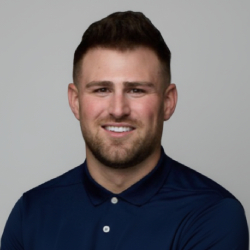
 Josh Gosnell is the Vice President of Revenue at Adit, an AI-powered, all-in-one practice growth platform that helps optometry and medical practices modernize operations, streamline workflows, and accelerate growth. Since joining Adit as its third employee, Josh has helped scale the company to over 600 employees and transformed it from a digital marketing firm into a leading healthcare technology provider. He is recognized for building strategic partnerships across the medical industry and is a sought-after speaker in the dental and optometry technology space.



Here’s a glimpse of what you’ll learn:
- [03:39] Josh Gosnell talks about the AI breakthroughs driving modern optometry practices forward
- [06:02] How client feedback sparks cutting-edge tech developments at Adit
- [10:24] Why seamless tech integration is crucial for optometry offices
- [13:17] Ways AI can capture missed calls and boost appointment rates
- [18:02] Adit’s outbound AI revolutionizing revenue recovery
In this episode…
Optometry is evolving fast, and the technology that once felt like a bonus is now becoming central to how practices run and grow. So how can AI actually make practice management simpler while uncovering revenue that’s been hiding in plain sight?
According to Josh Gosnell, a healthcare technology leader, the real power of AI is in making practice operations smoother and streamlining processes while helping teams spot opportunities that would otherwise be missed. He points out that many optometry practices are sitting on six or even seven figures of untapped revenue potential inside their active patient database; they just need the right platform to unlock it. The bigger takeaway is that AI isn’t about replacing staff; it’s about helping practices run smarter, connect with patients more effectively, and grow with less friction.
In this episode of the Cleinman Connect Podcast, Kim Carson is joined by Josh Gosnell, Vice President of Revenue at Adit, to discuss how AI-driven platforms are transforming optometry practice management. They explore consolidating tools into one system, finding missed revenue opportunities, and using AI call intelligence to improve patient engagement. Josh also shares advice on what’s next for outbound AI in practice growth.
Resources mentioned in this episode:
- Kevin Wilhelm on LinkedIn
- Cleinman Performance Partners
- Josh Gosnell on LinkedIn
- Marketing4ECPs
- Adit
- “Creating Face-To-Face Opportunities With Your Patients Through Products and Social Media” with Sarah Vinson on the Cleinman Connect Podcast
- “[Marketing] Digital, Traditional, and Best Practices for Marketing in Optometry” with Kate Virzi on the Cleinman Connect Podcast
- Alan Cleinman on LinkedIn
Quotable Moments:
- “I’ve worn pretty much every hat in the business over the last 10 years and operated in, you know, sales, marketing, business development, support, customer success — everything A to Z.”
- “Right now, AI is a big hot point in every medical community out there.”
- “A lot of our products over the last several years, a lot of these innovations have been created by someone saying, hey, I have this problem.”
- “We’re still 100% self-funded after 13 years in business, and that’s pretty unique to see for a software company.”
- “Really, the whole goal of any of this is just to streamline workflows and help find opportunities that we might be missing otherwise.”
Action Steps:
- Consolidate practice management tools into one platform: Reducing fragmented systems helps teams work more efficiently and lowers operational costs.
- Use AI to identify missed revenue opportunities: Spotting untapped potential in your patient database can unlock significant growth without relying only on new patients.
- Improve patient communication with automated scheduling and reminders: Streamlined engagement reduces no-shows and strengthens the overall patient experience.
- Leverage AI-powered call intelligence to enhance front desk performance: Scoring and flagging key calls make coaching easier and improve booking success rates.
- Invest in technology that supports both inbound and outbound workflows: Expanding AI beyond answering calls into proactive outreach can generate new revenue faster.
Sponsor for this episode…
This episode is brought to you by Adit.
Adit is the all-in-one practice growth platform built for modern optometry, bringing together phones, texting, scheduling, reviews, and more in one seamless system.
With powerful tools like real-time analytics and AI-powered call intelligence, Adit helps practices make smarter decisions, strengthen patient engagement, and capture revenue that might otherwise be missed. Offices can reduce costs, streamline operations, increase revenue, and focus more on delivering great care.
Learn more at Adit.com.
Episode Transcript
Intro: 00:07
Welcome to the Cleinman Connect Podcast, where we discuss marketing, ownership, growth strategies, and everything else surrounding the business of optometry. Cleinman is Optometry’s trusted business partner for over 35 years. Hello, I’m Kim Carson hosting Josh Gosnell, Vice President of Revenue at Adit on this episode of the Cleinman Connect Podcast. Past guests of the show include Sarah Vinson of Lunette, USA and Kate Virzi, the Director of Sales and Client Success at Marketing4ECPs. Those episodes are available at Cleinman.com or wherever you like to listen.
This episode is brought to you by Adit. Adit is the all in one practice growth platform built for modern optometry, combining phones, texting, scheduling reviews and more with cutting edge tools like real time analytics and AI powered call intelligence to fuel smarter decisions and stronger patient engagement by bundling everything practices need into a single integrated platform. Adit helps offices reduce costs, streamline operations, and win back revenue that used to slip through the cracks. Learn more at Adit.com.
And I’m joined today by Josh Gosnell, Vice President of Revenue at Adit, which I just mentioned is an AI powered platform that helps practices modernize their operations and grow with deep experience in sales and revenue leadership. Josh has spent his career building strategic partnerships with large organizations and influential medical professionals across the US. He’s a sought after speaker. Thank you for joining this podcast in the dental and optometry and medical technology space, helping practice owners leverage technology to improve patient engagement, streamline workflows, and accelerate growth. Josh’s blend of industry insight, practical expertise, and passion for innovation makes him a powerful voice on the future of healthcare technology. Thank you so much for joining me today.
Josh Gosnell: 02:03
Thanks for having me.
Kim Carson: 02:04
Yeah. Of course. You know, I do love to read a good bio on people. But a vice president of revenue with a deep experience in sales and revenue leadership. Josh, what does that mean? How did you get here?
Josh Gosnell: 02:21
Just means that I touch pretty much every part of the business, anything that’s associated with new revenue. You know, I came in early in the company’s lifespan. So I was employee number three at the company. We are now over 600 employees total. So it just means that I’ve worn pretty much every hat in the business over the last ten years and operated in, you know, sales, marketing, business development, support, customer success, everything A to Z.
But it’s been a good run for us even.
Kim Carson: 02:54
Were you a janitor at one point? Did you hand out stickers?
Josh Gosnell: 02:57
Oh, I’ve done it all. Trust me, I’ve been on the trade show circuit. I’ve cleaned up. Afterwards, I go throw away the boxes in the dumpster out back. I’ve done it all.
Kim Carson: 03:07
Amazing. Well, I am honestly floored by some of the stuff that I’ve seen. You know, just going through the attic website and stuff that, you know, you guys do or the program does. Can you tell me a couple of things just that Adit is best at and that, you know, maybe you’re excited about or, you know, it doesn’t even have to be a new feature. It could be something that you were like, I can’t believe that we can do this.
And it was, you know, five years ago, do you have anything like that?
Josh Gosnell: 03:39
Well, a ton. We’d be sitting here for several hours, I guess the, the thing that I’m most excited about and most proud about right now is what we’ve been able to do in the AI space and some of our developments and our artificial intelligence, how we’re using that for practices that that would be the most recent thing really. Any time that I talk about Adit in general, people know us as an all in one solution. I honestly, I really hate that because I feel like it’s just such a cap term that they throw on top of things. But to give you a more broad spectrum of how we help practices, it really fits into two buckets.
So there’s a lot of ODS out there that they’ve adopted technology, but they’re using several different platforms to get done what they need. Right. So you’ve got a phone system that integrates into your crystal. You’re doing something to generate Google reviews. Maybe you’re tracking some KPIs for your practice.
Maybe you’re, you know, texting and automating some of these things, but you end up doing them with several different systems. Really. What Adit does is it consolidates all of those things right, brings them into one place. It’s one user interface. It makes it much easier to use.
Most of the time it ends up saving on cost. On the flip side of that, if practices aren’t utilizing these systems, or maybe they’ve just like dipped their toe in, they haven’t really dove in to that end of the pool. Yet really, it’s finding missed revenue opportunities. There’s not an odd that I meet with that says that I don’t want to grow my practice. Right.
So most of the time, to them that means new patients. But most practices that we meet with have six, if not seven figures in opportunity. That’s just sitting in their active patient database. And it’s how can we find those opportunities and how can we leverage those opportunities. And technology like Adit is what makes that a lot easier for them.
Kim Carson: 05:36
When we talk about innovations in technology, I always wonder how, you know, I would love to have that next great idea that next, you know, billion dollar idea that changes the world. How does adit go about that? How how does adit know what’s next and what’s next? The AI integrations that you mentioned, you know, how how did that come to be?
Josh Gosnell: 06:02
Most of it actually comes from our clients, honestly. You know, when we started this company about 13 years ago, we actually started as a digital marketing firm. And so we were doing, you know, websites, SEO, Google ads, things of that sort. The product has really developed over time based on the feedback that we were getting from our clients, you know, and it started in in dentistry originally in the medical space. And we’ve since expanded verticals into optometry, orthodontia, chiropractic, etc. but a lot of our products were created based on necessity.
The things that we were getting from the doctors that we were working with. You know, it all started back when we were doing marketing. It was, hey, I’m getting all of these unique visits to my website, but I’m having trouble getting these patients scheduled. Is there any way that we could have a tool on my website that shows my availability, so we can develop an online scheduling tool? And then it’s, hey, Josh, all of these people are scheduling using my online scheduling tool, but my no shows are skyrocketing.
Is there any way that we could text these patients and just confirm the appointment and remind them that this is coming up? Sure. Let’s go build it. And so a lot of our products over the last several years, a lot of these innovations have been created by someone saying, hey, I have this problem. And us saying, hey, I think we can solve that.
And then just going out and building it.
Kim Carson: 07:24
Yeah, that honestly sounds very similar to the Cleinman story. I don’t know, you know how many people know this, but Al Cleinman started this company as a transactions and transitions company. So buying selling agreements stuff like that. And he would hear from practices or he would do evaluations on practices and they would, you know, he would do the evaluation. And then he’d be like, you’re not in a position to sell like you need, I don’t know, a business consultant.
You need to talk to your peers. And so now we have all these products. So I absolutely can relate to someone being like, hey, I need this now. Can you do that? Can you help me with this?
What is that process like? Like if if someone were to have at it as one of their technologies that they use, do they just call you and say like, hey, I noticed that it does this, can it do this instead? And like, how does that process work? And also how tailored could edit get for a practice?
Josh Gosnell: 08:27
Well, it really depends. I mean, so the basic process is every one of our clients has a client success manager, right. It’s someone that they’re talking with on a regular basis. We take a very proactive approach to engaging with our clients. A lot of software, as you’ll see, the kind of set it up and then there’ll be a reference point if the practice needs them.
We’re more proactive in the sense that we’re reaching out saying, hey, you know, it’s been three weeks since we talked. We just want to check to make sure everything’s good. So you see, a lot of these things start to pop up of, hey, I was wondering if it can do this or is there a way to do that? And if the answer is no, then we just go in and we build it. I think one thing that’s really unique about it is that we’re still 100% self-funded after 13 years in business, and that’s pretty unique to see for a software company, because we’ve got no outside funding, no venture capital, there’s no one that’s telling us what we can and can’t do or what we can and can’t build.
With a lot of companies, you’ll face some red tape, right? So it’ll be like, okay, well, maybe we have the capabilities of doing this, but we won’t because the board doesn’t agree to it, right. The process for us is would this change, would this innovation have a mass impact across these industries? So when you think about would we develop something for a very specific use case? Maybe maybe not.
But if it’s something that we say, man, we feel like a lot of practices would really benefit from having this type of technology. Then we can go build it and we can build it pretty quickly as well. A lot of our a lot of our dashboards, a lot of our KPIs and analytics that we offer have been built based on feedbacks, actually, from coaches that we’ve worked with in the auto Space that say, hey, these are the kind of things that we need to track. These are the KPIs that I keep my eyes on. This is how I practice, is growing, that I need to see these.
And we’ll go in and build them because we feel like it’s going to have a massive impact across all of those practices.
Kim Carson: 10:20
Do you just have a bunch of like, developers and coders on retainer or.
Josh Gosnell: 10:24
Well, I told you we got 600 employees at this point. Yeah. You know, so actually, yes we do. I wouldn’t call them on retainer, but they’re actually employees. And I’ll tell you, some of these guys, these are the sharpest folks out there and the the ability to put together and build some of these softwares because, you know, going a little bit more into our tech stack altogether.
Everything has to work with each other, right. And so one of the complaints that you’ll get from a lot of practices is trying to mesh together different softwares that don’t have a clean integration or they don’t work well together. So every new product, new innovation that we introduce, we have to make sure that it seamlessly works with everything else that we do. Give you an example. Right now, AI is a big hot point in every medical community out there, and there’s been a lot of AI front desk conversations, and it’s can I replace my front desk with AI, can I supplement my front desk with AI?
So on and so forth. So you’ve seen a lot of stuff popping up. So an example would be there’s a lot of AI agents out there that are conversational that maybe can take a phone call. They can hold that conversation, they can get a task that needs to be done, but they can’t do the task right. Example would be if I call your practice, you’ve got an AI agent that takes that phone call, right?
I’m looking to schedule an appointment. The AI can tell me, sure, we can get you scheduled, but then if it doesn’t have the capabilities to actually book the appointment and put it into my my crystal, my revolution, whatever, And it’s kind of useless because it creates the task that then a person still has to follow up on. So what I’m saying is when we build these pieces of software, we make sure that it works with everything that we’ve already built. So online scheduling being a huge part of what we have consistently done over the last ten years, we needed to make sure that if we’re going to build an AI component to this, an AI front desk component to this, not only does it need to be able to take that call, it needs to be able to actually book the patient. It needs to be able to actually send a text message.
You know, it needs to be able to actually send this patient form that the patient is calling about. Otherwise, it just doesn’t make any sense. So it has to be layered on top of all of these things. And that’s why it’s so important that we have all of these developers that can come in and build things the way that it needs to be built.
Kim Carson: 12:57
At the risk of, you know, I talk to a lot of doctors and I talk to a lot of people that have degrees that are much more impressive than mine. So at the risk of sounding maybe a little tech insufficient, some of this sounds very complicated. Is it easy?
Josh Gosnell: 13:17
Well, we try to make it easy. You know, it. It is complicated. I mean, it’s innovation. It’s technology.
There’s a lot that happens on the back end, but we try to make it as easy as possible for the practice. Really, the whole goal of any of this is just to streamline workflows and help find opportunities that we might be missing otherwise. That’s really all that it is. And you know, the problems that practices come to us with, whether it’s the amount of missed calls that they have, I mean, obviously we offer a phone system. So we’ll see that the average number of missed calls is right around 30%.
And that’s during business hours. And it’s okay. That’s a lot of potentially missed opportunity. I’d say most optometry practices are maybe operating at 60 to 75% of their actual capacity of what they could take in. And so if we’re missing ten phone calls a day, I mean, that’s money that we’re missing.
And so it’s how can we put something in place that makes their life easier, not trying to even, like, replace your office staff. But if we’re missing that during business hours, wouldn’t it be better if we just had something that could take that phone call and catch those opportunities? So that’s really all it is, is trying to make life as easy as possible. I’ll give you another example. And this is a good one specifically for Cleinman because of how you guys are coaching and working with these practices.
Let’s take new patients for example. Right. Every practice says they need new patients. But how? The front office staff handles the conversations with the new patients when they’re calling in is going to have a huge impact, not only if we get the appointment booked in the first place, but once the patient comes in, what is their experience going to be like?
Right? So that’s something that we need to think about. If a coach is going to come in and they’re going to look at the phone calls this practice is taking and advise them on how they’re handling these calls. That can be a cumbersome thing to do. So you’re thinking, all right, as a coach, how would I do that?
I’m going to go in and if they’ve got the call recordings, I’m going to pull ten random recordings from ten random team members at the office, listen to them and then go advise them. Right. How do I track if they improve? I pull ten more calls next week and see if it sounds better. Right.
So it’s using the software to make the life easier to your point. So it’s saying, okay, is there a way that I could use technology to score these phone calls and to identify or put red flags on the calls that I should listen to, because, you know, they’re getting 100 calls a day. If I just go pick ten random ones. I have no idea what these calls are about. I have no idea who’s handling them.
ET cetera, et cetera. But if I can just go put some red flags and be like, hey, these are probably the five calls that you should listen to for this reason, right? Then I can come in as a coach and I can say, hey, this is how we should handle these calls differently and our success should go up. Then watch that number next week to see if those same red flags appear, but have the technology be the one that’s listening to the calls and identifying if the red flags are showing up or not. Hopefully that’s a simple enough way of describing it, but really it’s using the technology to make the life easier.
You don’t necessarily have to know the workings of how the technology does all of these things, but does it make the process of operating easier for me?
Kim Carson: 16:40
So, Josh, I think at this point, people do know that Cleinman and Adit have a partnership. Can you kind of tell them what it means? What’s going to happen?
Josh Gosnell: 16:51
Yeah, absolutely. We’re super excited to start working a lot closer with you guys. Getting to know you, figuring out better ways that we can improve our product, and then how our product can improve the lives for the coaches and of course, the clients as we grow. I really think it’s about, you know, you guys operate with very high level practices. You know, I think Cleinman is known in the industry for getting the best of the best and really turning them into elite operators.
And in order to do that, you got to have the right tools. And so I think it’s a match made in heaven to pair that the thinking, the mindset of the type of clients that you guys work with, with the technology and what we can provide on that side, we’re super excited with it. To get to know each of the coaches, start to meet the the members and expand from there.
Kim Carson: 17:37
Yeah. Well, great. We’re very excited to see you in Austin.
Josh Gosnell: 17:41
Yeah, we’ll be there.
Kim Carson: 17:42
Well thank you, Josh, I do have one last question for you. And before I ask it I will point people to the website again adit.com. So my final question for you today is without maybe revealing all of the secrets that adit is working on, what is next? What’s coming up.
Josh Gosnell: 18:02
So it’s going to stay in the AI space. I will tell you that I would say it’s going to be on the outbound calling side. So there’s there’s a lot of softwares that exist now that have some AI components to it and maybe help you handle the inbound calls, but there’s really nothing in place that can be a revenue generator on the outbound side. So when calling patients back or when we identify maybe those opportunities where we’re missing revenue, it’s almost like having an additional team member. And it’s not thinking like, okay, can we be perfect?
But an example would be if if our system identifies that there’s, let’s say 100 grand in unscheduled treatment from the last 30 days, what is that practices typical strategy going to be to get them in. It’s hey well let me get a team member to start calling down this list and see if we can get these people back in. What if I could take something that takes ten hours and maybe gets 10% of it in, take five minutes and take that up to 25% of those bookings. So that’s I think that’s really the next frontier is how to better leverage our time on the outbound side as well, and how we can increase revenue there.
Kim Carson: 19:16
Okay. I almost need that for my personal life. I need someone to call my friends and text my friends back for me.
Josh Gosnell: 19:21
I’m telling you, I’m telling you. Well, you know, technology is moving so fast, I guarantee you you’re going to have a personal AI assistant here. Sure. I mean, you’ve seen Elon’s robots. Nothing surprises me anymore.
Kim Carson: 19:33
Yeah. Truly. Okay, well, thank you so much for your time today. That is our show. If you want to hear more of the Cleinman Connect Podcast, you certainly can at Cleinman.com and wherever you like to listen.
Outro: 19:44
Thanks for joining us today. Thank you for listening. At Cleinman, we take pride in helping our partners unlock their full potential. Subscribe to get the newest episodes or visit us anytime at Cleinman.com.