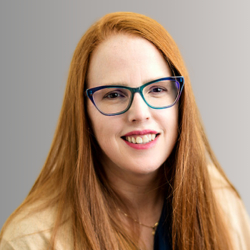
 Anne Chong is the President and CEO of Visual-Eyes, a leading provider of comprehensive practice management software solutions for the eyecare industry. Under Anne‘s leadership, Visual-Eyes has grown steadily for over 30 years, now integrating with nearly 200 types of ophthalmic equipment and offering more than 300 customizable reports to help clinics optimize their operations. A University of Toronto Engineering Science graduate from a family of engineers, Anne focuses on systems optimization and attention to detail in Visual-Eyes’ user-centric approach.


Here’s a glimpse of what you’ll learn:
- [02:36] Anne Chong shares how Visual-Eyes has evolved over 30 years to meet the changing needs of modern clinics
- [03:52] Why tiny workflow tweaks can dramatically reduce friction and save valuable time
- [09:20] Turning automation into a seamless, branded patient experience
- [13:23] What to look for in practice software to ensure a smooth transition and long-term success
- [15:10] Visual-Eyes’ expanding into the US and elevating what practices can expect from their software
- [17:41] How advanced analytics and dashboards unlock clinic performance insights
In this episode…
Operational friction rarely shows up as a crisis. It hides in extra clicks, double entries, missed confirmations, and the quiet frustration that builds when systems don’t quite talk to each other. What would change if your practice software could eliminate those pain points instead of adding to them?
For Anne Chong, a systems-minded engineer who spent three decades refining practice workflows, the answer is simple: optimize every step. She believes that streamlining isn’t about flashy features but about reducing unnecessary motion, whether that’s cutting down keystrokes, eliminating screen hopping, or integrating equipment so data flows automatically instead of being retyped. When those small inefficiencies disappear, teams gain time, clarity, and the freedom to focus on patient care rather than paperwork.
In this episode of the Cleinman Connect Podcast, Kim Carson is joined by Anne Chong, President and CEO of Visual-Eyes, to discuss streamlining processes and reducing operational friction. They explore eliminating small inefficiencies, leveraging integrations to reduce double entry, and using automation to improve communication and collections. Anne also shares advice on choosing software that supports smooth transitions and long-term growth.
Resources mentioned in this episode:
- Kevin Wilhelm on LinkedIn
- Marketing4ECPs
- Cleinman Performance Partners
- Anne Chong on LinkedIn
- Visual-Eyes
- “[Growth] Stocked Right: The Training Guide to Better Board Management” with Michelle Kelley on the Cleinman Connect Podcast
- “[Growth] Why You Should Consider Doctor-Driven Dispensing in Your Practice” with Michelle Kelley on the Cleinman Connect Podcast
- Traction: Get a Grip on Your Business by Gino Wickman
Quotable Moments:
- “Everything is optimized to make that data entry as smooth as possible and optimize those keystrokes.”
- “The integrations take care of that so they can focus on the work that actually matters.”
- “To streamline practice workflows, to optimize clinics so that they can do more with less.”
- “And so we assign one of our practice consultants to guide through the full process.”
- “And so what’s nice about those is you can customize them to be from your own tone.”
Action Steps:
- Audit your current workflows for friction points: Identifying unnecessary clicks, double entries, and screen switching uncovers hidden inefficiencies that quietly drain staff time and energy.
- Maximize system integrations across tools and equipment: Connecting devices, payment systems, and communication platforms reduces manual errors and allows data to flow seamlessly.
- Leverage automation for routine communications: Automating reminders, recalls, and confirmations improves consistency while freeing staff to focus on higher-value patient interactions.
- Provide ongoing training on software shortcuts and features: Reinforcing best practices ensures your team uses the system efficiently instead of developing slower workarounds.
- Track key performance indicators through reporting dashboards: Monitoring metrics like capture rate, new patient percentage, and revenue mix enables smarter, data-driven decisions.
Sponsor for this episode…
This episode is brought to you by Visual-Eyes, the premier practice management software solution for the eyecare industry. Through ease of use, reliability, and total office integration, the Visual-Eyes suite of software helps to reduce operational inefficiencies, allowing you to focus on what’s important. Your patients get more information at visual-eyes.ca.
Powered by Rise25 Podcast Production Company
Episode Transcript
Intro: 00:07
Welcome to the Cleinman Connect Podcast, where we discuss marketing, ownership, growth strategies, and everything else surrounding the business of optometry. Cleinman is Optometry’s trusted business partner for over 35 years. Hello, I’m Kim Carson, hosting Anne Chong President and CEO of Visual-Eyes on this episode of the podcast. A past guest of this show is Michelle Kelley, the Director of Ophthalmic Materials and Services at the Southern College of Optometry. Her episodes about doctor driven dispensing and optimal board management are available now at Cleinman.com.
This episode is brought to you by Visual-Eyes, the premier practice management software solution for the eyecare industry. Through ease of use, reliability, and total office integration, the Visual-Eyes suite of software helps to reduce operational inefficiencies, allowing you to focus on what’s important. Your patients get more information at visual-eyes.ca.
And I’m joined today by Anne Chong, President and CEO at Visual-Eyes, and is a graduate of the University of Toronto in the field of engineering science. Very, very smart. Let’s start with that. To some degree. She has been with Visual-Eyes since its inception 30 years ago and has become the backbone of the company, overseeing all aspects of essential day to day operations and collaborating with her team of talented managers. She is very proud of Visual-Eyes and its ability to make a difference in how a clinic operates. Welcome. Thank you so much for joining the show today, Anne.
Anne Chong: 01:41
Thank you so much for having me. Kim. I’m so excited to be here.
Kim Carson: 01:44
Yay! Thank you. Could you maybe tell us a bit about yourself, something that wasn’t in the blurb?
Anne Chong: 01:53
Sure. I actually come from a family of engineers, and so I think my brain has always just sort of worked on that systems process optimization. And so that’s my job and continues to be my passion that I bring to Visual-Eyes.
Kim Carson: 02:09
Nice. Do you have the ring? The engineering ring.
Anne Chong: 02:12
Of course.
Kim Carson: 02:13
Of course she does a whole family of engineering rings. Well, you know, as nice as it is also for me to read a little bit about Visual-Eyes to our audience, I certainly will not be able to capture the passion that you can while talking about it. So would you please tell us what Visual-Eyes does and is capable of for practices?
Anne Chong: 02:36
So Visual-Eyes is an all in one practice management solution, as Kim said. And we’ve grown over the 30 years. So we started, you know, at front desk and moved into the optical and then into the exam and then into online booking and then into automated communication and now into forms that go right into the exam form. And so we continue to add new things. We’re now playing with AI and figuring out how that will go.
So although we’ve been around for 30 years, we continue to grow in terms of the scope of what we offer. Visual-Eyes is also premium high touch points. So it’s about, you know, making a connection with our clinics and making sure that we’re able to support them in the ways that they need to be supported.
Kim Carson: 03:23
Nice. Amazing. That is so much better than what I said. So supporting them in the ways that they need to be supported. When we originally talked, there was, you know, discussion about streamlining processes.
Could you share maybe a few issues that Visual-Eyes has kind of tackled of, I mean, of late, or just if you have some like big ones overall that you were like, I’m I’ll always be proud of this. I’d love to hear some of those.
Anne Chong: 03:52
You know, it’s funny, one of our first clients was one of our beta sites and he unfortunately is is no longer a client because he got bought out by those who shall not be named. But he actually was invited to our 20th. And the reason we did that was we wanted our staff to hear sort of what was special about Visual-Eyes for him and what he still to this day, if you were to run into him, he would he would totally still say it was the attention to detail that went into like even just how much you click on the screen. So everything is optimized to make that data entry as smooth as possible and optimize those keystrokes. And I hear it over and over again.
I was at a clinic last summer. We hadn’t been in there in a while, and I just provided some shortcuts for them. Like, do you guys remember all these shortcuts we taught you? And he’s like, no. So, you know, they started using those shortcuts again and cut significant time off his exam entry because things are optimized to flow as easy as they can.
And a lot of them can be done just easy as using the enter a tab key and having them do what you expect them to do so that that sort of attention to detail, but also the shortcuts that allow you to process information quicker or jump into areas more efficiently. So just those extra attention to details that I don’t know why my competitors don’t do them, but we do. And we’ll we’ll take credit for them.
Kim Carson: 05:28
Yeah. Continue to do so. And because there is there’s hidden cost to some of those operational inefficiencies, do you have some small inefficiencies that you’ve tackled.
Anne Chong: 05:42
So one of the things I do is I love going in and observing clinics. So they’ve they’ve been using Visual-Eyes for one, five, ten years. And I go in and I just shadow what they’re doing at the practice. And sometimes I’ll watch them and go, why are they flipping from this screen to that screen? And sometimes it’ll be like, okay, I need to take that back to the development team.
We need to add that piece of information to the front screen. So they’re not having to click out of it. But most of the time I can say to the staff member, you know, that piece of information went over there to get it’s actually on the screen. You didn’t have to move screens. So again, again, that extra attention to detail to just make sure that we don’t have to waste time with those types of things.
Further to that probably is our integration. So we integrate with almost 200 different pieces of ophthalmic equipment. So whether that be autorefractors auto doctors, but even things like your optics and your office and those types of things to get those measurements into the system without having to double enter them. Payment integrations so you don’t have to type the amount into the hand-held machine and then have that come back. When you integrate that you balance at the end of the day.
Yeah.
Kim Carson: 07:02
There’s no user error when it auto populates. Hey.
Anne Chong: 07:04
Exactly. So these are we make you know, it’s streamlined in terms of processing at the end of the day. The payment integrations also allow us to send payment links to patients. So it makes collection so much easier. So just again all those little little touches that are in there.
Kim Carson: 07:24
Yeah. Why do you think integrations like that. You know beyond maybe the user or the, the allowance for human error. Why do you think integrations like that matter more than ever now?
Anne Chong: 07:37
Oh, I mean, so many people, especially since Covid, are having trouble finding staff. And so everything we can do to get the most out of the staff that we are able to hire so that they’re spending their time on how high value effort and allow the integrations to make the low value efforts sort of disappear. They don’t have to worry about them. The integrations take care of that so they can focus on the work that actually matters.
Kim Carson: 08:07
I agree, and I think too, it’s important, yeah, for that human side of it. And like you said, there’s limited staff and we want to make sure that they are, you know, fulfilled. Also I think that there’s you know, I think about some things that I didn’t know about. I switched to Mac not too long ago, and maybe someone listening might not know this. And they can be like, oh my gosh, great.
Now I know it. If you just like three finger swipe on the pad, you’ll get to a different page. And I use this computer for months and I did not know that. So I was clicking between all the different pages. And it’s frustrating.
It’s frustrating from the human side of it too. It’s not just, oh, we made this simpler for you. We made this easier for you. It’s less frustrating as well to have a platform that performs.
Anne Chong: 08:54
Exactly. Yeah.
Kim Carson: 08:55
Amazing. What else is Visual-Eyes? Kind of capable of like. I’m sure there’s lots of things. But you’re like, how long is this episode?
How many things can I list? Maybe like, what is like a, you know, like kind of a top three of of the things that Visual-Eyes is capable of that maybe people wouldn’t know about.
Anne Chong: 09:20
So one of the things is probably the automation and how the automation fits in. So we have automated reminders for appointments, recalls, pickup reminders. And so what’s nice about those is you can customize them to be from your own tone. So the clinic consistency the clinic lounges, they’re they’re quite customizable in terms of if you want different methods for different type of appointments. You’ve got complete control over all of that.
But the automation goes further than just sending the message because it’s fully built within. Visual-Eyes and Visual-Eyes. You can tell when a message is sent, what message was sent, and if the client interacted with that message. And so if an appointment is confirmed, for example, it just automatically changes the color of the appointment. So we know that it’s confirmed.
So I don’t have to call that patient. I don’t have to go into another system and see that was confirmed, and then transfer it over to the primary system so that I know that it was confirmed. Everything is built right in. You can do surveys through that as well to push reviews. So reviews we know in this day and age are critical to practice.
So important. And so we can trigger those all through the interactions that we’re having. And again we don’t need to manually do it. The system takes care of it for us. Now with reviews, we always know that if we talk about them, we have better success in getting the client to interact with them.
So there’s, you know, little tricks like that that you can do as well. But first step is get the system in place to get, you know, to start asking for them and make it as easy as possible for the client. The patient in this case to be able to action it.
Kim Carson: 11:09
Amazing. And how like how consistent does everything look from this platform. If if I got a text one day from a practice that had this software and then I got a text six, six months, one year later, would it be from the same number? Would it, you know, still have the same like format of links in it? Like, am I going to be scaring people with the amount of burner numbers that they get on their phone?
Anne Chong: 11:36
No. So with the text messages, it depends on how the clinic wants to set it up. So we do have a short code that’s used which increases the deliverability. Or you can use your primary clinic number so you can actually port that as well. So there’s some options there depending again on what branding makes the most sense for the for the clinic.
In terms of the emails that it would go from, it’s always from a clinic branded email. Some clinics choose to use the same email address for all of their messages. Others prefer to make it department specific, so if it’s a reminder about optical, it would come from optical. So there’s there’s always controls thoughts piece. But the brand itself will typically stay consistent.
Now obviously over a year and a half it’s possible that the clinic may have updated their branding. But beyond that type of thing, typically the messaging is going to stay consistent, which is why we like to make sure that all of the messaging is coming from one platform, one look. And so when you email from Visual-Eyes or manually through Visual-Eyes or from the automated, it’s the same experience for the patient.
Kim Carson: 12:46
I would like to ask. We very lightly brought up something that your competitors are not doing and that you luckily are. But I would like to ask what would you recommend? And you feel free to use Visual-Eyes as the like kind of case study. What would you recommend people look for in a software suite that like, you know, they’re they’re looking to to implement some type of software in their practice that does these things that can integrate, that has this cohesion.
What would you say that they need to make sure their software has in order to be successful?
Anne Chong: 13:23
That’s a great question. And I think it varies a little bit depending on where you are as a practice. So as an established practice, the most important thing for them is making sure that that transition from whatever they’re doing now to their new system is going to be is going to be supportive of them. And one of the things that Visual-Eyes does is we have a high touch point associated with that. And so we assign one of our practice consultants to guide through the full process.
And so they’ll tag people on our side as well as on the clinic side to make sure that that’s a success. But their goal is to make sure that we reduce as much friction as possible through that huge stress point. So for any clinic switching software packages, it’s it’s a lift to be able to switch software packages. And so you need to make sure that you’re supported through that. The second piece we’ve alluded to already, which is making sure that where your friction points are within the practice are going to be addressed in the new system.
So what are those small wins that can help elevate your processes so that your staff is not stressed about doing their work and and powered and enjoyed to to do the work with their patients rather than the paperwork or the computer work necessary to do their jobs.
Kim Carson: 14:54
Amazing. We do have quite a few Canadian listeners of this podcast. But we have even more south of the border stateside. Is there an expansion to the US maybe happening with Visual-Eyes that people could look forward to?
Anne Chong: 15:10
Absolutely. So we already have one in Austin, Texas. So I’m going to get to go see her quite soon. But yeah, we’re looking at expanding south of the border. Part of the reason we’ve joined the Cleinman Group is part of that initiative.
And so we are looking to add integrations that will further support the needs of the US clients. But a lot of what Visual-Eyes delivers today will elevate, unfortunately what’s being offered in the market south of the border. And so that’s why we’re moving there. We think we have a unique niche that will support the US customers to the same degree as what we do for our Canadian customers, and so we’re excited to be able to expand into the US and and share that.
Kim Carson: 16:01
How do you like making the decision to expand? Is probably a very large one. How do you look at what’s being offered currently in the market and know or solve the way to elevate it, and then how to offer that to people like what are you and what is Visual-Eyes doing to elevate what people currently have?
Anne Chong: 16:26
And so really it’s about, again, looking for those friction points and figuring out how best to resolve each of those friction points. And a lot of the friction points are the same north and south of the border. And so there’s a couple elements that are uniquely American in including insurance is probably the biggest. And so we we do have, as I said, one one client already in Austin, Texas, and she’s been using the system for quite some time. And so we’re working with her to elevate the insurance piece and address those aspects.
But really, the rest of Visual-Eyes out of the box is going to hit the needs of the American clinic because they have the same workflow, same processes. No matter where you’re located.
Kim Carson: 17:17
You have all this data, we have all this great data to look at. And it sounds like once something is integrated, you can do it. Once it reads it, it puts it into the system for you. You don’t have to then take those results and enter them. What is happening with that data after like, are there features that could inform decisions down the road using it?
Anne Chong: 17:41
So typically the equipment data that’s coming in is measurements. And so obviously those measurements go into the exact spots that they’re needed for whatever they’re being used for. And so for the most part, so that we don’t have to manually measure them or manually transcribed, but in terms of data and data usage, which is a little bit different. Question Visual-Eyes has over 300 reports that allow clinics to dig into what data might be important to them, depending on what they’re looking for. So we have reports, for example, that we’ll look at capture rate.
So of how many prescriptions we gave out today, how many captured per patient, and what was the average value of those prescriptions that we capture per patient. So that’s an easy one. New patient percentage would be another one that we often look at. also a number of multi pair sales. Are we doing frame and lenses only.
Are we doing lenses only. So there’s a number of different stats. What’s the percentage of contact lens revenue. I could go on. We’re also working on a new dashboarding module.
And so that dashboarding module is going to put all of those numbers at your fingertips. You’ll be able to have KPI mapping associated with that with benchmarking. So comparisons against other practices will be included in that as well as goal setting. So you can set your goals and it will highlight where you are not meeting of them. If you have any listeners that are using traction, a lot of that has been set up in the idea of the traction scorecards, so you’ll be able to define particular metrics and then what your weekly goal is for those metrics and be able to tell whether you’re on track or off track.
Quite visually.
Kim Carson: 19:41
That’s very in line with the Cleinman operating system. It’s same same. So no wonder we’re partners now. Okay, well, as we wrap this episode up, I do want to point people to the Visual-Eyes website. Again.
It’s visual-eyes.ca. And is there anywhere else that you would like to send people for them to learn more information about?
Anne Chong: 20:03
Visual-Eyes and the website is probably the best place to start, and there’s a contact us form on the website as well as links to our social media platforms.
Kim Carson: 20:13
Amazing. Well, my final question for you today is, you know, we’ve maybe touched on it or danced around it a bit, but directly, I would like to know what is the ultimate goal of Visual-Eyes.
Anne Chong: 20:26
To streamline practice workflows, to optimize clinics so that they can do more with less.
Kim Carson: 20:32
In the original notes for this episode, I did want to end with that question because you are so passionate about streamlining and it really speaks to me. What Visual-Eyes is about when you get rolling about the little things that people do that they could stop doing. Well, thank you so much, Anne, for your time today. That’s our show.
Anne Chong: 20:58
Thanks so much for having me, Kim. I’ve enjoyed it.
Kim Carson: 21:00
Yay! Thank you so much. If you want to hear more, you can at the or sorry of the podcast at Cleinman.com and wherever you like to listen. And thank you for listening today. Thank you for listening.
Outro: 21:34
At Cleinman, we take pride in helping our partners unlock their full potential. Subscribe to get the newest episodes or visit us anytime at Cleinman.com.