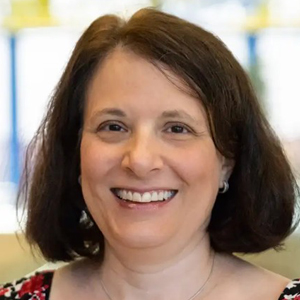
 Dr. Marie Bodack is Chief of Pediatric Primary Care at Southern College of Optometry in Memphis, a leading institution dedicated to training future optometrists and advancing eye care, particularly in pediatric and myopia management. Internationally recognized for her expertise, Dr. Bodack lectures around the world, contributes to research, and plays a key role in integrating emerging myopia control strategies into optometric education and clinical practice.



Here’s a glimpse of what you’ll learn:
- [02:30] Dr. Marie Bodack discusses how myopia education for optometry students is rapidly evolving
- [05:26] The real drivers of the global myopia epidemic
- [08:24] The biggest barriers practitioners face with myopia management
- [11:13] Why legal and ethical standards are raising the bar for myopia care
- [13:55] Best strategies for effectively communicating with parents about myopia
- [25:54] Busting the top myth about glasses making myopia worse
In this episode…
For decades, clearer vision meant getting a stronger pair of glasses every year. However, shouldn’t the overall goal not be just correcting blur, but slowing the eye’s growth and protecting vision long-term?
Drawing from her experience as a pediatric optometrist and educator, Dr. Marie Bodack explains that modern myopia care goes far beyond prescriptions. She emphasizes that the real issue isn’t simply nearsightedness but the physical growth of the eyeball itself, something clinicians can now measure and track. That shift changes how optometrists approach treatment, turning routine exams into opportunities to actively slow progression and protect future eye health.
In this episode of Optometrist Unleashed, a Cleinman Connect Podcast, Dr. Trevor Miranda is joined by Dr. Marie Bodack, Chief of Pediatric Primary Care at Southern College of Optometry, to discuss modern myopia management. They explore why myopia rates are rising, how treatment tools like atropine and multifocal lenses work, and the importance of axial length monitoring. Dr. Bodack also shares advice on talking with parents about treatment options.
Resources mentioned in this episode:
- Kevin Wilhelm on LinkedIn
- Marketing4ECPs
- Cleinman Performance Partners
- Dr. Trevor Miranda on LinkedIn
- Dr. Marie Bodack on LinkedIn
- Southern College of Optometry
- State University of New York (SUNY) College of Optometry
- American Optometric Association (AOA)
Quotable Moments:
- “But it’s the eyeball growing, you know, that never used to really be part of the definition.”
- “I think we’re going to see that, too, in myopia, that some kids are going to do better on atropine.”
- “I always try to tell my parents, I use half a diopter a year.”
- “I think people, you know, should not be afraid to embrace, you know, myopia management.”
- “But it’s not the glasses, the glasses are helping you see clearly.”
Action Steps:
- Educate every myopic patient and parent about management options: Clear communication ensures families understand that myopia progression can be slowed, not just corrected.
- Monitor axial length alongside prescription changes: Tracking eye growth provides a more accurate picture of myopia progression and treatment effectiveness.
- Use multiple treatment tools when appropriate: Combining approaches like atropine, contact lenses, or specialty glasses can improve outcomes for different patients.
- Schedule regular follow-ups for myopia patients: Frequent visits help clinicians evaluate progression early and adjust management strategies before vision worsens.
- Start conversations early, even if treatment isn’t immediate: Early education builds awareness and prepares families to act when myopia progression becomes a concern.
Sponsor for this episode…
This episode is brought to you by Marketing4ECPs!
Working with them is like hiring a full-time marketing professional who knows the industry and understands your goals. Except, instead of one experienced marketer, you get a whole team in your corner.
Whether you’re an optometrist, ophthalmologist, or optician, they can help you grow your business with a plan that’s completely customized for you. Learn more here.
Powered by Rise25 Podcast Production Company
Episode Transcript
Intro: 00:00
Welcome to Optometrist Unleashed, a Cleinman Connect Podcast with Dr. Trevor Miranda, a monthly doctor led discussion about everything surrounding the business of optometry.
Dr. Trevor Miranda: 00:15
Hello, everyone. Welcome back to another episode of Optometrist Unleashed, a Cleinman Connect Podcast. I’m your host, Dr. Trevor Miranda, coming to you from beautiful Vancouver Island, British Columbia. And today we are going to dive into a topic that’s close to my heart and critical to our profession myopia management.
This episode is brought to you by Marketing4ECPs. Working with them is like hiring a full time marketing professional who knows the industry and understands your goals. Except instead of one experienced marketer, you get a whole team in your corner. Whether you’re an optometrist or ophthalmologist or optician, they can help you grow your business with a plan that’s completely customized for you. Learn more at marketing4ecps.com.
Now, this isn’t just about getting stronger glasses every year. We’re talking science strategies and shaping the future of eye care. And I couldn’t be more excited to be joined by Dr. Marie Bodack, a nationally recognized pediatric optometrist and myopia management educator at the Southern College of Optometry. Coming to us from Memphis. Let’s get into it. Welcome, Marie.
Dr. Marie Bodack: 01:31
Thank you. Well, thank you for having me.
Dr. Trevor Miranda: 01:33
Yeah. And Dr. Bodack, I wanted to kick things off by hearing a little bit about your journey. What led you to specialize in pediatrics and then eventually become such a strong voice in myopia management?
Dr. Marie Bodack: 01:45
I always liked working with kids. I went to SUNY, we had a robust pediatric program when I was there, and I was debating between a VA or kids, and I just thought it would be a little more interesting to work with kids because they’re more fun, in my opinion. And I did my residency at PCO, and then I worked back at SUNY, worked in some private practice, was at a hospital for a while. So I’ve been pretty much peds since. Since I left SUNY, I as SUNY, I saw adults, but now I’m all pets.
Dr. Trevor Miranda: 02:21
And you’re also in the classroom, right? And how does myopia management play play in the curriculum in clinical rotations SEO these days.
Dr. Marie Bodack: 02:30
So I, I actually teach the class, I teach PEDs and then strabismus amblyopia. So it fits into didactics. We teach PEDs in the second year. So it’s I tell the students this is ever changing. The lecture I give in I just finished the course in the fall.
So the lecture I gave in 2025 is not the same as I gave in. 2024 is will not be the same in 2026. So we dedicate about a lecture of the peds class to myopia plus then in clinic when their third and fourth years more fourth years, they rotate through peds and contact lens. So they see it there. So you know they’re learning it.
When they’re students. They study for the test. You know, they don’t transfer to clinic. But then when they’re in clinic they’re experiencing it.
Dr. Trevor Miranda: 03:18
Yeah. I mean, the sort of the understanding and definition of myopia as you alluded to, is sort of changed in recent years. And what what are your thoughts? What’s your new definition of, of myopia?
Dr. Marie Bodack: 03:32
I still say in the nearsightedness I like that, you know, I learned minus six and higher was pathologic. The World Health Organization’s kind of saying five and higher. So, you know, I say it’s the eyeball, you know, juvenile myopia, which is what most of us deal with, not premature kids, but that’s a different type of myopia. But it’s the eyeballs growing, you know, that never used to really be part of the definition it was, but we never really explained it. Now we can measure it.
And the prescription, the glasses get thicker. So you know, and I right now I don’t, you know, is it nature, is it nurture. And it’s it’s both. We still don’t know, you know, all the components but we do know a lot more.
Dr. Trevor Miranda: 04:15
Yeah. And do you think everybody that’s managing myopia, which of course we all are in private practice should have, you know, axial length biometry measurement device in their office?
Dr. Marie Bodack: 04:28
I think it’s a it’s a helpful tool. We have one in the clinic, but it’s on a different floor. So we don’t you know I’m guilty too of not doing it all the time. But for the myopia control I think it’s going to become more standard of care. So we’re seeing that in all the studies.
You know, it’s not just the refractive error, it’s the eyeball growing. And we need to slow down the eyeball growing. So I think down the road that’s going to be I think it’ll be incorporated into other Are technologies, so it’ll be more accessible. But yes, that’s very helpful tool.
Dr. Trevor Miranda: 05:00
Yeah, we have it in our myopia management clinic. You know we have biometry as part of that. So we can sort of look at age related norms. And is there is the eyeball actually growing and causing a more myopia. Or are we actually managing it and trying to contain the myopia.
So, you know, everyone’s calling it an epidemic, Marie. And in in your view, what’s driving that in North America and worldwide?
Dr. Marie Bodack: 05:26
I think it’s I think part of it’s near devices. I know there’s been a lot of talk about Covid home schooling, but when you look it’s been increasing prior to Covid. You know, epidemic just makes it sound scary. But if you look from the 70s to the 80s, it’s slowly increasing. I mean, in Asia, it’s it is an epidemic because everybody’s wearing glasses in some countries.
But here you’re seeing it more and more. We’re seeing it younger and younger. When I worked in private practice, when I was in New York, we had a lot of patients from Albania, and they would come and the kids would be in school and the parents were born there. And, you know, nobody in my country wears glasses. You know, everybody here wears glasses.
So I think we’re seeing it, you know, in certain countries where there’s there’s not the education system that there is here where kids are not on computers. They may not have as much myopia, but when I think that’s a big part of it, the newer devices, the the phones books.
Dr. Trevor Miranda: 06:29
So yeah, 100% genetic.
Dr. Marie Bodack: 06:32
If mom and dad, I’ve had parents, you know, mom’s a minus. I could tell mom’s wearing thick glasses. Dad’s wearing thick glasses, and their kids six years old. And you tell them they need glasses and they fall out, you know? How did this happen?
It’s like, well, you’re nearsighted, you’re nearsighted, and you had a baby, so, you know. But I think, you know, there’s twofold. Yeah, the genetic and the nature.
Dr. Trevor Miranda: 06:52
Yeah, 100%. Let’s talk about your treatment toolbox right now. What is your go to? Are you using all atropine ortho-k soft contact lenses? Multifocals.
What are you. What do you go to?
Dr. Marie Bodack: 07:04
Now we use we use all. Some of it’s just our patient demographic. I find that certain patients do request ortho-k. Certain. You know, our Asian patients seem very interested in ortho-k, not other technologies, so that we refer those to our contact lens department.
Because I don’t do ortho K in terms of our clinic, we were doing a lot of atropine from compounding pharmacies. But it’s, you know, with mixed results. Some kids cannot put a contact lens in. We would use atropine and we just got the glasses. We’ve been doing a Hoya study.
This just became available in the States where we just got permission to get them in the school, in the clinic. So we hadn’t done the glasses prior, but I would say the two big ones I use are the bifocal, multifocal contacts, and atropine. Currently, I think that’s going to change.
Dr. Trevor Miranda: 08:01
Yeah. And, you know, because in Canada we’ve had Stellest and Miles smart and some other opportunities to to fit patients in in glasses, myopia management glasses as well. So you know, some doctors are hesitant to dive in. What are the top barriers you’re hearing from practitioners to not, you know, presenting myopia management every time?
Dr. Marie Bodack: 08:24
I think some of it’s education that they’re not aware. Some of it is. It’s kind of a sell. You’ll have patients coming in looking for myopia management or myopia control, or parents concerned that the numbers are increasing every year. And if a parent’s not concerned, it’s a discussion that a lot of doctors are uncomfortable having with kids.
I’ve also heard, too, about the data that a lot of the data is from Asia, and we need more data in the states. And some studies say 0.05%, some say 0.02. So there’s really no consensus like there’s no one size fits all. And I think in optometry with prescribing that makes it difficult. But you know, I usually say, well, there’s no one size fits all for glaucoma.
You know, some people, you know, may go to a prostaglandin as a first line. Some may, you know, use a beta blocker. Still some may use one, you know, newer medication. So I think it’s you know I think we’re going to see that too in myopia that some kids are going to do better on atropine. Some may need atropine in a multifocal.
Some may need multiple treatments.
Dr. Trevor Miranda: 09:32
Yeah. And hence the rationale to actually use, you know, axial length measurement as a standard besides the prescription sort of see what’s happening how monitoring I guess these patients to make sure that we’re managing the myopia. Right. So how often do you see those those myopia management patients.
Dr. Marie Bodack: 09:50
We are seeing more and more we see. I mean, every day we could see, you know, 4 or 5 that need myopia management. And some of it’s just a cost barrier. Right now in the States, many of our patients are on state insurance, which doesn’t cover it. And some it’s just, you know, I’m fine, you know, but I’m bringing them back.
I think we’re getting them to at least come back in six months, you know. And some when I say, you know, they I think the parents are more receptive are the ones who wear glasses and know that their prescription got thicker and they don’t want their children to go through that, you know. So I don’t know, in Canada, if you all are seeing different, you know, like, you know, you’ve had it longer, it’s out in the media longer. So maybe you have patients coming in asking for it more than we do here. Because right now it’s not, you know, the norm.
Dr. Trevor Miranda: 10:39
Yeah. And it’s interesting. I think it’ll evolve to the norm. You know, we’ve our colleges put out that this is the standard of care in Canada now. And so I think there’s a legal obligation to offer myopia management.
And I wondered what your thoughts are. You know, let’s say you have a patient not offered myopia management progresses to being a high pathological myopia has a retinal detachment. Could they go back to their practitioner and say, hey, listen, you didn’t offer me this opportunity to mitigate the myopia. What are your thoughts?
Dr. Marie Bodack: 11:13
I think that might happen. That’s a good that’s a good point because we’ve seen it in amblyopia that, you know, somebody had a amblyopia. They’ve really never had an eye exam. And their first eye exam is they’re ten, you know, they’re 20, 16 in their amblyopic eye. They’re 2020 and their other eye.
Nobody ever recommended therapy, you know, patching even or you know, any treatment. And then they find out there were treatments and they’ve gone back and gone after the provider. You know, so I think that might be something nobody ever told me. I I’ve heard that too from, you know, things in terms of vision therapy or, you know, just other treatments. But, you know, why didn’t my doctor tell me about this?
We’re seeing a lot of more community providers sent to us for myopia management. So we’re seeing that pick up, too. So, you know, our retail chains or private practitioners who don’t do a lot of it, there’s some that do, but we’re getting more from them. So the word’s getting out there in the optometric community.
Dr. Trevor Miranda: 12:12
And I think so.
Dr. Marie Bodack: 12:13
Yeah.
Dr. Trevor Miranda: 12:13
Yeah. We’re seeing more, you know, lift in that. And in terms of just in our clinics making sure every myopia and every of course, every parent of a myopia is educated on the opportunity to, to to to manage it a little bit more appropriately. And I think there’s more trust in the strategies, like the glasses for instance, are effective. And that is good.
So again, more more uptake, more acceptance by practitioners.
Dr. Marie Bodack: 12:42
Right. And I mean I think the options like anything new, you know, you have an electric car that was new. People don’t buy, you know, any new technology. People are used to glasses and contacts, eye drops in the eye and not so much, you know. But, you know, we’re talking in the clinic.
We’re actually developing kind of a patient education list. You know, myopia. These are your treatment options. And, you know, this will require kind of a contract. You want to come in every six months.
You have to wear the glasses for a certain amount of time or use the treatment. And I think that may be, you know, if patients don’t want to be dilated, some practitioners have them sign a waiver. This might be the type of thing I was educated about myopia. I refused to you know, I refuse all options. So that might be something.
We’re not there yet, but, you know, it’s just educating them on the options right now.
Dr. Trevor Miranda: 13:30
Yeah, I think we’re there in Canada for sure to to, you know, have a patient sign up or at least put the notes in there that they were offered in their patient file. You know, as you know, the conversation with the parents is a little bit more challenging. It’s just another thing to manage with people that are busy in their lives with their children. You know what? How do you do?
How do you manage? How do you interact with the parents? What? Do you have any tips on that?
Dr. Marie Bodack: 13:55
I think, you know, kind of saying, you know, I kind of use a lot of dental analogies. I kind of say, you know, if your teeth are crooked, you can still eat, right? But, you know, people want braces and they understand orthodontia where it’s a time commitment. You may need braces during the day, or you can get the upgraded braces that they don’t see, or they have colors or there were certain things at night. So I try to, you know, use a dental analogy and I just say, you know, we don’t want, you know, your child right now.
They have this prescription. I’ve used the Brien Holden, you know, algorithm where you could choose their age and ethnicity, and this is where they’re going to be. You know that their prescription may be five times what it was. So I always I try to tell my parents, I use the half a diopter a year And you know, if it’s more than that, or even I think when you say your prescription doubled, even if it went from a one to a two, that’s like, oh my gosh, they get they get concerned about that, that the eyeballs growing and you know, it’s putting them at risk. And we have pictures we show them too.
So you know putting it in words they understand number one. And then telling them that, you know, you don’t want it to progress to the point where the child is wearing Coke bottle glasses and has eye diseases that you may not see or the child may not see.
Dr. Trevor Miranda: 15:18
Yeah, this might be, you know, since you teach this course as well, is there, you know, a binocular vision component to the the advancement of myopia in these children?
Dr. Marie Bodack: 15:30
Yeah. I mean, there were there’s always been a question whether or not, you know, when they did the comet studies with the bifocal glasses, they found that isoforms did better with bifocal glasses than the non-use of force. And that’s something They’re over accommodating. They’re over converging. You know, but that never really went anywhere.
And I know that’s something postulated accommodative difficulties in patients and maybe ortho KS working on accommodation also. And you know when you’re looking at a bifocal contact lens multifocal there’s the plus is helping with something. So there I think there’s more binocular than we want than we know. A lot of the studies exclude strabismic patients from you know, the the, you know, subjects when they’re enrolling. But you know, you have intermittent exotropia who are myopic, you know, they might benefit from this technology.
We just don’t have a lot. You know, I don’t know of anything that says they progress more or less, but definitely even our contact lens department, they’ll look at binocularity. So I think that’s important at least accommodation and phorias.
Dr. Trevor Miranda: 16:39
Yeah, I think I think intuitively it feels like that has a role to play. It’s not been laid out fully, but as you as you said, doctor, we’re we’re learning more. And your lecture changes every year because we’re incorporating more studies and more science. So it’s a it’s an evolving part of our profession for sure.
Dr. Marie Bodack: 17:01
Yeah it is.
Dr. Trevor Miranda: 17:02
Yeah. Okay. I just want to talk a little bit about the education and the future. As I told you at the beginning of what my daughter is graduating from Neco in year four. So how do you help new ODS and graduates hit the ground running with myopia management.
Dr. Marie Bodack: 17:22
There’s there’s resources. A lot of the companies have resources. I know the AOA has myopia like change agents where we lecture and we go to meetings and try to promote. So there’s organizations I’m sure Canada has something similar, but organizations see like other CE being offered at state levels local levels. A lot of corporate sponsorship.
We see a lot of the contact lens companies. They come to the college and do a lecture about their new technology. So that’s ways to get started. I think as fourth years, fourth year students realize that they’re going out in the world in six months and they reach out, or I’ve even had reach out after they graduate, you know, send me a case. What do you think about this?
So I think connecting with their professors from clinic or if they do a residency or, you know, find a mentor in the area. But those are good resources. Most, most professors are not going to, you know, deny helping a student. I’m sending them articles, you know, and trying to get them set up with resources. And even if it’s just starting with one, one therapy in the beginning, but just explaining the options, I think they just need to be more comfortable.
Dr. Trevor Miranda: 18:42
Yeah, 100%. I mean, having supporting literature and brochures so you can have an educated conversation with the parents, educate them on on the condition and what are the opportunities to to mitigate myopia. So that’s, that’s that’s really great. And how how are we explaining this to the public. What’s your impression, especially in the US on the knowledge in the public to understand that we can manage myopia?
Dr. Marie Bodack: 19:11
I don’t think we’re doing a good job in the US. I just think I think people had I think when some some things rolled out, Covid hit and I don’t know what happened, it kind of stalled it. I know some communities use social media. You know, I think, you know, parents are looking maybe at social media, but I don’t even see things pop up on, like when I do a search on online. I think we need to do a better job Educating and, you know, get it out there for the public, maybe pediatricians.
I know that’s something that’s been mentioned for pediatricians because I don’t think pediatricians are aware, you know, but social media, I think, you know, needs maybe we need a bigger push with that. I don’t do a lot of social media, but other people who do, that’s where parents find out things. And then too.
Dr. Trevor Miranda: 20:03
Yeah, yeah. And I think, you know, you make a great point, Marie. When you graduate, it’s really important to, you know, not just educate your patients but educate your community that you’re in. I mean, here’s an opportunity, whether it’s dry eye or AMD wellness or myopia management to to let the community know, you know, how optometry has evolved on, on those fronts. So so that’s good.
I wanted to pick your brain brain on some new potential advances in myopia management. Is there anything that you’ve heard out there? I’ve heard photobiomodulation like red light therapy to mitigate myopia management. Have you heard anything about that or anything else that catches your fancy.
Dr. Marie Bodack: 20:41
I know that’s being used, I think, in China a lot. So there’s been a lot of a lot of the tech stuff come from there. I mean, they’ve used it for a lot of different things, even in amblyopia, if you look back in the literature. But the studies are they look good when some of the ones that look good look good, like 70% slowing. Looking at the life for ten minutes a day, it doesn’t seem like it’s a lot of time.
I know there’s been a lot of quality control concerns about the technology. You know, not everything is regulated to the same. Is it the same wavelength in this machine versus this machine? You know, light light probably does play a role because, you know, we have chromatic aberration and we learn that in first year and then we forget about it. But it makes sense that light has some role to play.
And, you know, I, I used to read under the in bed, under the covers with a flashlight. And my second grade teacher in elementary school was like, you’re going to get need glasses. And whether or not I that caused my myopia. But, you know, other kids who do that. You you know, they, the bookworms need become myopic.
So lighting is important and they’re using some, some schools in Asia, we’re doing more lights, more time outdoors has been, you know, postulated. So light does have a role, just the extent of the role, you know, whether it’s purely red light, whether that’s better than everything else. I, I’m hesitant to say. I say I’m cautiously optimistic we could incorporate it somehow down the road.
Dr. Trevor Miranda: 22:10
Yeah. I mean, I think we’ll as, as you know, we’ll learn more about this as time goes on. Is there different wavelengths that we can block out at different times of the day? That would be better to slow down myopia management and be just better for overall health and wellness? Maybe.
Right. I think certainly that that that is something that bears more investigation.
Dr. Marie Bodack: 22:32
Yeah, absolutely.
Dr. Trevor Miranda: 22:34
Yeah, totally. So if a young Myope says, you know, I’m not ready for myopia management. What do you say? I know we’re fitting contact lenses a lot younger than we used to when I started 30 years ago. You know, seven year olds we’re putting into myopia management contacts.
What are your thoughts?
Dr. Marie Bodack: 22:51
Yeah, I think that’s fine. I mean, I I’ve seen babies with congenital cataracts. We fit in contact. So it’s not an age thing. It’s a maturity.
So I like to ask the child or the is your room clean. You know, and if they they say yes and the parent says no. But if they’re if they’re responsible, they can take care of contacts. And I’ve had parents, I’ve had high myopes. One little boy in particular is about a six year old, about a -8 or 9.
And I said, what about contacts? And the parents looked at each other. They’re like, they didn’t think so. And so I said, what? They said, what do you think of contacts?
Your cousin wears them. And he said, I’ll try. And so we just put, you know, close to that on his eye, not exact and just one eye. We tried it and he looked around and saw how well he could see and he was sold. And the parents were just impressed.
So, you know, and that was that wasn’t he was beyond myopia management. But we fit him and he he’s loving the contact. So I think the parents are a lot of the barrier. They don’t think the child can do it. But the children surprised them and they can.
So when they see better and they.
Dr. Trevor Miranda: 23:58
Yeah, I think it’s a great point. I mean, demonstration would be great. You know, put on a pair of contacts on, on that child in the exam lane and, and show them that it’s not that scary and that they can see better. And that just in general that that is an effective way to, to to to sell more contacts as well.
Dr. Marie Bodack: 24:15
So and then I show the parents who the myopia to so demonstrate to if parent doesn’t know myopia this is a minus one. I put a plus in front of the eye you know. And then these can go to this. And you know a lot of times you get oh poor baby. Because they don’t realize how blurry minus three is.
Dr. Trevor Miranda: 24:30
Yeah. And if you’re not myopic, you know, it’s that’s the first thing I’m wearing contacts today. But, you know, that’s the first thing I reach for. You know, when I get up so I don’t step on my dog. You know, that’s how it goes, right?
So what would you say? What do you think might be care will look like ten years from now. Marie. With more knowledge and more education to the public.
Dr. Marie Bodack: 24:55
I think we may have a better idea of who works for what. I don’t think there is going to be a one size fits all. You know, and it may be a genetic screener that we do, or it may be, you know, what their visual needs are, or maybe some other method, you know, chromatic aberration, something we haven’t discovered yet. And we may find what works better for, you know, that this works better for certain people. This works better for certain.
I think we’re going to see a lot more combination type treatments atropine and glasses, atropine and contact lenses. Since we’re just getting the glasses in the States, I think we’re going to see more of those as a first line because those are easier than putting a contact or, you know, an eye drop in. But I think it’s going to be more standard of care in the future. So, you know, become much more common.
Dr. Trevor Miranda: 25:49
Yeah I agree. Is there a common myth about myopia? You want to bust once and for all.
Dr. Marie Bodack: 25:54
That the glasses make the eyes worse?
Dr. Trevor Miranda: 25:57
Yeah.
Dr. Marie Bodack: 25:58
I mean, I hear that, you know, I got the glasses, and then every year, the glasses change. It’s the glasses made my eyes worse. And it’s not the glasses. The glasses are helping you see clearly. And that’s where we bring in.
Maybe it’s accommodative as being defective and that. But it’s not that. But you hear that from Hyperopia Hyperopic 40 year olds. You know, they get their reading glasses and now they need distance glasses. So they blame the glasses on everything.
So but it’s not the glasses.
Dr. Trevor Miranda: 26:23
It’s your eyes. Right.
Dr. Marie Bodack: 26:24
It’s your eyes. Right.
Dr. Trevor Miranda: 26:25
But we can choose better glasses to help your eyes.
Dr. Marie Bodack: 26:28
Absolutely. Yeah.
Dr. Trevor Miranda: 26:29
Yeah. Amazing. Amazing. Is there anything else? Do you have any any thoughts that you want to share before we wrap things up?
Dr. Marie Bodack: 26:36
No, I think I think people, you know, should not be afraid to embrace, you know, myopia management. And, you know, there are a lot of resources out there. And, you know, just start with one patient, you know, and, you know, don’t pick the most complex case. Start with an easy myope. And you know, but have have the have something, you know, ready to go like patient education brochure.
I think that’s a good start. And just start having the conversation whether you’re treating it or not. Educate parents. And then, you know, we’ll bring them back in six months. And maybe in six months in a year, they’ll be ready to ready to do something.
Dr. Trevor Miranda: 27:10
Yeah. Don’t hide the don’t hide the education right for every single patient and parent deserves to know there is something there that can help. And even if you’re not the practitioner that’s going to be doing it, it’s really your obligation to educate. I think that just applies to everything that we do in optometry, because there’s so many things to know. As you know, in in being an educator yourself, it’s tough to be an expert in everything, right?
Dr. Marie Bodack: 27:35
And if you’re if you don’t feel comfortable, send it to a colleague who is.
Dr. Trevor Miranda: 27:38
So yeah, that’s great advice. So Dr. Bodack, I want to thank you so much for your wisdom, your energy and everything you’re doing to advance both myopia management and optometric education. And it’s inspiring to see your impact on young doctors and and even younger patients. So to all of our listeners, if today’s episode sparks some ideas or made you rethink your own approach to myopia, like and subscribe to our podcast and you can find all of our episodes at Cleinman.com. Share this episode with your colleagues.
And until next time, keep your vision focused and your passion unleashed. We’ll see you soon.
Outro: 28:17
Thank you for listening. At Cleinman, we take pride in helping our optometrists unleash their full potential. Subscribe to get the newest episodes or visit us anytime at Cleinman.com.