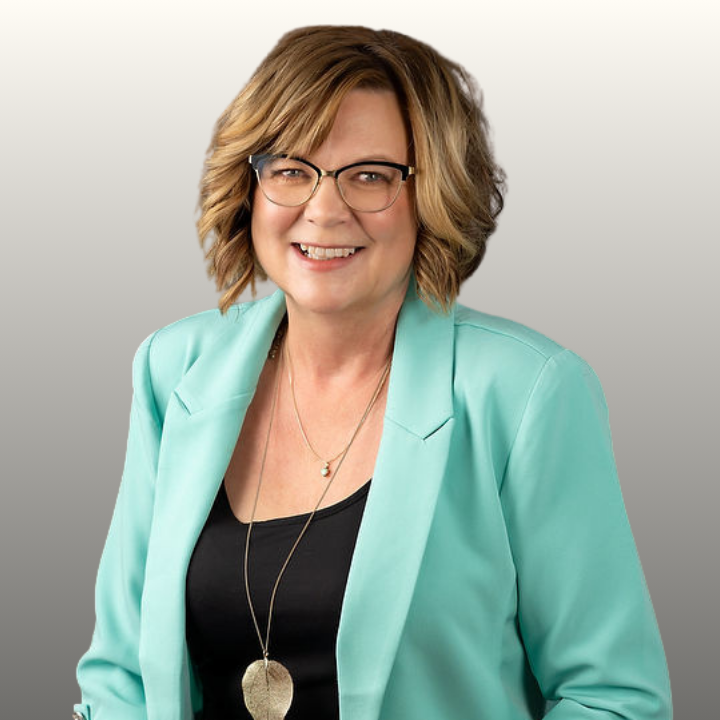
Nancy Dewald is Senior Director of Client Solutions at Cleinman Performance Partners, a consultancy that helps optometry practices grow through strategy, training, and performance improvement. With decades of experience, she supports independent practices across operations, coaching, and consulting. Nancy specializes in leadership development and created Cleinman’s Lead by Design program, equipping managers to communicate clearly, coach effectively, and build accountable, high-performing teams.



Here’s a glimpse of what you’ll learn:
- [01:40] Nancy Dewald introduces the Lead by Design program and the leadership gap in optical practices
- [04:03] What managers are missing when stepping into leadership roles
- [06:50] Nancy shares participant feedback, including feeling supported, less isolated, and more confident applying tools
- [09:53] How Nancy builds interactive learning through small groups, accountability partners, and real-time application
- [11:22] Nancy’s structured approach to handling difficult conversations and making them more effective
In this episode…
Leadership ability doesn’t automatically come with a promotion; it requires structure, support, and the right tools to help talented team members grow into their roles with confidence. How can practices take a more intentional, structured approach to developing their leaders?
With decades of experience in consulting, operations, and training, Nancy Dewald believes that leadership development starts by giving people the support they need before expecting them to succeed in a new role. She compares it to promoting a great flight attendant to co-pilot — the potential may be there, but training and resources are what keep the plane steady. When leaders are equipped with clear expectations, coaching skills, and practical tools, they feel less alone and more prepared to guide their teams well.
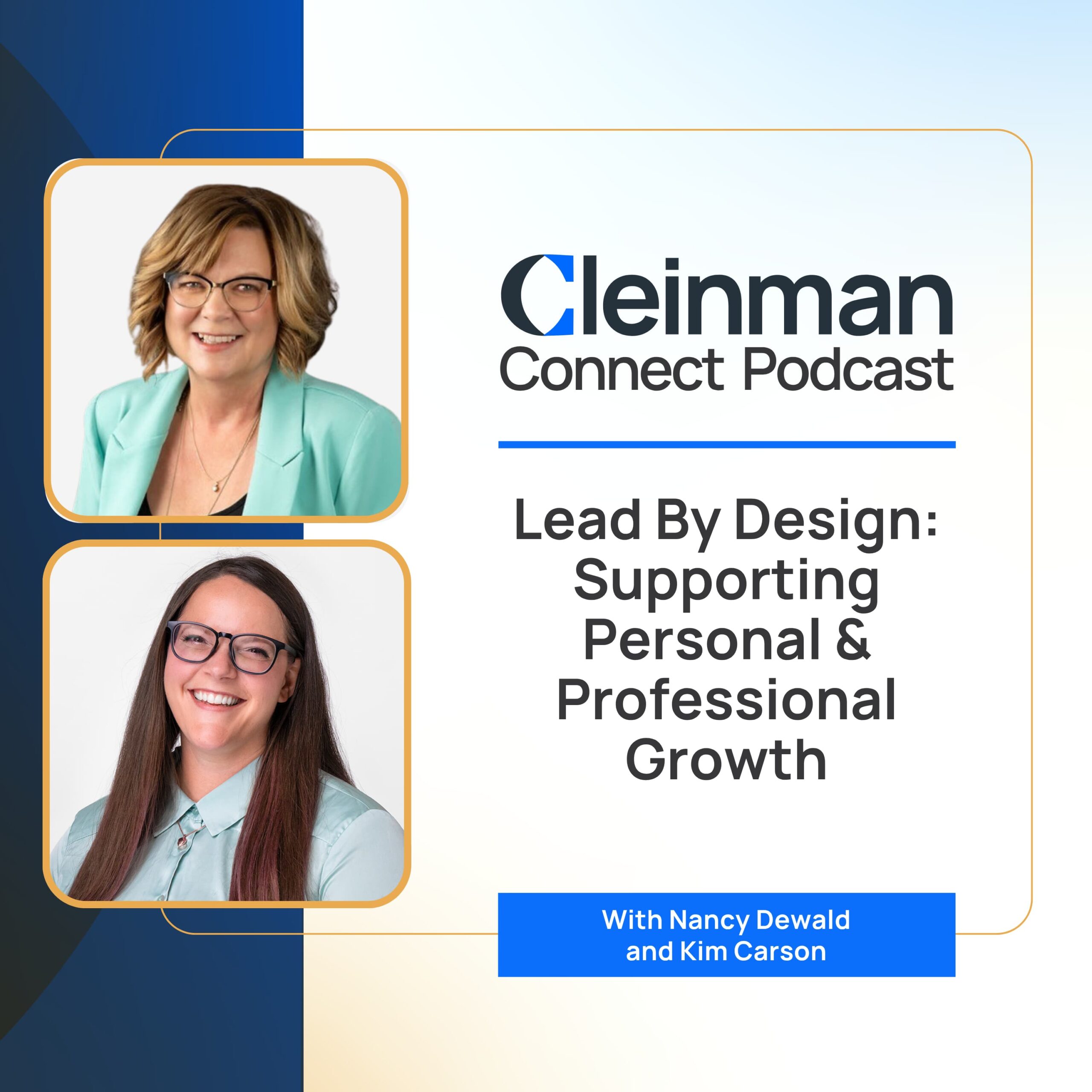
In this episode of the Cleinman Connect Podcast, Kim Carson is joined by Nancy Dewald, Senior Director of Client Solutions at Cleinman Performance Partners, to discuss the Lead by Design program and how it supports personal and professional growth. Nancy shares her perspective on leadership training, feedback and coaching, building trust and accountability, and also offers advice on handling difficult conversations.
Resources mentioned in this episode:
- Kevin Wilhelm on LinkedIn
- Cleinman
- Nancy Dewald on LinkedIn
- Lead by Design
- The Five Dysfunctions of a Team: A Leadership Fable by Patrick M. Lencioni
Quotable Moments:
- “We have so many great people, talented people, ambitious people.”
- “The first step is we have to set clear expectations with our team.”
- “Trust is the foundation of any good team.”
- “Every team actually has to have conflict, and we have to be okay with conflict.”
- “It’s really important to focus on team results.”
Action Steps:
- Set clear expectations with your team: Defining what success looks like gives leaders and employees a shared foundation for accountability, feedback, and growth.
- Practice coaching and feedback regularly: Learning how to guide employees with clarity helps reduce frustration and creates more confident, capable teams.
- Build trust before pushing for results: Vulnerability-based trust makes it easier for teams to navigate conflict, commit to decisions, and hold each other accountable.
- Create space for difficult conversations: Having the right tools and structure makes challenging discussions less intimidating and more productive.
- Support leaders with practical resources: Templates, scripts, assessments, and peer support help managers apply what they learn instead of relying on trial and error.
Sponsor for this episode…
This episode is brought to you by Marketing4ECPs!
Working with them is like hiring a full-time marketing professional who knows the industry and understands your goals. Except, instead of one experienced marketer, you get a whole team in your corner.
Whether you’re an optometrist, ophthalmologist, or optician, they can help you grow your business with a plan that’s completely customized for you. Learn more here.
Powered by Rise25 Podcast Production Company
Episode Transcript
Intro: 00:07
Welcome to the Cleinman Connect Podcast, where we discuss marketing, ownership, growth strategies, and everything else surrounding the business of optometry. Cleinman is Optometry’s trusted business partner for over 35 years. Hi, I’m Kim Carson hosting Nancy Dewald on this episode of the Cleinman Connect Podcast. So excited to have you here today, Nancy. Thank you.
Kim Carson: 00:35
I’m excited to be here.
Kim Carson: 00:36
Yay! Well, usually I would start off with a bio about our guest, but Nancy, you’re such a good speaker. I feel like no one can speak to who you are better than you can. So could you please tell our listeners a bit about yourself?
Nancy Dewald: 00:50
Okay, so my name is Nancy, as you heard. I’m one of the consultants with Cleinman. I have been in the optical industry in space for a lot of years. We’re not going to attach a number to that because that would be embarrassing at this point in a lot of different roles, whether it be in training, consulting, performance management, even running operations. And so I’ve been with Cleinman since last July, which has been very exciting.
So many new things and a lot of great things planned. And I’m excited to be here.
Kim Carson: 01:18
Yay! Well, yes, thank you for joining us on the podcast and at Cleinman, I appreciate it. So what we are here to talk about today is this big, shiny new product program. We have Lead by Design, right? Why Lead by Design?
What was the kind of onus behind it?
Nancy Dewald: 01:40
Well, so Lead by Design came about as I look at the optical space, and I’ve seen this for a lot of years that I’ve been working in optical. We have so many great people, talented people, ambitious people. And often what happens is we move them from one role that might be technical and optical, and we put them into a leadership or a manager role without really giving them the proper support that they need. They don’t really have other support in-house. And I like to compare it to, you know, if you had a flight attendant, you ran an airline and you had a flight attendant.
They were so good. They never had complaints. They were always on time. They kept everybody motivated. Would you make them the co-pilot?
Kim Carson: 02:22
Maybe not.
Nancy Dewald: 02:23
Maybe not. Not that they couldn’t be the co-pilot, but we’d probably have to support them with some training and resources to make sure that they’re successful and wouldn’t crash the plane. So that’s what I see happening in our businesses, is we might take that stellar optician, or we hire somebody from outside of our industry, and our industry is so complex, and we make them a leader or manager, and they kind of have to learn trial and error, which is not really the greatest way to learn everything about leadership, especially when you need to galvanize and get the team rallied and accomplish things. It’s really hard to do so in my journey of training and consulting. One of the things I realized that jazzes me and I’m really passionate about is helping others succeed, and I’m really passionate about leadership development. So I was really grateful when I said to the group, hey, what about if we pulled together a leadership development program to support those managers, those upcoming managers, maybe the associate odds and even the odds with managing their people because they have so many competing priorities.
If we can help them with that and make it easier and reduce the stress which so many of them have with this part of the business. So I was so grateful that Cleinman was open to letting me run with this program.
Kim Carson: 03:37
Yeah. Amazing. Well, you know, I know that it is six sessions over eight ish months. You’ve scheduled it out to be not in peak months for the practices so that we’re not pulling away their current leaders, their future leaders for this training. But, you know, without giving me or giving the audience all of the details of it.
What are some of the things that you cover?
Nancy Dewald: 04:03
So we start with setting clear expectations. Anybody who’s taken any kind of accountability training knows that. The first step is we have to set clear expectations with our team. So we walk through how do we do that? What does it look like and the importance of it.
And then we go into how do you provide feedback? You know, I was working with a group of managers and some of them have been managers for 20 years and had never been taught how to provide feedback or coach an employee. Imagine how frustrating that is for both the employee and for them. So we talk about providing feedback and coaching. We talk about empathy because what we know is a lot of the top organizations are really good with empathy, and it actually links to productivity.
We’re going to move into employee engagement and making sure that when once we attract that top talent, what are some of the things we have to do to retain them? And then if we actually turn over happens, that’s reality these days. So as we have turnover, how do we onboard people so that they stay? How do we provide put in a performance management program so that they stay. And then we’re going to lean into how do you have a difficult conversation?
Because most of us lean out and away from that and it’s actually not as scary. So when you have the right tools and resources and you’ve been taught how to do it, pretty easy to lean into those conversations, and then we’re going to finish it off with one of my very favorite programs, based off the book by Patrick Lencioni, called The Five Dysfunctions of a Team. So it’s a program that I got certified in, and I just think it’s really key to build a cohesive team and move forward and get results.
Kim Carson: 05:38
What are some of those behaviors?
Nancy Dewald: 05:41
Good question. The first one is trust. You know, trust is the foundation of any good team. We need to have trust and, and not just any kind of trust, but we need to have vulnerability based trust. And then every team actually has to have conflict and we have to be okay with conflict.
So we learn what’s healthy conflict and what’s unhealthy conflict, and how do we maneuver our way through conflict. And then we talk about commitment. You know, once we agree on things, we get a commitment from our team and we move forward as a team. And then accountability, which is sometimes everybody’s favorite word, but it’s about peer to peer accountability. If we’ve committed to something and we’ve got to hold each other accountable for that, it doesn’t just fall on the manager. And then, of course, at the end of the day, this isn’t a hobby. It’s actually a business. And we talk about how do we get results.
It’s really important to focus on team results. We can still call out key contributors to those results, but we need to be focused on team results and move forward with that.
Kim Carson: 06:37
Yeah, so we did launch a couple of sessions of Lead by Design already. What has some of the feedback been so far on the program?
Nancy Dewald: 06:50
You know, it’s really been great feedback so far. Some of the key things is, you know what? They’re in a group with other managers who are having the same kind of experience. And sometimes that in itself is powerful to know that, you know what? I’m not alone on an island that goes a long way.
Also giving them the tools and resources so they feel more empowered and enabled to go back and do things properly. And to hear, yeah, that’s okay. That’s the right thing to do. And, and I built in a couple other interesting things to the program. And I kind of was testing them, but I like how they’re working out.
So after each session, I book a follow up session. It’s completely optional whether you want to attend the session or not, but you come to the session, we’re going to talk about your wins. We’re going to talk about your challenges. We’re going to review the content and see how you’re doing with applying the content. The other thing I did was I had each of them pick an accountability partner.
So once they come through the program, they go back and they review the content with this accountability partner. It helps to retain the content and chances and likelihood that they’ll apply the content greatly increases. We also have been introduced a pre-assessment and a post assessment. I think with anything we do, it’s really important to measure are we is this helping? Are we being successful?
So everybody will take a pre-assessment on the different topics and behaviours, and then they’ll take a post assessment at the end. Some of the feedback that I’ve got is they just feel not so alone. They feel like they have a plan and they feel supported. So that’s that’s rewarding.
Kim Carson: 08:24
Nice. Do you use the pre and post assessments as almost a measure of success? Like how does someone, I guess, graduate, for lack of a better term from this program?
Nancy Dewald: 08:37
It will be a level of success. But more importantly, I think sometimes we accomplish things. But we’re in such a busy environment and there’s so many competing priorities that we forget how far we’ve come. You know, I see that a lot in my consulting. You know, a doctor might not feel great about their results.
And I’ll be like, whoa, let’s let’s rewind this and see where we we started because sometimes we’re so busy and we forget. So I want to be able to really reinforce for them how far they’ve come, like where they were in their coaching skill and competency versus where they ended up. There’s a lot of practical application in the program as well. So we’ll practice the coaching templates, but then they have to go and apply them right away, which is really important for adult learning that we can apply the things we’re learning as we’re learning them and then in, in our real life scenarios.
Kim Carson: 09:28
Yeah. Can you tell me, I think in the creation of this program, you wanted to put an emphasis, like in everything that we created and everything we say about it, you wanted to put an emphasis on live interactive. Is that another route that you are taking to ensure that learning is like actually like stuck in there for, for everyone taking it.
Nancy Dewald: 09:53
It is. So some of the criteria to we’re going to keep the group sizes really small. Got to have your camera on. And with small group sizes, I know I can see you. It’s not TV. I know if you’re participating or not.
I know if we have a handbook, you take notes because we have to engage and we have to practice and we have to be vulnerable to learn. You know, sometimes we got to put ourselves outside of that comfort zone, but it will pay off. So yeah, by design.
We’re keeping the group sizes small. I’m keeping notes and knowing, okay, what do certain people need when and making sure that everybody gets a turn to practice and to apply the learning. It’s very important for adult learning that we apply the concepts.
Kim Carson: 10:39
You mentioned that one of the topics covered is difficult conversations. I think that something that is that’s personal to me. I avoid them like the plague. I am more open to them now because, you know, I’ve learned in my experience that when you avoid a difficult conversation, you’re making a concession for somebody else. Someone is uncomfortable when you don’t have the difficult conversation and it’s generally you.
So I’m getting more comfortable with them. But, you know, I think that it’s kind of a universal maybe fear or like there’s a hesitation there. Do you want to tell a bit about how you cover that topic?
Kim Carson: 11:21
Sure.
Nancy Dewald: 11:22
Yeah. And I haven’t met many people who are like.
Kim Carson: 11:24
I love difficult conversations. I love conflict favorite.
Nancy Dewald: 11:29
There are a few people and I’m like, okay.
Kim Carson: 11:32
Yeah.
Nancy Dewald: 11:32
Maybe you’re not in the right role, but.
Kim Carson: 11:33
Different folks. Yeah. Yeah, exactly.
Nancy Dewald: 11:35
So I will admit, I kind of modeled the template that I put together after a program called Fierce Conversations. So I’ve done a lot of work with that program in the past and it’s really brilliant. So it really is a template that you follow. It’s in a specific order that makes the conversation very successful. So it’s about setting clear expectations up front about how the conversation is going to go, going through the different steps and really helping the person you’re having the conversation with really communicating very clearly what’s at risk.
You know what the problem is, your desire to resolve the problem and then collaborating on a solution. It has been very successful in the past, and you can use it in your work life. You can use it in your personal life, but it’s really a powerful tool. And for a lot of the things that I build, I will give them templates and I will give them scripts because to tell somebody, hey, here’s how you do it. It’ll sound good, but they’ll go back and try it or not try it because they don’t know where to start.
Whenever I do any kind of program content, my goal is I want them to walk away and know exactly the first thing that they need to do and have the tools and resources to do it.
Kim Carson: 12:49
Yeah. We opened a couple more sessions for Lead by Design. We did by popular demand.
Kim Carson: 12:58
When are those sessions going to run?
Nancy Dewald: 13:00
So we’re going to launch the next one at the end of May.
Kim Carson: 13:03
Yeah.
Nancy Dewald: 13:04
Which I’m excited about. And then actually I also have had a request to do a doctor’s only one. So I think I might streamline it a little bit pared down because I know that their, their time is very valuable. So I’m excited about putting that content together and launching that.
Kim Carson: 13:20
Yeah. Amazing. So I think we discussed maybe May 15th. Registration is going to close.
Nancy Dewald: 13:27
Yes.
Kim Carson: 13:28
You got to get in.
Nancy Dewald: 13:29
Yeah. Yeah.
Kim Carson: 13:30
Limited seats.
Nancy Dewald: 13:31
Yeah. We have to keep the group sizes small. As much as it’s hard for me to say no, we we will launch more in the future. I know there’ll be a demand, but it’s really important that we keep the group sizes small so that everybody participates and everybody gets the value out of it that they need.
Kim Carson: 13:48
Okay. Where can people find out more?
Nancy Dewald: 13:51
Well, you can go to our website.
Kim Carson: 13:53
Yeah. cleinman.com.
Nancy Dewald: 13:56
Yeah. You can reach out to me directly. You can reach out to Kim directly. But anybody on the Cleinman team can help you to get registered.
Kim Carson: 14:06
Amazing. Well, thank you for listening today. That is our episode. If you would like to hear more, you always can also at cleinman.com. And thank you.
Outro: 14:10
Thank you for listening. At Cleinman, we take pride in helping our partners unlock their full potential. Subscribe to get the newest episodes or visit us anytime at cleinman.com.