
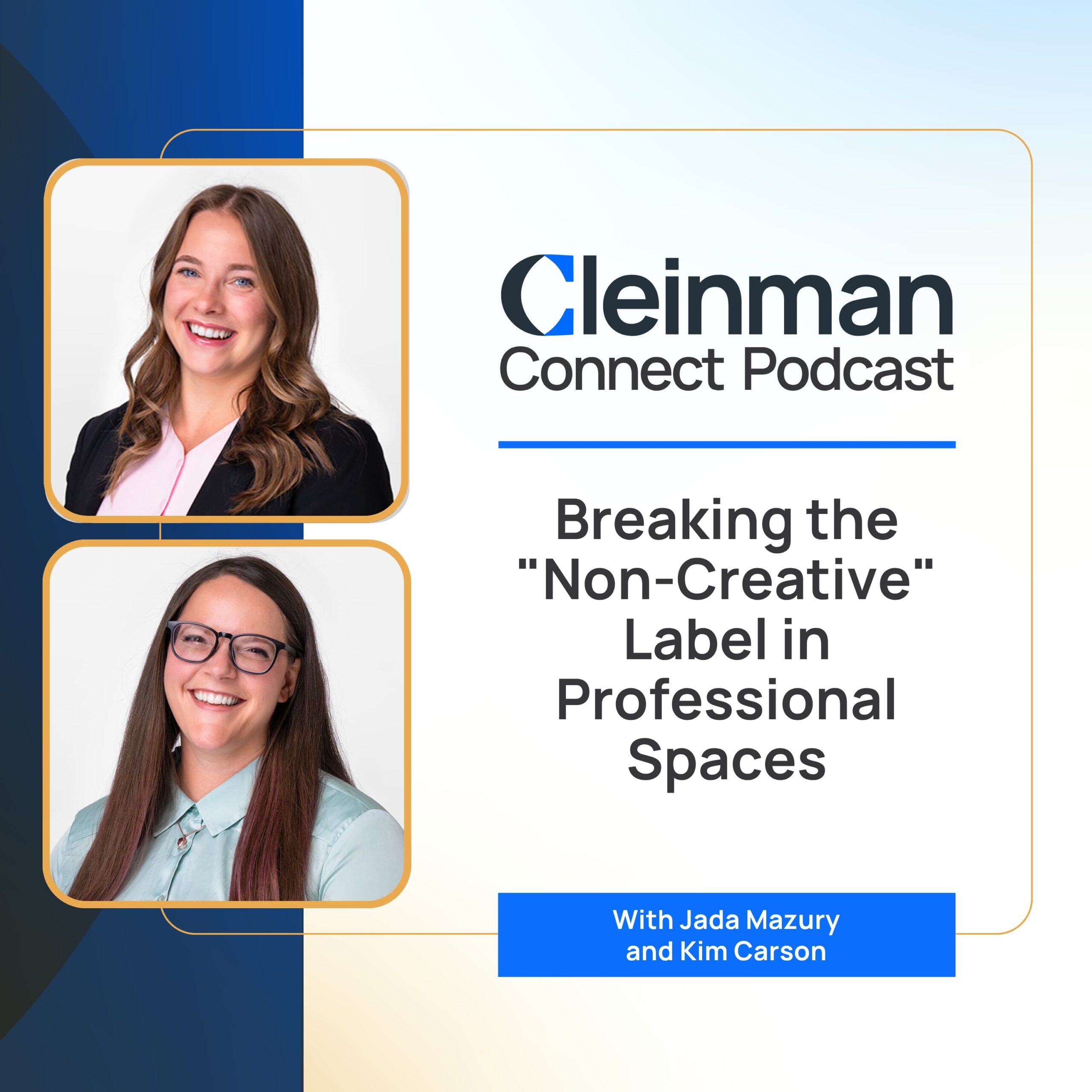

Jada Mazury is an Account Manager at Marketing4ECPs and SmileShop Dental Marketing. With an MBA from San José State University and a background as a Division I gymnast, she brings a unique perspective to teamwork, creative problem-solving, and client relationship management. Jada helps make marketing feel more approachable for healthcare professionals by showing how creativity, collaboration, and authenticity can support meaningful business growth.



Here’s a glimpse of what you’ll learn:
- [03:24] The power of early goal-setting and manifestation
- [04:40] How gymnastics shaped Jada Mazury’s teamwork and leadership skills
- [10:12] Strategies to stop labeling yourself as “not creative”
- [13:49] Jada gives tips for overcoming social media shyness as a healthcare professional
- [16:22] Tailoring social media content to match your authentic brand voice
- [17:53] Creating posts that offer true value and resonate with your audience
In this episode…
Creativity often gets treated like a talent you either have or you do not, especially in professional spaces where routines, tasks, and expectations can feel tightly defined. How much creative potential gets lost when people decide they are simply not creative?
Drawing from her work helping healthcare professionals navigate marketing and social media, Jada Mazury believes the first step is to stop assuming creativity has to look the same for everyone. She explains that creativity often shows up when people find what energizes them, whether that is talking ideas through with a group, listening to music, moving their body, or simply giving themselves room to try something different. Her perspective is a reminder that creativity is less about being the most imaginative person in the room and more about building the confidence to let ideas surface before they feel completely polished.
In this episode of the Cleinman Connect Podcast, Kim Carson is joined by Jada Mazury, Account Manager at Marketing4ECPs and SmileShop Dental Marketing, to discuss breaking the “non-creative” label in professional spaces. Jada offers her perspective on creativity in teams, finding energy that sparks ideas, and building social media content confidence. She also shares advice on creating authentic content that fits your brand.
Resources mentioned in this episode:
- Kevin Wilhelm on LinkedIn
- Marketing4ECPs
- Cleinman Performance Partners
- SmileShop Dental Marketing
- POD Marketing
- Jada Mazury on LinkedIn
- “[Optometrist Unleashed] The AI Evolution in Eye Care: From Scribe to Strategy” with Dr. Eric Jennings on the Cleinman Connect Podcast
- “[Optometrist Unleashed] Myopia Management and Going Beyond the Blur” with Dr. Marie Bodack on the Cleinman Connect Podcast
- “[Optometrist Unleashed] Healing the Ocular Surface” with Dr. Julian Prosia on the Cleinman Connect Podcast
Quotable Moments:
- “You can do whatever you set your mind to, honestly.”
- “It teaches you to kind of figure out ways to make yourself stand out from everyone else.”
- “Everyone has different types of creativity; that does not mean that you are not creative.”
- “When you feel energized, you probably will feel more creative.”
- “Find your authentic voice. Find your authentic self and follow that.”
Action Steps:
- Stop labeling yourself as non-creative: Letting go of the “non-creative” label creates space to experiment, contribute ideas, and recognize that creativity looks different for everyone.
- Find what energizes your creativity: Identifying the settings, activities, or people that spark your energy can help you access more natural and authentic creative thinking.
- Share ideas before they feel perfect: Writing ideas down or saying them out loud helps clear mental blocks and builds confidence through practice.
- Use collaboration to spark new ideas: Bouncing thoughts off others can open up fresh perspectives and help teams build stronger creative solutions together.
- Create social media content that fits your brand voice: Staying authentic to your practice’s voice makes content feel more genuine, useful, and engaging for patients.
Sponsor for this episode…
This episode is brought to you by Marketing4ECPs!
Working with them is like hiring a full-time marketing professional who knows the industry and understands your goals. Except, instead of one experienced marketer, you get a whole team in your corner.
Whether you’re an optometrist, ophthalmologist, or optician, they can help you grow your business with a plan that’s completely customized for you. Learn more here.
Powered by Rise25 Podcast Production Company
Episode Transcript
Intro: 00:07
Welcome to the Cleinman Connect Podcast, where we discuss marketing, ownership, growth strategies, and everything else surrounding the business of optometry. Cleinman is Optometry’s trusted business partner for over 35 years.
Kim Carson: 00:28
Hello, I’m Kim Carson, hosting Jada Mazury, an Account Manager at Marketing4ECPs and SmileShop Dental Marketing on this episode of the Cleinman Connect Podcast. Get all of the past episodes at cleinman.com, including our monthly special episode of Optometrist Unleashed with Dr. Trevor Miranda.
This episode is brought to you by Marketing4ECPs. Working with them is like hiring a full time marketing professional who knows the industry and understands your goals. Except instead of one experienced marketer, you get a whole team in your corner. Whether you’re an optometrist or ophthalmologist or optician, they can help you grow your business with a plan that is completely customized for you. Learn more at Marketing4ECPs.com. So Marketing4ECPs.com.
I am joined today by Jada Mazury and your accolades, Jada, are wild. I knew that you were a D1 gymnast, which is, you know, on its own. Incredible. But you’re totally googleable, which is such a feat. She holds an MBA from San Jose State and is an accomplished gymnast, earning a nomination for the NCAA woman of the year. Crazy. Welcome to the podcast.
Jada Mazury: 01:38
Thank you. I am so excited to be here. So yes, having me.
Kim Carson: 01:42
Oh my gosh. Of course. Thank you so much. I honestly, when I was reading through all of you know, what the internet could tell me about you, I was like, we’ve worked together for eight months now ish. You got to lead with that.
I was so I was like, oh my gosh. Like.
Jada Mazury: 01:59
It feels like it feels like a past life, you know? Sometimes I forget. I forget about it. But yeah, it’s it was a great experience. So very lucky.
Kim Carson: 02:08
Oh my gosh. Amazing. I want to know, like, how did you get to like such high levels of competition? Like what was it like going through, you know, kind of all of the steps to become this D1 gymnast?
Jada Mazury: 02:23
Yeah, it was a lot of work. I started when I was really young, so I started gymnastics when I was three, and I stuck with it throughout my whole life. But being from Canada, getting recruited is a lot more challenging. So I actually had to take it on myself. I did outreach to every single division one coach in the book, and there’s like 80 division one schools.
I was cold emailing them. I was doing cold outreach, sending my gymnastics resume, like doing everything in my power to get recruited. And I ultimately ended up getting recruited by a few places and San Jose State felt like home. So that is where I ended up. I never wanted to go to the Olympics.
I wrote it in my sixth grade graduation book. I want to do college gymnastics in California, and I ended up doing that, and I could not be more grateful for that whole opportunity.
Kim Carson: 03:14
So wow. Oh my gosh. I mean, are you like an early adopter of manifestation? Like who’s to say? I was just going to say manifestation.
Jada Mazury: 03:24
Is real manifestation since the sixth grade. So yeah, it’s you can, you can do whatever you set your mind to honestly. And it if you try, you can get there.
Kim Carson: 03:35
Yeah. I want to ask too, because, you know, I am not familiar with all of the many things that fall under gymnastics. Like there’s so many different routes that you can go. Did you have like a specialty? If that’s a silly question.
Jada Mazury: 03:50
That’s a completely fair question. I did artistic gymnastics. So the vault, the floor, the bars, the beam. So basically what you see at the Olympics in gymnastics, And I would say my specialty was probably the floor. That’s the one where you dance around in the big circle and you do all the flips.
That was my favorite because you get to have music and then you get to dance around, you get to do your flips, and it’s just fun. So that was my best one.
Kim Carson: 04:17
Oh my gosh. You know, when I think of you, I think of this very creative, very social person. But you’re saying that you, you know, did kind of an individual sport. How do you find that those go hand in hand or that maybe the individuality of your gymnastics career has helped you now?
Jada Mazury: 04:40
Yeah, I growing up in club, club gymnastics, it’s very individualized. You are not on a team. You are out there by yourself, for yourself. So it teaches you to be confident in what you’re doing. It teaches you to kind of figure out ways to make yourself stand out from everyone else, because you are all doing pretty much the same thing.
You need to have some sort of flair. up. But then we get to college. You’re on a team and it totally changes the environment. You’re with a bunch of teammates, same age, you’re working together to achieve a shared goal, and it’s not as much about individual accolades as it is about team accolades.
Like, if I were to win an event in college, it doesn’t even matter if my team wins. The overall event is what matters. So the shift was was very different there and I loved the team aspect more. Shifting to the team mindset. That is where I learned to be a team player.
I grew up in the whole individual side of things as we just talked about. But once I learned how to be on a team, I learned how to collaborate with different personalities. I learned how to help people when they’re down or help people when they’re facing adversity. I learned how to be a leader. I learned how to speak up for my peers.
So all of those skills, they’re soft skills, but they’ve all transferred into my job here at Marketing4ECPs and SmileShop Dental Marketing because when you’re working as an account manager, you work with so many other departments. For example, we’re working with marketing scientists. We are working with people doing search engine optimization or brand engagement to try and put together the best products and the best success for our clients. So you have to know how to communicate with different personalities. You have to know how to communicate effectively with different styles.
You have to know, you know, when do you have to push a little bit? When do you have to give a little bit? And you have to know when you need to take a lead or when you need to take a step back. So it’s there’s a lot of parallels that run from being on a sports team to being in a workplace team. And I think learning those things in university on an athletics team has really allowed me to flourish on a team here.
Kim Carson: 06:50
For sure. And I mean, this might just be more of a personal question for me that I want to know, but when you were about to compete, like what is going through your mind? Like you’re, you’re maybe standing still in the mat. You’re waiting for your music to start. What’s going through your head?
Jada Mazury: 07:07
Yeah, I personally, I loved competing, so I didn’t ever feel super anxious, super nervous. I did my best when I was kind of in a Zen chill flow state. I was dancing around to the music, but what would go through my head before was just, I’ve been here before. I’ve done this literally a million times, and I just need to go out and have fun and do it for my team was my main driver and then me and my coach. This is like a little fun side story, but me and my coach, every time I would go up to compete, like before I would start, we would always start with, what are three things I’m grateful for today?
I would say them to her and then I’d go up and it just grounds you a little bit and you get out there and do your thing. The practice of gratitude is a whole different side.
Jada Mazury: 07:52
Topic, but that was something that really helped me out as well.
Kim Carson: 07:55
Oh that’s amazing. You’re manifesting in grade six. You’re grounding with gratitude in university, like doing all the things.
So switching gears just a little bit, I did, you know, mention that when I think of you, I think of a social creative person, you know, where would you say that your creativity kind of sparks from? Like, you know, some people, I think about people who need to be surrounded by like stuff that they really like. And they’re like, it makes me feel more creative when I am in a certain place in my house, or when I am holding a certain instrument, like a paintbrush or something like, do you have a place that your creativity like thrives the most?
Jada Mazury: 08:39
Yeah, honestly. I would say my creativity thrives the most in a group setting. Like I find my specific team at Marketing4ECPs and SmileShop Dental Marketing is a lot of creative people. So when I’m in a space in a room, even when I’m in a room with you, Kim, when you’re able to bounce ideas off each other is when my creativity thrives because we can be talking back and forth and it sparks so many new ideas. That’s where it stems from for me.
I’ve always been naturally a creative person. Like I went to art school when I was younger, and we did so many creative activities and grew the creative piece of the brain. But it’s really that people, engagement and being surrounded by people is what kind of energizes me and energizes my creative muscle.
Kim Carson: 09:26
Totally fair. I like to call that being a riffer.
Jada Mazury: 09:29
Yeah.
Kim Carson: 09:30
I like to riff off of people. I absolutely talk things out. You know, I, I, what’s the saying? There’s like, you talk to think or you think to talk. I definitely talk to think.
Jada Mazury: 09:41
Me too. 100%.
Kim Carson: 09:42
So honestly, amazing quality.
Jada Mazury: 09:46
Don’t mind if I say myself. It’s an amazing quality. Yeah.
Kim Carson: 09:52
So, you know, we do have some people that I’m sure that, you know, in your life that self-identify as not creative and they, you know, pass everything creative off to somebody else, perhaps limiting what they could be capable of. Do you have any advice for maybe people who think of themselves like that on how they could work on being more creative?
Jada Mazury: 10:12
Absolutely. To start, I think feeling not creative is completely valid sometimes. I’m sure you feel it. I feel it when you’re in a room with someone who you just know is so creative and has all these amazing ideas. You might feel a little shy internally or that you are not as creative as them, which is okay.
Everyone has different types of creativity. That does not mean that you are not creative. So I think the first step in that is just getting out of the headspace that you can’t do it, that you’re not able to do it, that you’re not creative. And then secondly, to try and kind of find that passion, find that creativity, figure out what energizes you in a sense, or what makes you feel good, or if it’s listening to music, if it’s writing things down, if it is playing a specific instrument, if it’s some sort of fitness, like figure out what energizes you. Like, for example, for us, I think being around people is energizing and that helps our creativity flow.
I find that energy and creativity go together. When you feel energized, you probably will feel more creative. So stop labeling yourself as non-creative. Everyone is different. Everyone’s creativity is different.
It does not look the same for two people. And then find that space where you feel energized and three. Just don’t be afraid to let your ideas fly. Like write it down. Maybe you look back on it and it’s not the best idea you had, but at least you tried to open your brain.
Get out of the box a little bit, which is hard. I know we this work specifically in optometry. Like, you know, there’s, there’s boxes and there’s tasks day to day and there’s things to do and, and there’s analytical thinking, but give yourself the room and the space to step outside of that box for a second and try and maybe dig deep and find something different.
Kim Carson: 12:05
I’ll add to that. I think there was an interview with Ed Sheeran. I don’t know who was interviewing him, but he, you know, pretty prolific songwriter Ed Sheeran. And he said he thinks about songwriting, like turning on the tap in an old house. You have to turn it on to run the water through the pipes, and maybe there’s some gunk in those pipes after all those years.
Exactly. You have to run that water and you’re never going to get the gunk out unless you run it. So you have to just put the ideas out there. And I love what you’re saying too, about feeling energized. That’s totally how I feel about it.
Like being in a room with people. I think after concerts, I feel like, I could climb a building right now. I could do anything. I am so up here energy wise and, you know, like going to plays and stuff like that, like seeing other people be creative and love their art is also so energizing, I find. So that’s wonderful advice.
Jada Mazury: 13:08
It has so many different forms. Like you said, creativity to you and being creative on you looks so different than maybe what being creative is to me. So it’s the labels, like without the labels I think is when you can step outside the box.
Kim Carson: 13:24
Totally. I kind of want to bring it around to something that maybe our optometrist friends listening face, which is the constant pressure of social media. Do you have a few clients that feel that they aren’t creative enough for social media, or to get out in front of a camera or just, you know, maybe too shy to put their ideas on display?
Jada Mazury: 13:49
Yeah, I absolutely social media is my bread and butter a little bit. I, so I love this topic. But yes, as an optometrist, sometimes it can be really nerve wracking because social media may not be your area of expertise. It may not be something you feel comfortable with. It is changing so frequently.
It’s always evolving. It’s always adapting. All of a sudden, the world wants you to be putting these reels out there where you’re speaking to the camera, and you and your staff just might not feel comfortable doing that. What I will say is your patients want to see your face to face time. They want to know you better.
They want to hear from you. And the way to overcome that shyness a little bit. I, in my opinion, is knowing that you are the expert on the topic. So yes, you might feel nervous recording a video, for example, talking about myopia or talking about dry eye therapy, but someone watching that would never know you’re nervous and they just see you as an authority in that space. They see you and they listen to you because you have the credentials, you have the knowledge, you have the skills.
So again, it’s taking off the label that you cannot do social media, that you won’t be good at it, that people won’t like the content. And stepping outside of the box, breaking the boundary a little bit and putting yourself out there, putting yourself out there in any situation is nerve wracking. But once you do it once, I think you’ll feel a lot more confident. And there’s also ways, if you really don’t want to put your face on camera, if you really don’t want to have your staff’s faces on cameras, there are ways around it. You could do a voiceover clip, you could film the machine working, for example, and put a voiceover on top of it.
That’s you speaking, but your face doesn’t have to be in it. You’re still giving the educational content, you’re still demonstrating your expertise, but you do not necessarily have to be in it. So there’s ways you can get creative with it and ways you can get around having your face on camera. But ultimately, your patients want to see you. They care about you, they keep coming back to you for a reason.
So give them that knowledge, give them your expertise.
Kim Carson: 16:00
Yeah. For sure. I think, you know, just going off of what you said too, There’s more like there’s endless options of what you could put on social media. It could be stills, it could be carousels, it could be reels, it could be a voiceover on a still, like it doesn’t have to just be a video of you talking about one particular topic.
Jada Mazury: 16:22
Exactly. And you can tailor your social media to match your brand. So if your brand is not one practice might be making super funny reels where and have a lot of humor involved. If that is not your brand, don’t feel the need to try and be something you’re not like. Maybe your brand is your posting stills of educational content.
It doesn’t have to be video. It doesn’t have to be anything of the sort. It’s just informational educational content. Like there’s so many different ways you can create social media content that matches your brand. Don’t try to be someone else.
Find your authentic voice. Find your authentic self and follow that.
Kim Carson: 17:03
And I think too, what? Like if I’m reading between the lines or listening between the lines, depending on how someone might be watching or hearing this episode. Is that you want to give your audience something. So if it’s education, then it’s education. If it’s entertainment, then it’s entertainment.
You want to give them something though, or, you know, if you have a sale or promotion running, like you are giving them something when they come to your page. And that ultimately is one of the most important things. I mean, I would say, and I would, you know, love your take on that as well for, for just one year coming up with the social media content and you’re forcing yourself to, to try these creative routes is just making sure that you’re not posting for the sake of posting, but that there actually is value for your audience in it.
Jada Mazury: 17:53
Yes, 100%. Like anyone can post a post, but it’s not worth your time to make the content. Post the content. Write the caption if nobody’s going to read it, if it doesn’t pertain to them. Put yourself in the mind of a patient.
What would you want to see? And then while doing that, stay authentic to yourself and your practice. Of course.
Kim Carson: 18:15
Amazing. Well, I have one last question for you here, Jada. And before I ask it, I will point people to our show sponsor again, that is Marketing4ECPs, and you can find them at Marketing4ECPs.com. And my question for you is where do you feel that your creativity stems from?
Jada Mazury: 18:34
Oh, that is a good question. Oh, it’s a hard one too, because creativity is such a broad term. I think I labeled myself as not creative for quite some time, because I didn’t feel like I was creative as other people, but I would say my creativity now stems from just wanting to try new things and wanting to see how I can do something differently than it’s already been done. So my creativity kind of stems from wanting to see change, wanting to change things, wanting to change processes. And yeah, and also like, I feel I’m the most creative when I’m walking outside like, and with people.
So putting myself in those spaces is where it really stems from for me.
Kim Carson: 19:26
That’s amazing. It totally does. Yeah. Well thank you Jada. Thank you for joining me today.
And that’s our show. If you want to hear more of the podcast, you certainly can. At Cleinman.com and wherever you like to listen. Thank you.
Jada Mazury: 19:40
Thanks, Kim.
Outro: 19:45
Thank you for listening. At Cleinman, we take pride in helping our partners unlock their full potential. Subscribe to get the newest episodes or visit us anytime at Cleinman.com.