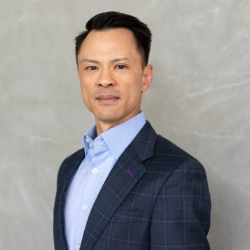
Dr. Kevin Gee is the President of Gee Eye Care, a full-service optometric practice based in Missouri City, Texas that provides comprehensive eye care to the community. Since establishing the practice in 2007, he has grown alongside the area’s expanding population while maintaining a strong focus on patient care and community involvement. Dr. Gee is a former President of the Texas Optometric Association and is known for his leadership and commitment to advancing both the clinical and business aspects of optometry.



Here’s a glimpse of what you’ll learn:
- [02:14] What sparked Dr. Kevin Gee’s lifelong passion for optometry
- [06:10] Why Gee Eye Care became the area’s go-to medical authority
- [13:06] Hands-on outreach strategies that earned community trust
- [14:51] Evaluating new technology and its potential ROI for practices
- [21:15] Dr. Gee’s practical approach to implementing new systems smoothly
- [23:26] Practice-building advice from Dr. Gee’s three unbreakable pillars
In this episode…
Success in a growing practice rarely comes from reacting to what’s in front of you. It comes from anticipating what your patients, your team, and your community will need next — sometimes before they even know it themselves. So what does it really look like to plan proactively in a world that keeps changing?
For Dr. Kevin Gee, the key lies in building a practice around intentional pillars that never waver, even as everything else evolves. Drawing from his experience as a seasoned clinician and community-focused practice owner, he explains that growth isn’t about chasing every new trend, but about reinforcing core values like efficiency, patient experience, and ethical care. Whether it’s investing in technology, adjusting hours, or embedding himself in the community, Dr. Gee’s approach centers on staying visible, accessible, and aligned with patient needs. That mindset turns change into opportunity rather than disruption.
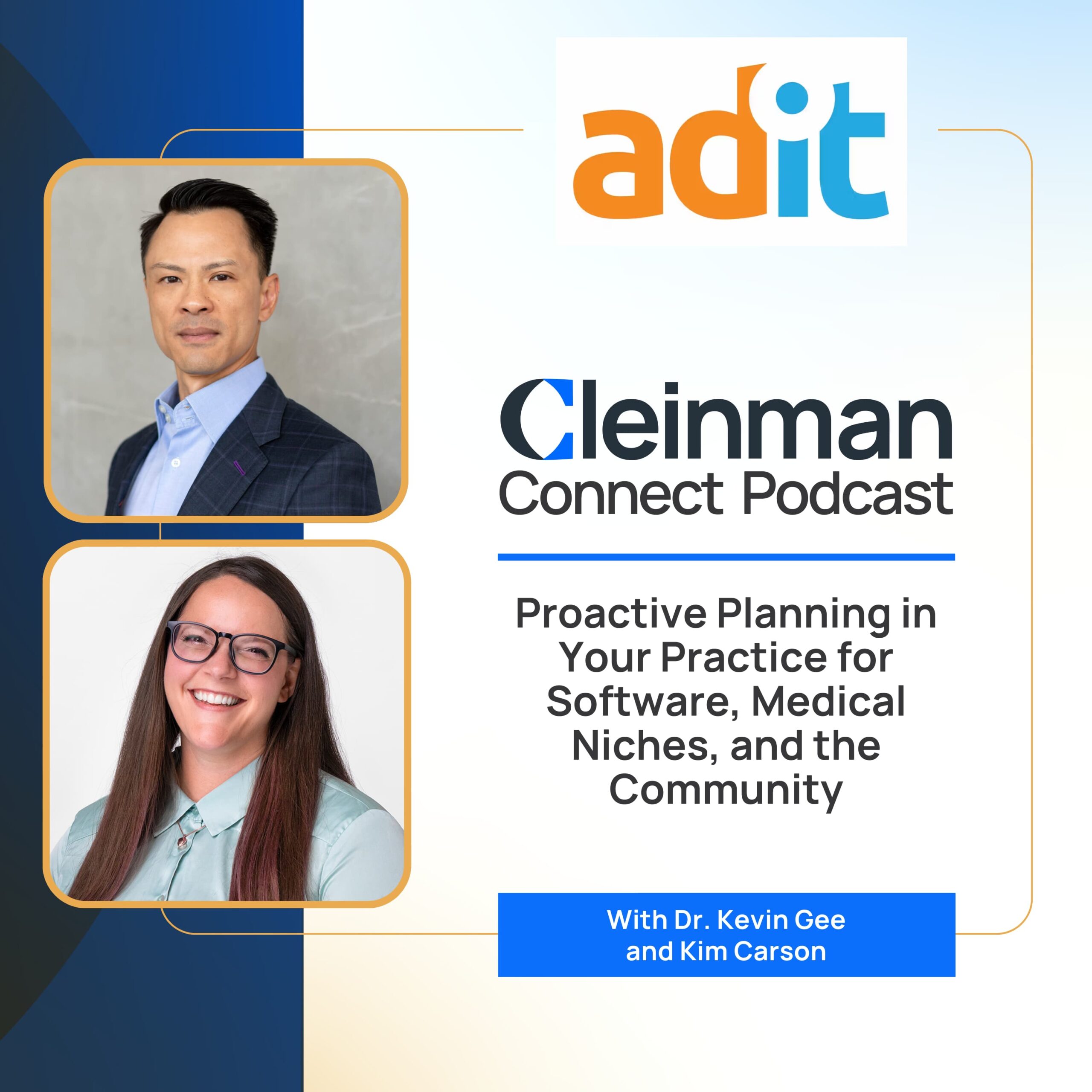
In this episode of the Cleinman Connect Podcast, Kim Carson is joined by Dr. Kevin Gee, President of Gee Eye Care, to discuss proactive planning in modern optometric practices. Dr. Gee explores building within a growing community, adapting marketing as demographics shift, and evaluating technology based on patient value. He also shares advice on reinforcing core practice pillars for long-term success.
Resources mentioned in this episode:
- Kevin Wilhelm on LinkedIn
- Marketing4ECPs: Website | Instagram
- Cleinman Performance Partners
- Adit
- Dr. Kevin Gee on LinkedIn
- Gee Eye Care
- “Marketing Dry Eye Equipment & Treatments in Your Practice With Dennis Evans Jr.” on the Cleinman Connect Podcast
- “What To Consider When Insuring Your Practice” with Andrew Davis on the Cleinman Connect Podcast
- Texas Optometric Association (TOA)
Quotable Moments:
- “I couldn’t think of a better opportunity to do so than the seat of optometry.”
- “We hit the ground running like crazy. This place, this area, needed an optometrist.”
- “I don’t ever purchase a piece of technology or equipment in an effort to pay it off.”
- “I’m always looking for that partnership and that support piece in the background when it comes to it.”
- “We provide timely and efficient care for everybody. We provide a memorable experience for anybody that walks in the door.”
Action Steps:
- Reinforce your practice’s core pillars consistently: Clearly defined values like efficiency and patient experience guide decisions and keep your team aligned.
- Invest in technology that serves current patient needs: Choosing tools based on real demand ensures meaningful impact rather than unnecessary financial pressure.
- Stay actively engaged in your local community: Building relationships outside the office strengthens trust, visibility, and long-term patient loyalty.
- Adapt your marketing as your community evolves: Shifting strategies with demographic changes helps maintain a steady and relevant patient base.
- Balance automation with personal connection: Combining convenience with human touch meets modern expectations while preserving meaningful patient relationships.
Sponsor for this episode…
This episode is brought to you by Adit. Adit is the all in one practice growth platform built for modern optometry, combining phones, texting, scheduling reviews and more with cutting edge tools like real time analytics and AI powered call intelligence to fuel smarter decisions and stronger patient engagement by bundling everything practices need into a single integrated platform, and it helps offices reduce costs, streamline operations, and win back revenue that used to slip through the cracks. Learn more at adit.com.
Powered by Rise25 Podcast Production Company
Episode Transcript
Intro: 00:07
Welcome to the Cleinman Connect Podcast, where we discuss marketing, ownership, growth strategies, and everything else surrounding the business of optometry. Cleinman is Optometry’s trusted business partner for over 35 years. Hello, I’m Kim Carson, hosting Dr. Kevin Gee of Gee Eye Care on this episode of the Cleinman Connect Podcast. Past guests of the show include Dennis Evans Jr. of Dry Eye Rescue and Andrew Davis at Beck Insurance. Those episodes are available at Cleinman.com or wherever you like to listen.
This episode is brought to you by Adit. Adit is the all in one practice growth platform built for modern optometry, combining phones, texting, scheduling reviews and more with cutting edge tools like real time analytics and AI powered call intelligence to fuel smarter decisions and stronger patient engagement by bundling everything practices need into a single integrated platform, and it helps offices reduce costs, streamline operations, and win back revenue that used to slip through the cracks. Learn more at adit.com.
I’m joined today by Dr. Kevin Gee, a Houston born optometrist who blends clinical excellence with innovation, leadership and entrepreneurship from academic medicine and hospital care to private practice and national speaking.
He’s built a career focused on advancing both patient care and the business of optometry. A former president of the Texas Optometric Association and board certified diplomat, Dr. Gee is a trusted voice in shaping the future of the profession. Outside the clinic, he’s a devoted family man and community leader, deeply invested in mentoring, educated and giving back. Thank you so much for joining our show today.
Dr. Kevin Gee: 01:52
Thanks for having me.
Kim Carson: 01:53
Yay! I want to start off, you know this me reading some of your accomplishments As always, great! I’d love to know how you accomplished all the guests on the podcast are. But Dr. Kevin, I would love to start by just asking what drew you into the world of optometry?
Dr. Kevin Gee: 02:14
Yeah, thanks again for having me. It’s a long journey. I was one of those few rare, few high school students that decided they wanted to do something and stuck to it. I think that also speaks to my determination over the years, and the things that have been ingrained in me as a child and a family that that raised me, that when I was a junior in high school, I something struck a chord with optometry. And I’d be lying to you if I told you exactly what it was.
But something struck a chord and an interest in optometry, and I was very vocal about it, to the point where I went back to my first high school reunion and they asked me, are you an eye doctor yet? From there, truthfully, just to I was amazed with the things that we could do, and continue to be amazed with the things that we can discover through the eye. But that’s really what drew me into it. And, you know, I’m a huge people person. So being able to sit down and talk to patients about not only just their eye conditions, but how those tie into physical conditions, and as we’ve been in practice here at this particular location for almost 19 years now, get to see families grow up and make that connection with folks.
I couldn’t think of a better opportunity to do so than the seat of optometry.
Kim Carson: 03:36
Yeah. In talking to as many optometrists as I’ve had the pleasure to now just people is the core of what you guys do. And I can really see that in how you speak about it. I want to know at what point, like, what year did you start at your practice, if you don’t mind telling our listeners kind of where you’re located, how many doctors are at your practice? Kind of the kind of the numbers about Gee Eye Care?
Dr. Kevin Gee: 04:07
Oh, great. Yes. So I graduated from optometry school in 2002. I practiced outside of Houston for a few years, and then returned back to Houston to establish Gee Eye Care in 2007. We’re here in the Missouri City area of Houston.
It’s a suburb of Houston. We serve a master planned community out here. I live in the community. I put a stake in the ground in 2007 when there really isn’t anything out here, and it’s it served us well to get entrenched in the community, to see the schools rise in the new schools established. At the time, we didn’t even have a high school.
Now we have two. And we had one middle school. Now we have three. It’s been a good opportunity for us to again be a part of that community. We are two doctors here, myself and Dr. Thuria Younis. Dr. Younis actually started as one of my technicians pre-COVID, went to optometry school and then ultimately came back during Covid and did her externship at the office. And things just worked, at which time we were I issued her a set of scrubs for Covid purposes and ended up saying, hey, you keep them because I think we’re going to end up using those again. We offered her a position and she’s been with us ever since. She’s been a great asset to our office.
Kim Carson: 05:29
That’s amazing. I love to keep it in the keep it in the family, so to speak. Yeah. So 2007, you said I can think of maybe a couple things that were happening economically at the time, around 2007. Did you ever have a feeling of, you know, that you were kind of keeping things running when you opened your practice and, and, you know, now in, in some of our conversations that we’ve had, I get more of a feeling that you are a designer of a business.
You’re not. You’re not living in the day to day. You’re not trying to keep up. You’re ahead of things. Did you have, like, a mindset shift anywhere and like that you could pinpoint?
Dr. Kevin Gee: 06:10
That’s an interesting statement or question. I will tell you though, we were a little bit different than that. We hit the ground running like crazy. This place, this area was it needed an optometrist. It needed a pediatrician.
It needed a dentist. Believe it or not, it’s hard to say that, right? I mean, this area was we got it. We got in right when the area started to grow and we became the authority for so many other referrals. People would come to us because there was really nowhere else to refer to.
And as we continued to build our reputation and that we were a medical facility, not just an eye care facility, that we could detect and make referrals appropriately professionally to other disciplines. We were very, very fortunate in doing that. The mindset, I don’t know necessarily that much changed. It was we hit the ground running and we were very fortunate and blessed that people continue to come to see us. We continue to build that patient base.
I think, interestingly enough, being part of a master plan community, I think one of the things would be is that you you go in to practice for this long, you actually have a good bit of necessary turnover because at least in these in these homes, there are folks that they move into these areas for schools. But when their kids graduate from school, then they become empty nesters and they end up moving out. So you end up having to kind of reform your practice again. And the marketing strategies become different. When you sit on word of mouth, that word of mouth necessarily doesn’t carry forward.
When there’s a bunch of new, new folks moving into the into the area. So I think maybe that’s a little pivotal, pivotal point for us in our practice. But besides that, I mean, we’ve been very, very fortunate.
Kim Carson: 07:58
Well, yeah. Really knowing the community that you’re in, like I do like that you said, you know, you live in, in the community as well as help them with their health. I think that that’s super important. You know, just because you get those opportunities to be like, hey, I know that this person is going to be here with their family for ten years. Once their kid graduates, they likely will move on.
But, you know, I live here. I’m still here. So anyone new that comes in, you’re going to know them. Hopefully you’re going to be your neighbors.
Dr. Kevin Gee: 08:28
Well, and it continues to grow. So and that’s the one thing that was really kind of interesting when we early on when we started, there was a grocery store that opened out here. It was a large grocery store chain grocery store. I was single at the time. I didn’t really have any need for groceries.
There were times where I would literally just walk over to the grocery store, hang out in the grocery store, and shake hands with people that I would see from the practices. The practice was growing at the time, so there was a lot of face recognition, name recognition, and folks really kind of enjoyed the fact that I was able to address them by name.
Kim Carson: 08:59
I mean, that’s there’s something here with being seen and being an optometrist and being seen by your community members. That sounds like it’s. Yeah, it’s a very intentional decision that you made to to go out and do that and yeah, continue to be part of this community. I would like to move on to asking you, was there like certain milestones that your practice reached? Like, you know, they can be dollar, they can be patient amount, they can be a number of, you know, hours put in.
But just what if you had a milestone and then what changed after you hit that mark?
Dr. Kevin Gee: 09:42
I think the biggest milestone that we hit was our 10th anniversary. We were in a previous location that served us very, very well for ten years. It we it was right around the eighth year we felt like we were going to start to outgrow that, that space. And I started kicking the tires to some other locations. And at the same time, there were some freestanding emergency rooms around here that were faltering because of the nature of freestanding emergency rooms.
And there was one that was cut just right for an eye for an eye care office. And I went and looked at it and ended up not moving on it to move to actually a facility right next to one of our major resource referral sources here at. It’s a multidisciplinary medical center that that sends us a lot of diabetics, since it’s a lot of kids, rheumatology, rheumatological patients. So we ended up just kind of tearing down some walls and sitting right next to them. And they’ve been the pillar really of our of our patient patient load.
And it’s kind of it brings comfort to patients to know that we’re right next door. They can walk next door and then that that mode of communication, even though it’s electronic, I mean, they find it, find it comforting that we’re right there next to them to send them reports over to their doctors. Otherwise, in other disciplines. I think the other thing too that changed was when we started or when I started the practice. I was going all hours of the day.
I was looked at crazy. I literally was I was doing patients until eight, 9:00 at night. I didn’t have really a whole lot to do when I got home, so I just kind of grind it out in the in the office. And the thing that changed for me was when my family grew and I decided I was going to take a step back and work kind of real kind of traditional hours, but it’s actually kind of interesting. We stay open two nights a week until 7:00 pm.
And again, I think we all can say that the world changed, too. Folks aren’t offering up as much anymore, whereas those later hours were more reserved for folks that were in offices and we’d catch them on their way home. Whereas folks now that work from home are able to take those breaks and then shoot back out and see us during the day. So the demand really isn’t there. That’s a big pivotal part for us, was just kind of a family change and then kind of how the how the workforce has changed and has dictated our hours accordingly.
Kim Carson: 12:21
I want to kind of extrapolate something that you said. So you have this great location that is a partnership with, you know, the people that you share the space with or, you know, share maybe half a wall with some of a wall with. So you physically are, are there for, for your patients and those referrals and having later hours a couple times a week, you know, you have the availability for your patients. Are there other ways that Gee Eye Care has made itself more available to its patients? Like is there are there technologies are there.
You know, outreach people like, do you go to events like how else do you make sure that this community knows that you support them?
Dr. Kevin Gee: 13:06
The biggest thing well, early on, one of the things that really worked for us is we were in the schools doing school screenings, offering to do free school school screenings. You know, we provide folks a direction. Yes, this kid needs to get their eyes formally checked. It doesn’t necessarily have to be with us. So it was twofold.
Number one, they got the information. Number two, they saw us as gracious and that we were trying to drive business necessarily our way. We just told them to, you know, go check with somebody. But the biggest thing literally for us, and it’s that’s part of the reason why I love being a part of this community and living in this community is that people reach out on a regular basis. When you talk about technology, to have something like a communication platform that allows me instant notifications that somebody needs help.
It doesn’t necessarily mean I’m going to have to go in and see them. But a notification that somebody is in need or has a question about a busted or ruptured blood vessel, which for the most part not always, but for the most part can be fairly benign. But they want that peace of mind that they’ve reached out to somebody and somebody that can respond back to them. And if needed, I can come in and see them because I’m only about ten minutes from the office. It’s that’s the biggest thing for me is that touchpoint to know that you actually can get Ahold of your doctor at any time of the day.
Kim Carson: 14:26
And what are some of the you know, we can we can use it as the case study. We can if you want to name drop other things that you have in your practice that have been extremely successful, but in the categories that matter most, which you know generally are people, patient experience systems. How do you evaluate what you invest in and what you put into your practice?
Dr. Kevin Gee: 14:51
The so when we start talking about bringing things into the practice so we run a full service clinic here. We have every piece of technology that’s in this building. And that’s that’s available to optometry in this building. Everything from aesthetics to diagnostic care for retinal concerns, things of that sort. So from front to back, we’re doing it all.
And whenever I think about bringing on technology, the first thing I look for is I look for a partner. I need somebody that’s going to have my back. And it you can tell quite easily who’s just trying to sell you a piece of technology or equipment. And people can live can thrive off of that too. Because I’m a big techie person, I love technology, I love the new stuff, I love trinkets and gadgets and stuff like that.
So people can smell that on me. And but what they don’t realize is that I’ve been doing this long enough and savvy enough to be able to tell you when, be able to tell when you’re trying to sell me something. So I’m always looking for that partnership and that support piece in the background when it comes to it. So that’s the biggest thing for me when it comes to that. Does it bring added value to the practice?
Is probably the second thing. I’ve gone on the record to say it before, and I’ve written articles before to say I don’t ever purchase a piece of technology or equipment in an effort to pay it off. When we bring in technology into the practices, technology that we bring into practice to address the need of the practice and the patients that we currently serve. And I think when clinicians and practice owners look at that, in that in that view, it makes acquiring capital expenditures and capital equipment a whole lot easier because you’re not stressed by trying to check that box. And there’s a quota of so many we have to do per day.
If you look at it from the other side, that, hey, listen, if we brought this in, these are how many we potentially these are how many patients we potentially could touch. It makes things a whole lot easier.
Kim Carson: 16:39
Yeah. These are the lives that we could help.
Dr. Kevin Gee: 16:41
Exactly.
Kim Carson: 16:42
Yeah. That already come to us and trust us. Amazing. I would like to ask you about. You know, it sounds like.
And if you love trinkets and you love technology and you love like, what is next? How do you keep yourself ahead of the game or ahead of the cutting edge without maybe chasing too many shiny objects?
Dr. Kevin Gee: 17:06
Yeah. So that’s really that’s the trap, right? I mean, latest and greatest, this, that and the other. I have a pretty good judge on that myself. I, you know, I would say maybe I fall victim to it periodically, but it it’s small margins.
I think the one thing that also really kind of helps when making those decisions or really governing that for myself is going back to that value added prospect. What what can a type of value can this bring to to the practice. And that’s not necessarily dollars and cents. That very well could be the, you know, little things that that that are shiny for a patient really because patients are the same way too. We live in a tech savvy world.
So for instance, we we talk about Things that might enhance patient experience. And particularly right now, we’re going through a phase right now where we’re changing our electronic medical records from something that’s traditionally been with us for 19 years. We use the same EMR for 19 years, and everybody be like, you gotta be kidding me that you’re actually going to do this? Well, when I look at it, my staff’s doing extra work that my electronic medical record isn’t standing, isn’t backing them up for. And then the patients will be able to access their documents on the fly and it’ll address them.
So it’s A12 punch for us. And we’re looking to hopefully go live with that here in the next 45 days or so. But it just things to make us more efficient. Things to get get patients excited because when patients are excited then that that word carries from there.
Kim Carson: 18:46
In this podcast we’ve talked a lot about just previously, like lowering the barrier of entry for people, you know, having automations in a practice that, you know, a link is texted out and all of a sudden your patient has what they need in their cart. They didn’t have to come in. They didn’t have to, you know, jump through a ton of hoops or even, like, source the product themselves. It just is there. I’m wondering if if you think that stuff like that is like, does it actually set a practice apart, or do you think that some of the stuff you’ve done where you do the screenings in schools, you do, you know, when you were first starting and you went to the grocery store and you shook hands and, you know, kissed babies or that kind of stuff, like which, which do you think is maybe a bit more advantageous, or is it truly a combination of both?
Dr. Kevin Gee: 19:42
It’s really a combination of both. But, you know, we continue this. We continue to live in this kind of immediate gratification. I wouldn’t say so much instant, but immediate gratification. People realize that there are people involved, but there’s.
But when you’re not automated, you’re behind number one for the people that you’re trying to support, but also too, you’re falling short on the patients that want that type of automation sometimes, too. And I think the world is starting to change a little bit more that direction. Whereas, you know, we used to like draw a line in age that the older group doesn’t, but the older group is now getting more savvy with those types of things. But I truly believe it’s a combination of everything. But the saying goes, the saying still holds true.
I mean, there’s low hanging fruit out there that you offer it up to somebody and you make it easy for them. So whether that’s reordering contact lenses, the ability to get glasses and things ordered online through said portals, things of that sort, it’s all beneficial for us all.
Kim Carson: 20:42
So I guess I’ll circle back on myself now with switching over the system that you’ve used for 19 years, which also best of luck with that. I’m sure that your practice manager was like, oh, yay! When you were like, we got to change this. How did you, you know, choose like we can see that it was taking your staff some more time. There was stress.
There was maybe a bit of like redundancies. And that’s why you thought to look for a new system. But then how did you choose that new system?
Dr. Kevin Gee: 21:15
So first of all, we obviously have systems in place in the office. So that’s the first thing is to make sure that we’re not rocking the boat too much to completely rebrand us. And I’m going to be real with you. I don’t think it’s going to be that big of a deal. I really don’t.
I think that when you look at things these days, they if they’re a little a little bit of work or maybe a little bit of work goes on in the background. And we’ve, we’ve been playing with the sample version for about a month now where, where I tell folks, just get in there and start clicking around. Start kicking around, start playing around. And at the end of the day, it’s just a bunch of clicks. It’s just like going to a new website that you don’t know how to navigate it.
So is it the is it the program that’s more easy? Is. Is the program easier to navigate? Probably. And that’s probably the selling point for me.
Is that for me, what made my decision was it just seemed natural. It did. I mean, I looked at the the demonstration, I, I watched it, I clicked a few times myself and it just made sense. And again, I tend to be a tad bit tech savvy, but at the same time, I think that the if you have a if you have an electronic medical record that’s tech savvy as well, they can make things easier on you as well. I really, truly think that this is going to be a fairly smooth transition for us.
Kim Carson: 22:40
Okay. Well, I, I only have one more question for you. Yeah. Kevin, before I ask it, I would like to point people to our sponsors website again. That’s adit.com. And my final question for you is perhaps like a philosophical sort of one.
Dr. Kevin Gee: 22:59
I love them.
Kim Carson: 23:01
But if you were to start again today, what are some of the things or some advice that you would give to your younger self, whether that’s investing in something or if, you know, if you caught a particularly nasty flu at the grocery store that day from shaking too many hands. Like, don’t go that day kind of thing. But do you have any advice for your younger self getting into eye care?
Dr. Kevin Gee: 23:26
If I were to start again today, I think I would take the pillars that we set this practice up with and reinforce them over and over and over again. Because these are the pillars that I believe kept us where we are now. And when it comes to staffing, we’ve made a point at making this a conversation from the interview to the higher documents to orientation, and just kind of putting it into place for our staff. And I think the other is twofold by repeating it, you continue to remind yourself of it, and then you continue to reinforce that for those that support you. So we have three things here in the office that we stand true to.
And it’ll never change. In my opinion. It can’t change as we provide timely and efficient care for everybody. We provide a memorable experience for anybody that walks in the door. And number three, we provide more moral and ethical judgments for everybody based off of their eye conditions.
And those three things are are huge for us. And I think when we went, if I were to go back and do anything, the world may have changed, technology may have changed, but those three things will never change. And those three things are the things that will build success and hopefully somebody can steal that. And if they want to subscribe to it, all, the more power to you.
Kim Carson: 24:58
No. That’s amazing. I think to revisit your pillars is excellent advice, even for someone who is not just starting, someone who is deep in the weeds right now. I think that’s amazing advice. Thank you so much for your time today and your insight.
It was lovely to chat with you. That’s our show. If you would like to hear more of the podcast, you certainly can at Cleinman.com and wherever you’d like to listen. Thank you for joining us today.
Dr. Kevin Gee: 25:24
Awesome. Thank you so much.
Outro: 25:29
Thank you for listening. At Cleinman, we take pride in helping our partners unlock their full potential. Subscribe to get the newest episodes or visit us anytime at Cleinman.com.