
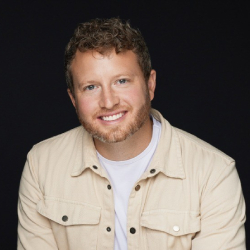
Kevin Wilhelm is the CEO of Marketing4ECPs, a marketing agency that helps independent eye care practices grow through strategic branding, digital marketing, and patient acquisition. With extensive experience in the optometry industry, Kevin works closely with practice owners to develop strong brand identities that differentiate them in competitive markets. He is also an Amazon best-selling author of Click: Transform Your Business Through Digital Marketing.

Sarah Nwaerondu is the VP of Marketing and Communications at Calgary Wild FC, the city’s professional women’s soccer team in the National Soccer League. Sarah’s background spans sports marketing with the Calgary Flames, entrepreneurial ventures like Rebel Muse Marketing, and expertise in digital marketing, bringing a creative and disruptive approach to brand-building.



Here’s a glimpse of what you’ll learn:
- [05:09] Sarah Nwaerondu shares how a career pivot fueled her creative marketing breakthrough
- [07:59] The secret to branding beyond “authenticity” for real impact
- [12:02] How to connect with multiple audience segments authentically
- [16:06] Why evolving your brand matters as much as consistency
- [23:54] Proven strategies for balancing brand awareness and lead generation
- [29:09] How treating social media as a focus group drives growth
- [36:36] Kevin Wilhelm explains why you must find your practice’s voice before you start marketing
- [40:52] Ways clarity, consistency, and frequency drive trust in your brand
In this episode…
A strong brand isn’t just seen, it’s felt. But what actually makes people remember you, and more importantly, trust you enough to come back?
For Sarah Nwaerondu and Kevin Wilhelm, the answer is clear: it starts with intention and evolves through connection. Drawing from her experience building a professional sports brand from scratch, Sarah believes that a brand isn’t a logo, but a living identity shaped by how you show up, listen, and adapt. Kevin echoes this, emphasizing that consistency and clarity are what turn recognition into trust. Together, their insights reveal that memorable brands aren’t static — they grow alongside their audience and become something people genuinely connect with.
In this episode of the Cleinman Connect Podcast, featuring 4TheRecord, Tyler Kemp is joined by Kevin Wilhelm of Marketing4ECPs and Sarah Nwaerondu of Calgary Wild FC, to discuss how to build a brand patients remember through consistency, trust, and meaningful audience connection. Kevin and Sarah also share advice on balancing brand awareness with lead generation and using social media as a real-time feedback tool.
Resources mentioned in this episode:
- Kevin Wilhelm on LinkedIn
- Marketing4ECPs: Website | Instagram
- Click: Transform Your Business Through Digital Marketing by Kevin Wilhelm
- Cleinman Performance Partners
- Tyler Kemp: LinkedIn | Instagram
- Sarah Nwaerondu on LinkedIn
- Calgary Wild FC
- Rebel Muse Marketing
- Specsavers
- YXE Vision Group
Quotable Moments:
- “Your brand needs to be as flexible as you are as a person.”
- “Your brand is not your logo.”
- “I truly think that the most valuable asset for a business owner and for a brand is to show up on social media, try new things, be disruptive, and be authentic.”
- “Trust comes from having clarity in the brand, consistency, and then frequency.”
- “When it all comes together, it creates a great brand that attracts the ideal patient profile.”
Action Steps:
- Define your brand personality before you market: Establishing a clear voice and identity ensures your messaging is consistent and builds trust from the start.
- Treat social media as a real-time feedback tool: Actively testing content helps you understand what resonates with your audience and refine your strategy without high upfront costs.
- Balance brand awareness with lead generation: Investing in both ensures you’re not only visible but also converting attention into actual business growth.
- Stay flexible and evolve your messaging: Adapting based on audience feedback allows your brand to remain relevant and competitive in a changing market.
- Build your brand through every touchpoint: Aligning team behavior, customer experience, and operations reinforces your brand and creates a memorable, trustworthy impression.
Sponsor for this episode…
This episode is brought to you by Marketing4ECPs!
Working with them is like hiring a full-time marketing professional who knows the industry and understands your goals. Except, instead of one experienced marketer, you get a whole team in your corner.
Whether you’re an optometrist, ophthalmologist, or optician, they can help you grow your business with a plan that’s completely customized for you. Learn more here.
Powered by Rise25 Podcast Production Company
Episode Transcript
Intro: 00:07
Welcome to the Cleinman Connect Podcast, where we discuss marketing, ownership, growth strategies, and everything else surrounding the business of optometry. Cleinman is Optometry’s trusted business partner for over 35 years. Hi, I’m Kim Carson, host of the Cleinman Connect Podcast. This episode is brought to you by Marketing4ECPs and is a special featured episode of their new eyecare marketing podcast called 4TheRecord. The episode you’ll be treated to today is hosted by Tyler Kemp and features a conversation with Sarah Nwaerondu, the VP of Marketing and Communications at Calgary Wild FC.
They discuss how memorable brands are built through consistency, emotional connection and trust. Also featured in this episode will be Kevin Wilhelm, the CEO at Marketing4ECPs. I really hope you enjoy this featured episode today. And if you want to hear more from Tyler and 4TheRecord, please check them out on YouTube and at marketing4ecps.com.
Tyler Kemp: 01:17
Hello and welcome to 4TheRecord, your eye care marketing podcast. My name is Tyler. I’m going to be your host for this new podcast series that we are launching. What we are ultimately trying to do with this is bring some different insight as to how you can utilize marketing in your business to help drive it forward. We’re going to be talking to people within the eye care industry who have done a great job at building practices, building their teams, building processes.
But we’re also going to step outside of the eye care world and talk to some interesting people just in the marketing world in general, and take some insights that they’ve found in marketing other types of businesses or what’s happening in terms of trends, and we’re going to pull that all together by talking to experts within our business about how we can utilize that to support practices, and how you can either take that on your own or work with agencies like us to be able to drive your business forward, whatever that means for you. Today’s episode is really cool. We’re going to be talking to Sarah Nwaerondu of the Calgary Wild FC. It is the soccer team in Calgary for the NSL, the first Canadian women’s soccer league. Sarah actually hired me at Marketing4ECPs for about six years ago and since working at 4ECPs, she has gone on to do a ton of incredible things, including helping to head up what was the inaugural season for the Calgary Wild FC, and basically how to take a brand that nobody had heard of before and fill seats at the stadium and make this a successful first season.
This whole idea and concept can actually really be brought back to cold start practices. And I think that’s where a lot of practices are going to get value out of today’s episode is to hear if you’re starting a new brand or you’re continuing to elevate your brand into new areas or new audiences. How important is it to have that established brand and marketing first? How do you build it properly, and ultimately, how do you use it to grow the business in the way that you want to, whether that be in increasing your average revenue per patient or whether that be acquiring new patients in general. Then at the end of every episode, like I said, we’re going to be pulling in someone from our team who can expand on how to pull that insight back to make it applicable for eyecare practices.
And today, we’re extremely lucky to have our president, Kevin Wilhelm, join me in a conversation about what Sarah and I talked about and how we take that and ultimately apply it to eye care practices, how you can take that insight and use it within your own goals. We are really excited to start this journey. We’re so grateful for you to be following along. Please subscribe to our podcast. You can get this anywhere you get your podcasts on YouTube.
And if you want to give us a follow to learn a little bit more about who we are, follow Marketing4ECPs on Instagram. You can follow my professional account tytalksmarketing and overall, we’re just really excited to have you along for this journey and we hope you can bring we hope that we can bring you a lot of value in how marketing can impact your practice moving forward. Thanks so much and enjoy.
Super thrilled today to be joined by Sarah Nwaerondu of Calgary Wild FC, VP of Marketing and Communications. So, Sarah, you and I have known each other for a long time. You actually gave me my start at 4ECPs is like 6 or 7 years ago, and that’s kind of what I wanted to start with that you have had a you’ve had kind of a wild career arc in most cases, from the flames to the Calgary Wild FC and then tossed eyecare marketing between there. Your own entrepreneurial things like for a little bit of background, can you tell us a little bit about kind of what got you here?
Sarah Nwaerondu: 05:09
For sure. So I started off after I graduated school, I was accepted into a position in marketing at the Calgary Flames, which was such a dream job loved it. It was so much fun and learned a lot about community relations, public relations, all things marketing, but was kind of missing that digital marketing component. So after leaving there, went on to pod marketing and for CPS, where I learned everything that there is to know about digital marketing. Obviously, it’s ever evolving and changing, but was able to learn so much and really diversify my experience.
And then after having two kids and during Covid, wanted to scale back a little bit, and that’s when I started Rebel Muse marketing, which was more like project based small business branding and social media marketing video projects. And that kind of gave me some good balance of work and being creative, as well as being able to figure out my identity as a mother and how those two worlds collide. So through all of that experience, it kind of with my sports marketing, my Rebel Muse project base, it kind of led me down this road where I was then introduced to the president of the Calgary Wild, and that got our conversation going about some challenges that they were facing. And they were a few weeks out from the start of their season and had no marketing yet that was out in the world. So I jumped in kind of full force and still was balancing Rebel Muse, but then was able to just tackle the the big project of trying to get something out into the world really quickly and loved it and have been with them ever since, and grown into a larger position and still doing some stuff on the side.
But yeah, it was a bit of a whirlwind over the last year and one that was very exciting. So I’m grateful.
Tyler Kemp: 07:07
So you touched on something that I want to be a big theme of our conversation today, being around branding and kind of like the identity of not just you, but your brand and how important that is for kind of the next stages of things, whether we’re talking about personal branding or whether we’re talking about companies trying to do their branding, would it be fair to say that without the creativity you started with your own gig with Rebel Muse there? You you took a really interesting approach to that. And I love that it wasn’t super corporate. It was very you. It was like there was there was just a lot of creativity to it that I think when someone like Calgary Wild come come knocking and say, hey, we’re creating something brand new as well.
We need someone who’s going to think differently. How important was the brand that you developed for yourself and just kind of like your overall brand for Rebel Muse in kind of leading you to that next place with Calgary Wild?
Sarah Nwaerondu: 07:59
Yeah, for sure. So it was, it was a fun project to build Rebel Muse. It’s one being in branding and trying to help clients build their brand. Obviously, the message is always like authenticity and being original and being bold and, and using all of these things that encompass like who you are and what you believe in, and presenting that and building a personality and a brand behind it. So with Rebel Muse, I mean, if everybody’s saying that though, then you’re kind of just doing what everyone else is doing.
So with Rebel Muse, I wanted it to be a little more bold and disruptive. So instead of it me being exactly authentically me, I wanted it to be that person that wouldn’t hide behind all of my insecurities. So it was kind of like the deeper level of, of who I aspire to be versus like Sarah that shows up for a podcast and is still like, oh my gosh, don’t say the wrong thing. It’s I wanted to build it as like the person that inspires me to, to continue on and to learn and, and be disruptive. So it’s Rebel Muse is kind of like the, the girl that’s hiding inside of me without those insecurities and the what the person that’s, you know, very vulnerable.
So who is that person and how does she show up? And then that allowed me to show up more as that, as that person. So it was a bit of a different approach to the typical, like, who are you as an authentic person? And you know, what does that mean? It kind of all ends up looking the same because everybody is still worried about what their peers are going to think or what their clients are going to think.
And so it all kind of still ends up looking the same. It’s like, oh, I’m being authentic and showing up on Instagram Live, but behind it, you’ve done like 400 takes and you’re, you know, still a little bit masking behind all of those insecurities. So I wanted to use Rebel Muse as that outlet of, okay, so if you were to be that person that wasn’t scared of what your industry thinks of you, how would you show up? What colors would you use? What would you wear?
What would you say? And so it’s kind of like that deeper level of branding that I think just doesn’t exist that much. When you’re looking at smaller businesses, especially.
Tyler Kemp: 10:31
I’ve liked the term planned authenticity. And I think it’s interesting that you, you say that, that you develop the kind of the core and the base around your brand based on, yes, I want to, I want to show my authentic self, but that doesn’t mean that you’re not considering your audience through this. You’re you’re thinking about how you’re going to show up to them. And considering that, yes, even if it’s authentic to me, it still needs to be something that identifies with who your core audience is. Which kind of leads me to let’s talk about Wild FC a little bit because this is very cool.
So NSL, the first professional Canadian women’s soccer league, there’s there’s a lot that’s going to go in that into that with the branding. There’s I mean, it’s it’s starting fresh overall. It’s authenticity, but you also have to consider you kind of have a huge job going into this with you have two different types of fans. You have the fans who are going to buy tickets now, who have been soccer fans for a long time, but also recognizing that if this is going to be a lasting league, you need to bring in the future fans, you need to bring in the kids. So how do you make this family friendly and exciting that way?
But also Consider the soccer fans who have been dying to see professional soccer, and especially women’s sports, more represented in Canada. How do you balance those two audiences while still being authentic to the brand?
Sarah Nwaerondu: 12:02
For sure. So I think it’s really important to still listen and build your marketing plan around not just your core demographic, but all of the demographics that you want to reach and that you need to continue to build on in order to evolve and change and grow. So obviously, we really focused first and foremost on that core demographic, like our large supporters, no matter what, we really wanted to hear from them, what was important to them. Soccer culture is such a deep and like guarded thing in in the football world. So we wanted to make sure that we were still adhering to the kind of that culture, but being disruptive so that it’s not just what you would expect at a soccer game.
It’s about inviting other different demographics and people and being inclusive. And if we’re not performing well on the pitch, how can we perform well in the stands? How can we show up in the community? How can we bridge new audiences? That one don’t know we exist yet?
Because there’s we’re one year into this. Obviously there’s there’s still some growth there. But two never considered themselves as a soccer fan. How do we reach and tap into that demographic so that they understand this is for everybody? So, you know, it’s a bit of a layered approach of building a message that speaks to our core demographic.
We call them support hers. They’re going to support us no matter what. There are supporters. And then also using influencers that are going to tap into a different demographic using collaborations with different businesses and brands that are going to tap into a different demographic. Working with different community associations and different community groups that are going to give us access to newcomers are going to give us access to all of these different areas that we haven’t tapped into yet.
And then, you know, learn and and listen to them and see what is important to them. So obviously, after year one, we’ve done a lot of looking into our data, looking into our analytics surveys, focus groups, speaking with all of the different people to better understand what worked well and what didn’t work, so that in year two, we can be better prepared to create the message that speaks to those people. And then also to layer in more opportunity to reach new demographics, but then to also just make it more fun and more appealing for the people that did show up and and provide them with a great experience that makes them want to come back.
Tyler Kemp: 14:53
It’s obvious that you’re very passionate about this brand, and I think for anyone watching this, anyone in the eye care space, they’ve opened their practice, they’ve opened an optical boutique. They’re very passionate about their brand as well. And it can be extremely easy to say, this is my brand, this is who I am. And if I change, I’m not being committed to myself. I’m not being committed to who I know, the personality of the brand, what I’ve built all of this.
But you brought up something interesting that you want to get feedback. You want to hear what the fans are thinking. You want to hear what the people who haven’t come to the games are thinking. Why have you missed out on talking to them or really reaching them? And what maybe brought in those new fans or kept the people who were obviously going to be there from the beginning?
We see that a lot in conversations that new practices will start, and it can be a lot more challenging to get into the community than they thought. And they have this unique brand and they want to show it off, but they’re having trouble reaching them. How important do you feel it is to be flexible with? Yes, you need to stick to who you authentically know you are, but sometimes you really need to listen to what the audience is saying and perhaps shift your focus and your attention and your strategy.
Sarah Nwaerondu: 16:06
For sure. And I think it goes back to just understanding you as a person are different than you were five years ago. It’s an evolution. You’ve learned a lot. You’ve failed.
You’ve learned from those failures, you’ve seen what success looks like, and that changes you. And so your brand needs to be as flexible as you are as a person. So sure, it can look and, and still really feel overall in this the same kind of way, but with the tactics that you use, with the approach that you take, with the different messages that you put out, that needs to be more feedback from your audience, like you need to be open on social media. Test out new things. That’s your focus group for then getting into your advertising.
What works on social. Get that feedback. Then you can use that as a stepping stone to create a larger ad campaign or messaging for, you know, how you write your brochures or whatever. Those like different marketing tactics are. I would start at the feedback that you’re getting from your direct audience and really building on that because, you know, a brand needs to evolve and change.
You don’t need to change your logo every two years. You don’t need to update your signage every two years, but it needs to be flexible and it needs to evolve with who you are. Because if you’re staying the same and you’re not changing and you’re being quite rigid in who you are and what your business is, then you’re missing out on the opportunity to disrupt a new market, to grow and to adapt with the ever evolving business culture, marketing culture, all of these different things, you need to be flexible.
Tyler Kemp: 17:54
So let’s talk about brand and logo a little bit, because I think that oftentimes it can be just assumed that your brand is just your logo. It’s just there is so much more involved in that. And where I think that even though you started like, like you said, like a week before the season that you were kind of really brought in to kind of do a little bit more of, okay, let’s get this marketing out here. You did have a brand that you were able to walk in with. You did have an identity in terms of what you wanted to look like and the general kind of culture that the team wanted to create behind this.
That’s not always normal in sport, and we’ve seen it in the last couple of years with both the PWA and the NHL. There have been new teams that have been introduced that have essentially had placeholder logos, placeholder branding for a full year. What was the importance of having that brand already there that you could build off versus starting to talk about this thing you were doing and then just developing the brand over time.
Sarah Nwaerondu: 18:57
One kind of lesson that I like to teach clients is your brand is not your logo. It could be as similar as, you know, your your logo is what you wear. It’s what you show up to the office in. And your brand is the personality, the, the soul kind of behind it. The brand is, is who you are and how you show up.
So for certain sports organizations to show up without that personality, I understand why they have to do it. And I don’t think it’s a choice that’s like intentional. I think it’s one that they just, okay, we we just got to get going and we’ll figure this out later. But I think in order for you to put yourself out there, you have to know who you are, what you stand for, the purpose so that you can excel and perform well, not just on the ice or on the pitch, but also off. When you show up to business meetings and when you show up with your marketing, that needs to be established.
And so for us, it was very important for that to be established before we started social media, before we obviously started the matches and the marketing, we needed to know who we are. We were so that we could be authentic from day one and just be confident. I feel like if I were to show up without a logo and a brand on the pitch, it’s a little bit wishy washy, like, I don’t know who I am and I’ll figure it out later. Like that to me does not scream a professional sports team and like no slight to them. But for us, I think it’s super important to have that, you know, grittiness and that grace and show up on the pitch knowing exactly who we are and to be able to have that branding and that representation in merch and marketing, it gives you kind of that uniform when you put it on to, to feel that presence and that confidence, the teamwork, all of it behind it.
It kind of gives you that leg up. And so I think it’s super important. And I wasn’t there for the brand building exercises. And it took months and months and months of like a volunteer team. There was like, there was no full time staff there at that point.
It was like this core group of volunteers and investors, and they brought in an amazing design firm that built this with so much intention, they knew exactly the words they would use the, you know, how they would show up, what they would wear on the pitch, how they would, you know, show up in the community. And so that gave them the foundation to then live and breathe who they are when, you know, they’re out into the world and, and the brand is actually living. So I do think the foundation of a strong brand needs to be first and foremost. And it can be ever changing, like ours will change and adapt. But for us to have that level of foundation gives us an advantage because we then know who we are.
Tyler Kemp: 22:10
And we’re just touching on the impact of having a brand to the marketing company and to the team. We’re not even talking about the fans right now. And that’s and when we’re talking about the audience and how important it is for people to feel like they can identify with a brand in order to actually kind of, well be become a fan of it. It’s I feel like the impact would have been so different to go from, yeah, I’m going to the Calgary women’s soccer team game today versus I’m going to the Wild FC game. That’s a that’s a big difference.
That’s something that you can identify with. And that’s something that can help to expand the name within the community as well. It’s something memorable. It’s something that you feel like you’re a part of a group, not just something that’s started. And maybe next year we’ll have a name like that’s.
I see that as so important. So okay, so that’s, that’s the branding side of it. And the great piece about the branding is that you do have the option to be able to take that and use it on so many platforms, whether that’s social media, print, ad kind of anything. What about the other side of it that there is always a there’s always a bottom dollar, whether it is we need more patients to fill the seats to make sure that we can continue doing what we want to do. Or in your case, we need to fill seats in the stands to make this brand new league work.
So how do you balance that with the marketing? How do you go? On one hand, I want to focus on the branding goal. I want to make sure everyone knows Calgary Wild FC. While at the same time, where’s the lead generation come into this at the same time?
Because I can imagine that it cannot be one without the other. I know that from the eye care side, but this is a whole different beast going into sports for sure.
Sarah Nwaerondu: 23:54
So I think I think it’s quite similar. I mean, obviously very different industries, but I think it’s still very similar. The goal is to get bums on seats, to be a thought leader, to be to establish, you know, that leadership in the industry and to create awareness for, you know, what the purpose of it is behind whether it’s eye care or sports. So it needs to be a bit of a layered approach. Sure.
You need brand awareness. It’s absolutely important. Should you put all of your money into billboards? Absolutely not. You know, I think it’s very important to establish a brand first and doing that in a very tactical way where you are going to see some ROI.
So whether that is investing in social media and maybe LinkedIn, if you are trying to grow and establish your voice within the eye care industry as a thought leader, those are great platforms to use to establish yourself and to test what is working and what isn’t with your messaging. And so I love using social media first as like, let’s get out there. You can still create some brand awareness, but you can do so while receiving feedback that will then establish what the next step should be. So you definitely need some lead generation. So obviously digital campaigns is probably the best way to go, but you do need to invest some dollars into just general brand awareness, whether that’s sponsoring a big gala in your community where you can get your brand out in front of 1500 affluent people that you want to be clients, great.
Or whether that’s a billboard, which is, you know, I think there’s a time and a place for a billboard. You need to have some brand recognition before you go and throw your brand up on a billboard because it’s, you know, half a second to see it. And so you’re going to want to have some established brand awareness before you do something so big and bold. But I think that there’s so many different tactics you can use to establish your, your brand, but your focus really should be in lead generation. And it doesn’t need to be like a 30, 70 rule or anything like that.
But I think it needs to, you really need to be flexible in that budget and where you’re seeing that ROI. So, you know, bums in seats is first and foremost the most important thing for eye care practices and for us as well. Obviously, partners is a big part of that as well, a merch, but we need people to show up to the games or we don’t have a fun atmosphere. It’s really hard to get people to come back if it feels lackluster. And so lead generation is extremely important for us and where we invest most of our dollars and where we do a lot of testing.
So for every match we run two campaigns, one that’s more fan focused and one that is more soccer focused so that we can identify what works best. So I think running a lot of of testing for lead generation is very important because it gives you exact feedback and data that you can use to improve your next campaign. But yeah, I do think that there’s tactical ways to build your brand in the, in the space that you’re in without having to spend a ton of money at first. So a lot of community focus and finding ways to build your brand through influencers or, or different people that can help you just be out there and without spending a ton of money.
Tyler Kemp: 27:45
I’ve been saying it for a while on, on calls and on podcasts that people choose who they trust and they trust who they know. The reality is. For someone who wasn’t a soccer fan or had never been to a match before, Wild came in, if they were to receive an email right away saying, hey, we got discounts on the game this Saturday, are you coming? Without the brand before that, without the understanding of who you are, the things you’re doing in the community get a sense of familiarity. There’s probably not much actual you can do all that lead gen you want, but what leads are you going to generate from people who have no knowledge of you and no trust of you?
So I do appreciate the fact that you and the team have put in so much effort into the awareness standpoint and being out in the community. And the part that impresses me a lot is that last. The first post on the Wild Instagram account was I saw May 30th, 2024. That was 600 days ago, and in 600 days you’ve posted almost a thousand times. Now, that’s obviously not going to be what every practice and optical boutique can do.
There’s there’s a lot of different content, but why was it so important to your brand to be posting that frequently?
Sarah Nwaerondu: 29:09
Yeah, it is very important because again, you know, it’s, it’s your direct feedback. So I like to treat social media as, as a focus group. And I think it’s super important to one, it’s free if it costs time and money, but if a, if a practice owner really wants to get out there and test what’s working, what’s not working. I know it’s time is the hardest thing for every business owner. And so I know it’s not easy.
But if you put yourself out there and try to post every day or twice a day, or just did some, you know, behind the scenes stuff on, on stories and really focus a core 2 hours or 1 hour a day to showing up online, you are going to get direct feedback that is going to give you such valuable insight into, okay, this message really worked. I got this was seen by 100 people and 100 people liked it. More of this. This was seen by 100 people and zero people liked it. Never doing that again.
It really informs your next step and it gives you a path forward without having to spend money on a billboard and having no idea what you got out of it. It’s your first step in being able to be like, okay, this is what people want. I’m going to build an ad that is similar and invest some $500 if you wanted. On social media to look and feel like that. Now I’m going to go back to social media, do more of that, build and learn and optimize from that and build a new ad campaign or test it against the one that you previously put out to see which one performs better.
So I always think that social media is the place to start. It’s the no brainer for every business, but it seems to be the hardest thing for businesses to get behind. And I understand that, especially as an entrepreneur. The last thing I wanted to do at the end of the day was go home and make content. So I’m terrible at that for myself, but for my clients, I find it’s so much easier because you can kind of hide behind that brand a little bit, but it’s, It’s the place that you can show up.
You can test new things. If it didn’t work, delete it. Who cares? And so, yeah, I truly think that it’s the most valuable asset for a business owner and for a brand is to show up on social media, try new things, be disruptive and be authentic.
Tyler Kemp: 31:49
So I think you touched on one of the biggest pain points for business owners when you talk about looking at the engagement on posts. You can spend the same amount of time and effort and creative energy into two posts, and one gets 50 likes and one gets zero. If you have a post that is really important to your brand, but it doesn’t get the kind of engagement. Do you still think that there is importance behind posting that? Because when you and I were creating the the framework of what would be the organic social media program at 4ECPs at that time, pre-pandemic, there was a lot that ages us.
Yeah. That at that time we were still really focused on. Success will mean this many new followers. It will mean this many posts. Things are a lot different now.
Social media and Instagram especially has moved a lot more to the quality of engagement and the quality of the followers seeing you. So what would you say to a business owner that’s going? I’m posting all the time. I have a decent amount of followers. I feel like it’s good with my community, but some of these posts are getting zero likes.
Does this mean it’s a failure? What would be your take on that?
Sarah Nwaerondu: 33:02
I mean, social media is tough, and it’s because it’s those vanity metrics that we were initially told meant success. It’s really hard to shift that perspective. But I would say if it’s super important to you and your brand, if it gets zero likes, try saying it in a different way, but continue down that message. If that’s if that’s super important to you, what you want to look at followers you can buy likes is such a vanity metric. It doesn’t it doesn’t mean anything.
Look at the shares, look at the comments and look at the direct messages that you get from from your posts and the response, the positive responses that you’re getting out of those metrics should inform what you do more of. So if it didn’t get any likes, it might be, I mean, the wrong time of day. It could be as simple as it was a bad time of day, or it could be it wasn’t positioned in a way that your audience is receptive to. So try changing the hook of that message. Try walking and talking instead of sitting in front of the camera.
Just try new ways to say the same thing and see how that works. Just continue to optimize and improve what you’re doing. But yeah, vanity metrics have completely shifted. I still have a hard time when, you know, our, our president is like, this isn’t getting as many likes as this, but then you just have to go back and really educate likes is one thing. But this post, I think we, we had a post yesterday, it had 919 likes.
The last time I looked at it after a few hours, which is great, but it had 161 shares, so I don’t really care about the 919 likes. 160 something shares means that people think it’s important, like they are willing to share it on their platforms and however many hundreds or thousands or hundreds of thousand followers they have that is now reaching a new audience that I could not reach myself. So if you’re thinking about how can I get direct messages, shares and comments that should be your metrics of success.
Tyler Kemp: 35:26
Sarah. I have so many things that I could thank you for. I mean, you gave me the start in my career, which I’ll forever be grateful for. But most of all, thank you for coming in today and doing this and being the first guest on our podcast. I’m very excited for to continue this conversation again one day, and we’d love to have you back another time.
Sarah Nwaerondu: 35:43
Yeah. Thank you so much for having me.
Tyler Kemp: 35:44
Thanks, Sarah. Okay, so that was a great chat with Sarah. We learned a lot about some of her background in terms of what she has done to continue to build brands and the impact it can make on a business when a brand is set up properly. So to pull this back to the eye care industry, I don’t think there’s anyone better to talk to than Kevin Wilhelm, CEO of 4ECPs and Cleinman. And so, Kev, what I wanted to talk to you about today was I think Sarah brought up a lot of things about unique brands.
She’s built her own, she’s built her own agency. She’s worked with. I mean, obviously the first women’s soccer league in Canada. There’s a lot you can do with that. I think the question that would come out of this for a lot of practice owners is, how do we get creative in the medical side?
How do we make sure that our brand can stand out from our competitors? Where would you start with that? Where would you advise?
Kevin Wilhelm: 36:36
Well, I think the first thing is I think a lot of people have a unique story, but there are a lot of practice owners struggle with telling that story. And so one thing Sarah said that really stood out to me was about early on, finding that voice and finding that personality before you just start kind of going out and speaking. And I think that the opportunity for practice owners is for them to really identify what is the personality of the practice beyond just them as the doctor. So as a doctor, as an owner, you have your own personality, but does that mean that your practice is mirrored the same way, or is there something different because your practice is made up of a lot of people? And so once you identify really what the personality is, what’s the voice, then you can start to craft that message and craft how you want to get on on social media, how you want your website to read, even like signage or your collateral.
So all that should be predetermined. And you know, when we talk about voice, it could be something like, are we cheeky or are we just educational? Are we funny? Are we really personable? You know, what are those characteristics that you want to have defined your brand?
Tyler Kemp: 37:51
Yeah. So I want to dive into more personality because I think that’s a, I think that’s a unique piece. I think a lot of times when, when we ask a business to define their, their brand persona, they’ll often pull back to themselves. And that’s, and that’s great. But there is that, there is that limit.
There’s, there’s finding that balance of making sure it stays professional. But there is something that brings people in. We’ve seen a lot of that in Canada over the past few years as Specsavers has come in and there is a huge. It’s very impactful to the small business owners that we work with and the independent practices that they are putting out ads on every corner. And so they are really leaning into a certain personality.
They’re leaning into a certain brand. How does an independent practice, an independent practice owner, compete with a brand that has the resources of that? Why is it important to even. Why is it important to even try? I think that’s one of the questions that we get that we don’t have a budget like they do.
How. How is leaning into the brand so important when we consider factors like that?
Kevin Wilhelm: 38:57
Well, I think when you talk about Specsavers or any big chain or even any competitor, the first step is what do you provide that is different than what Specsavers would provide? Let’s start there. And so, you know, if you ask any of our clients and say, okay, what is the experience that a patient would go through if they were with you for an hour, and what is the experience a patient would go through if they went to Specsavers or Walmart or wherever? What is the key difference? You know, I think our clients would be very passionate in telling you exactly what’s different.
And so I think with anything to do with personality or brand, it’s about first understanding what is the difference that you provide? What is the value proposition, whether it’s experience, product services, what makes you different than everybody else that someone can choose? And then marketing and social media is about telling that story so that you can find the type of patients that value what you offer. And so if we’re talking about comprehensive eye exams, we’re talking about getting way more procedures and tests done and learning way more about your eye and having more time in the chair to really understand and feel like you had a really comprehensive look at the health of your eye, and then you have time to, to properly shop and be educated on the types of lenses and types of, you know, frame styles. All of a sudden my, my comfort level in purchasing goes up and I feel more confident I’m going to get a better fit.
I’m going to get a better clarity. So that’s really what our clients provide. We have to make sure that we do a good job telling that story for them at their level. They have to really understand their differentiator and be able to stand on that and be confident in what they offer. That’s different.
Tyler Kemp: 40:44
So would you say that comfort level comes with trust, and that trust is built from really kind of knowing and understanding a brand?
Kevin Wilhelm: 40:52
I mean, yeah, so trust comes from a having clarity in the brand consistency and then frequency. So I know who they are, I know what they stand for, and I’m reminded of them all the time. And, you know, that’s really where trust gets built before somebody meets you. So trust gets built. Then when they walk into your practice and the experience they get and whether they’re greeted and how they’re treated the entire way, but before they even book an eye exam.
It’s about, you know, they see the message, there’s clarity in what you’re offering, and they see you, you know, repeatedly so that there is trust built in.
Tyler Kemp: 41:28
So knowing your experience in the marketing industry, I know that I could talk to you for hours about how to get that message out there. But I want to take a step back because I do imagine that a lot of people who will listen and take value from this are those who are looking at starting their own brand, those who are starting from. I graduated school, I have a lot of patients who seem to enjoy coming to me. I think that I can make this my own business. I think I can grow and create my own practice.
So they’re starting from scratch. And this was a conversation that Sarah and I got into around the fact that when we’ve seen professional sports teams come into leagues or expansion teams or relocate, oftentimes that first year that they start, they start without a brand there, that city’s sports team. And it can be very challenging to really build that sense of trust and excitement when you don’t really have that level of identity. So from a marketing standpoint, how important is it for a doctor or a group who is starting a new practice to start with brand versus starting their business and figuring it out along the way?
Kevin Wilhelm: 42:36
The reality is, how important is it? I think that many people will be successful if they run a good business. I think that it comes down to the opportunity. So one thing that you said with Sarah was, you know, talking about going to the soccer game, you said, well, I’m going to a, you know, professional women’s soccer game. And then you said, well, I’m going to a Wild FC game.
And that really stood out to me. And when I kind of go back to our industry, are your patients saying, you know, do you want them to be saying, I’m going to the optometrist, the optometrist, or am I going to vivid eye care or sphere optometry or, you know, insert practice name here because it means something more than going to the optometrist. And the opportunity that I see is how can you build the experience, which is everything from, you know, your retail location, the inside, how it’s designed, the products you have, the people you hire, the training, all of those things that go into it to make going to your business the experience as opposed to the optometrist, which is just something I do. You know, every so often.
Tyler Kemp: 43:46
I think I see a lot in our industry of names and brands built on the convenience of location, which can be effective. It can be great for SEO value, but I do see such an impact when, when a practice does take the time to, even if they’ve utilized their community or their area’s name, that they take the time to build on to. It’s not just because we’re in the community. What does. For example, I live in the community of legacy and we have legacy eye care.
We have legacy dental. I do think that that can be impactful. If you understand what legacy eye care means to you versus just it is the eye care, it is the spot in my community. It is the dental practice in my community. What does it actually mean?
Do they lean on the term of legacy? Do they explain what that means? Do they go a little bit further in depth from your experience in working with practices all these years? Is there anyone in, whether it be Canada or the US, that stands out to you as a brand that has really leaned into their story, leaned into their culture, leaned into basically the name and what they have built as who they are. That’s kind of driven them forward.
Like you talk about the opportunity that having a name and having that story can be a huge impact. Is there someone that you could highlight for us that has done a really good job of that?
Kevin Wilhelm: 45:07
I mean, I think there’s been many that have done that. Where my mind just goes originally is YXE Vision in Saskatchewan. You know, they’ve named the business after the airport code, which I mean, talks about being local. But when you actually go in, you know, they have many locations. And probably by the time you watch this, they’re going to have more locations, but they have really found a way to intersect that local feel.
But the Disney Wow experience, which has been very intentional with them. When we talk about how they’ve built their brand, you know, if you were to ask a patient, I’m sure that they talk about just how they’re treated is just at a different level. You know, they’re, they’re different locations look a little bit different. Each one has their own sort of unique vibe. But the personalities inside, the way that people are treated, it’s all very intentional from an operations standpoint.
And so they’ve done an incredible job transcending. Just saying I offer good service to offer exceptional service that really does stand out in that community. And it’s also why a lot of, you know, brand isn’t just about the patient, it’s also about associates. Part of the brand that you want to create is attracting the right team members and the right associates to come. Because, you know, I look at our brand at marketing and I go, well, what, how would I define my brand?
And I think part of that is a lot about innovation expertise. Great relationships would be sort of three things that I would highlight. And I look at someone like you, and I think that you check all of those boxes. And so as we look to build out a brand and decide what is our brand going to be, a lot of that is also finding the people and building your community internal that can represent those same brand values, just like you do with our business. It’s incredible.
And then, you know, then you’re an extension of the brand. You have your own sort of look and feel and value that you provide your clients, but you are mirroring the brand values of the organization, as do all of our account managers. And so I think when you are trying to build out that brand, identifying those values, and then making sure that you’re also surrounding yourself with people that share those and really exemplify them.
Tyler Kemp: 47:33
So to touch on both of those notes, I’ve had the opportunity to work with YXE as well. And what I think is fascinating is when I do talk to their team and ask how things are going, the question isn’t how is each individual practice doing? The question is how is YXE doing? How are the practices doing? And it’s and it’s very much it’s intentional from my side, but it’s also something that I feel like I’ve been trained by them to ask it that way, because that is how they view it.
Each of the owners is very present within all of the locations. And so that feeling isn’t just dedicated to one spot and it is kind of a trickle down effect. It’s very intentional that it’s everywhere. And that’s what I’ve noticed at when we go to Vision Expo with, I’ve been lucky enough to be on that speaker, that speaker circuit with our general crew who goes there. Last time we were there, someone who was in one of our talks three years ago was passing us on the conference floor.
And instead of stopping and saying, Hey, Leila or hey Tyler, it was hey 4ECPs. And that was really cool because we weren’t wearing any for merch or anything like that. But the way that we have branded our group that we’ve chosen at certain events to, to represent our business has come across that way that we are for 4ECPs. We are not just the individual people who are a part of it. So I guess on a closing note, branding is not simply about the story that you’re putting on your website or on your social media.
It’s also very much an intentional choice as to how you structure your business overall, how you structure your culture, how you structure, how you show up for patients, how you structure just the general happenings of the day to day within the patient side and the internal side. Would you have anything to add to that or do you agree with that?
Kevin Wilhelm: 49:23
I mean, that’s a good start. I think that when we talk about brand, it’s the culmination of every single thing that your business does, who you hire, how you train, how you approach problems and challenges, how you approach refunds when, when needed, or remakes or refits or, you know, a really complicated case comes in the door and how you approach that, the types of frames that you’re putting on your frame board, the signage, the lighting, everything speaks to a brand. And so when situations come up or experiences happen, it’s how is this organization, which is again, a culmination of people and process and product and, you know, decor and all that. How is that all going to come together to provide an experience for me? That really does separate between, I’m going to the optometrist and I’m going to see vision.
Because that means something more. And so, you know, if I was to for your for your viewers and listeners here, the opportunity here is to sit down and really be intentional about all of these things and not just, oh, I just need an office manager. So I’m going to, I need someone, so I’m going to hire someone today. And the best person today is who I’m going to bring in. Understand that when you make that type of rush decision, that’s not intentional and you don’t make the right hire that has lasting effects on how your patients are treated, how your employees are treated, how you feel coming in every day.
Are you motivated? Are you happy to come in? All of that matters. And so as an owner, it’s an obligation, but also, you know, an incredible opportunity to just be very intentional about everything that you do. And when it all comes together, it creates a great brand that attracts the ideal patient profile, which I mean matters to a lot of people.
You want to see more of the better types of patients. And this is, this is really how you do it. You know, what you do for a living, which is advertising and marketing. Your job is to take that and just shout it from the rooftops, right? And so, but it does start with the practice owner.
And what a, what a great, you know, opportunity to be able to create your own. And I think that’s why independent business owners stay independent, because they get the choice and the freedom to be able to do it their way. And that’s why I love working with independents, you know, more than anything else.
Tyler Kemp: 51:51
Amazing. Well, thanks, Kev. This has been a perfect way to bookend the first episode of this podcast. I hope that listening to this for all the practice owners out there or people close to graduating optometry school and kind of getting into this world are going to take value as we roll these episodes out every month. We’re going to get more in depth in future conversations outside of just branding.
But how to actually begin to implement your brand and what tools to use for what specific goals and needs for your practice. So stay tuned for that. We’re excited to start this journey together, and we appreciate you all for tuning in.
Outro: 52:28
And that’s the special featured episode of 4TheRecord. I hope you enjoyed the show today and learn more about how you can elevate your practice through brand awareness, recognition, and connection. We’ll talk to you next week. Thank you for listening. At Cleinman, we take pride in helping our partners unlock their full potential. Subscribe to get the newest episodes or visit us anytime at Cleinman.com.