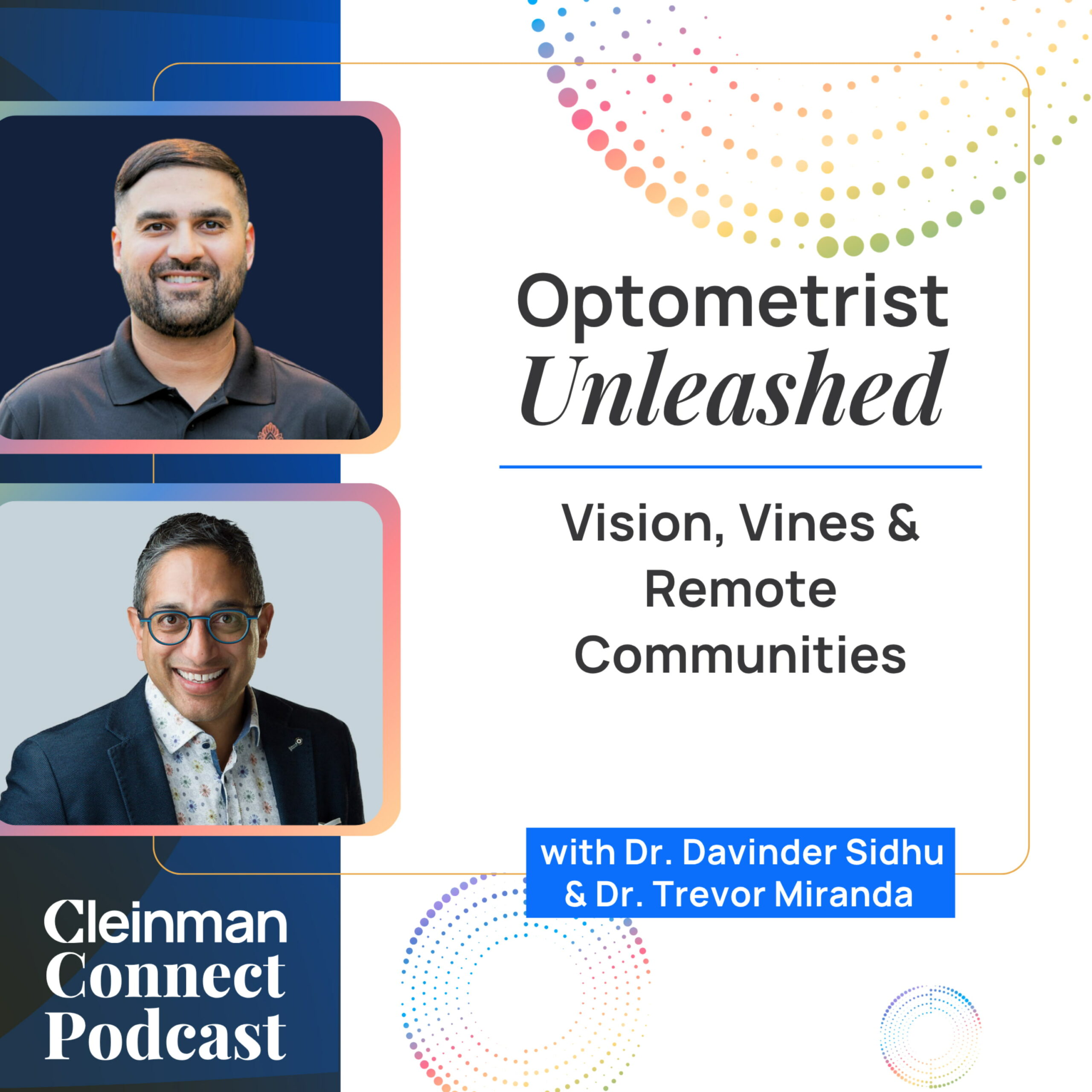
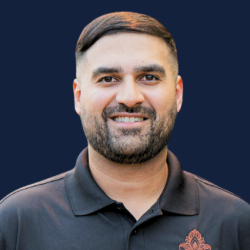
Dr. Davinder Sidhu is the optometrist behind The Genuwine OD, an educational and consulting platform focused on evidence-based eye care, private practice growth, dry eye, leadership, and the eye-brain connection. He provides comprehensive eye care in British Columbia, with experience in ocular disease, surgical co-management, contact lenses, binocular vision, pediatrics, and neuro-ophthalmology. Additionally, Dr. Sidhu is the Co-owner and Director of Operations at Vasanti Estate Winery, an award-winning, family-owned South Okanagan winery rooted in the Sidhu family’s farming heritage.
Cleinman is Optometry’s Trusted Business Partner – your guide to building the practice of your dreams. Explore what the future could look like and request a consultation with us. As an added bonus, if you click here to book, you could win a wine gift basket from Vasanti Wines!
Here’s a glimpse of what you’ll learn:
- [2:27] Dr. Davinder Sidhu’s roots in agriculture, vineyard work, biochemistry, and early curiosity in science
- [4:34] What Dr. Sidhu wishes new optometrists understood about building a career beyond traditional practice models
- [6:46] Remote eye care across British Columbia, from Prince Rupert hubs to Indigenous communities by seaplane, ferry, and water taxi
- [12:04] How patient journey mapping, team systems, and revenue per hour shape stronger optometry practices
- [14:48] Why AI, teleoptometry, remote intake, and digital tools could expand access while improving clinic efficiency
- [21:36] Dr. Sidhu’s interest in neuroscience, cognitive load, ADHD, screen time, and the eye-brain connection
- [26:54] The surprising overlap between winery hospitality and optometry, from customer journey to how patients feel
- [43:19] Dr. Sidhu’s advice for building an unconventional optometry career without shrinking into someone else’s mold
In this episode…
Optometry can look very different depending on where it is practiced, who it serves, and how widely a clinician is willing to define the profession. From remote communities to practice systems, patient education, and family winemaking, what does it take to build a career that is both clinically grounded and creatively expansive?
For Dr. Davinder Sidhu, an optometrist, practice owner, consultant, and educator focused on evidence-based eye care and practice growth, the answer starts with refusing to fit into a single mold. He explains that optometrists can build careers around their strengths, whether that means serving rural and Indigenous communities, developing efficient clinic systems, educating patients online, or branching into entrepreneurship. Dr. Sidhu emphasizes the importance of mapping the patient journey, tracking meaningful KPIs like revenue per hour, and using tools such as AI and teleoptometry to expand access without losing the human side of care. His perspective turns “unconventional” into a practical strategy for creating more resilient practices, stronger teams, and more meaningful patient experiences.
In this episode of the Cleinman Connect Podcast‘s Optometrist Unleashed series, Dr. Trevor Miranda chats with Dr. Davinder Sidhu, the optometrist behind The Genuwine OD and the Co-owner and Director of Operations at Vasanti Estate Winery, about vision care, business, and vines. Dr. Sidhu shares lessons from remote BC clinics, optometry KPIs, and the patient experience. He also touches on AI, teleoptometry, neuroscience, wine hospitality, and unconventional career paths.
Resources mentioned in this episode:
- Kevin Wilhelm on LinkedIn
- Dr. Trevor Miranda on LinkedIn
- Marketing4ECPs
- Cleinman
- Dr. Davinder Sidhu on LinkedIn
- The Genuwine OD
- Vasanti Estate Winery | 15% Discount Code: UNLEASHED15 (Valid July 1–15, 2026)
Quotable Moments:
- “Understand that there are endless possibilities in this, in this profession, you can practice however you want.”
- “But I would say every week look[s] different due to what you deal with.”
- “So culture is a overused word, but also a very important word for that same reason.”
- “I think every person should look at revenue per hour. That’s my go-to one.”
- “I would say don’t shrink yourself to fit a mold that was built before you arrived in optometry.”
Action Steps:
- Map and design the full patient journey from first contact to follow-up care: Ensuring consistency across phone calls, online search, and in-clinic visits improves efficiency, reduces chaos, and strengthens the patient experience.
- Track revenue per hour as a core business KPI: This metric helps evaluate scheduling efficiency, team performance, and whether clinical time is being used productively and sustainably.
- Integrate teleoptometry and AI tools into everyday workflows: Leveraging remote triage, digital intake, and virtual monitoring expands access to care, especially for remote communities, while improving clinic efficiency.
- Build culture through systems that reduce daily operational stress: Clear processes and team alignment help staff feel supported, reduce overwhelm, and create a more consistent and positive work environment.
- Pursue an unconventional path instead of fitting a traditional mold: Embracing diverse experiences and background strengths allows optometrists to build more fulfilling, innovative, and personally aligned careers.
Sponsor for this episode…
This episode is brought to you by Marketing4ECPs.
Working with them is like hiring a full-time marketing professional who knows the industry and understands your goals. Except, instead of one experienced marketer, you get a whole team in your corner.
Whether you’re an optometrist, ophthalmologist, or optician, they can help you grow your business with a plan that’s completely customized for you. Learn more here.
Powered by Rise25 Podcast Production Company
Episode Transcript
Intro: 00:00
Welcome to Optometrist Unleashed, a Cleinman Connect Podcast with Dr. Trevor Miranda, a monthly doctor led discussion about everything surrounding the business of optometry.
Dr. Trevor Miranda: 00:15
Hello, everyone. Welcome back to another episode of Optometrist Unleashed, a Cleinman Connect Podcast. I’m your host, Dr. Trevor Miranda, coming to you from beautiful Vancouver Island. And today we’re talking optometry, entrepreneurship, social media, rural healthcare and wine making.
This episode is brought to you by Marketing4ECPs. Working with them is like hiring a full time marketing professional who knows the industry and understands your business. They help you grow your business with a plan that’s completely customized for you. Whether you’re an optometrist or ophthalmologist or optician, they can help you learn more at marketing4ecps.com.
Today I’m joined by Dr. Davinder Sidhu. Today’s guest has one of the most unique stories in Canadian optometry. He’s an award winning optometrist, entrepreneur, consultant, educator, social media creator known as The Genuwine OD and Co-owner of a family winery in Oliver, B.C., by the way, I’ve been there and it is freaking amazing. You have to go. You have to make a special trip to Oliver and visit wineries. But we’re going to get into wine because I love talking about wine. From providing eye care in remote communities across British Columbia to helping practices, improve performance and producing award winning wines.
Delicious. Dr. Davinder Sidhu has built a career that is anything but conventional. So welcome, Dave, to our Optometrist Unleashed podcast.
Dr. Davinder Sidhu: 02:00
Well, thank you so much for having me. And we’ll leave out some of the details, but we did have a good time at the winery when you came by, so I appreciate you visiting.
Dr. Trevor Miranda: 02:07
Oh, I mean, it is fantastic. What beautiful wines. I mean, life’s too short to drink bad wine. Dave and I know you really take care for great wine, so we’re going to jump into that as well. But just tell me, you know, you grew up in Oliver, right?
The wine capital of Canada. Tell me about growing up and around vineyards.
Dr. Davinder Sidhu: 02:27
Well, ironically, you know, it wasn’t always such a wine tour destination. Trevor. It used to be more agricultural, like, you know, apples, cherries, peaches, whatnot. It wasn’t until the late 90s where it kind of started to take off into more vineyards. And then actually, I’d say 2010 to 15 is where you start to see a lot of wineries pop up.
So growing up, it was more working the different crops, you know, kind of learning the hard work aspect from my parents. And I didn’t really understand the chemistry side of things until I went to UBC Okanagan and kind of started studying that and kind of knew what we had in the field. So I’d say great outdoors experiences, great food on the table is another thing. Being from that area, all the vegetables and fruits. So very, very blessed to grow up in a small outdoorsy place, but also have the ability to grow my own food as well, which I think is very important to know how to do.
Dr. Trevor Miranda: 03:15
Yeah. Especially now with food security an issue for us. What attracted you to healthcare and optometry? How did you pivot into that area?
Dr. Davinder Sidhu: 03:24
So, you know, science was always at the forefront of my mind in general. I was one of those kids that was doing experiments at home, you know, building my own batteries, things like that as a child. So for me, I think that was just kind of the way my mind worked. Obviously going to UBC Okanagan, studying biochemistry. And then, you know, I always had healthcare in the back of my mind, I wasn’t sure kind of which avenue to go.
I never really thought I’d become an optometrist as a child. It wasn’t really on my list, but as I kind of went through the steps and kept the electives open for health care. Fields did some job shadowing and I found the optometrists were the happiest. People are the people I job shadowed. All of them.
Had a great work life balance, had time to spend with their families. So I found it very, very intriguing. And then obviously being from a bio chem background, you know, the I was just full of all sorts of cool biochemistry. So I thought it was kind of a no brainer at that point to apply. And then, you know, everything’s been great since.
So it’s gotten me where I am and I have absolutely no regrets. I think it’s the best field you can go into.
Dr. Trevor Miranda: 04:25
Yeah, I agree, it’s amazing. I love it, I love it still 30 plus years later. Dave, I love it. Looking back, what advice would you give your younger self entering optometry.
Dr. Davinder Sidhu: 04:34
I think for that, you know that’s a really good question. Trevor. I’m sure you probably have an answer for this as well, but I think entering optometry, optometry school in general kind of makes you feel like there’s only one way to practice, if that makes sense. They teach you the different parts. Like this is low vision.
You know, this is peds. This is, you know, more of a neuro optometry thing, and then you kind of graduate and you’re like, hey, well, I have to fit into this mold of what optometry is. So I would say if I can go back and tell myself or tell students is understand that there are endless possibilities in this, in this profession, you can practice however you want. It does not have to be just with an optical. That’s the traditional method.
You could have your own niche. You can have your own specialty. You could work with ophthalmology. You could do things that haven’t been done yet. There’s, like I said, endless opportunities.
So having that wide scope of things, I might have come out of school thinking a bit different. It took me a few years, like a lot of new grads, to kind of figure out what I wanted to do, but I think that’s what I would tell myself if I could go back.
Dr. Trevor Miranda: 05:29
Yeah, I think, you know, optometry makes you a better person 100%. You learn from your patients. And I think it’s just amazing. I know culture’s really important to you, Dave, can you can you tell me a little bit about what that means to you and how you’re building a better culture in, in not only your optometry office, but in your winery?
Dr. Davinder Sidhu: 05:48
I think culture, Trevor in general is big for any sort of business, right? So end of the day, a lot of doctors refrain from saying that optometry is a business. You know what? We have to the business has to make money for you to be able to pay your employees to increase the wages for your staff and doctors, but also bring in more technology. And I think culture is a word that is thrown around a lot.
But you have to lead by example. You have to have people buy in to what you’re offering. You have to provide them with the systems to make their life easier at work. And things have become more efficient for your team. You’ll be finding that people are happier.
They’re not as stressed out or as chaotic throughout the day. So culture is a overused word, but also a very important word for that same reason.
Dr. Trevor Miranda: 06:29
Yeah, it’s it’s huge. It is, it is everything in a lot of ways. Hey, you spent a lot of years serving remote communities in BC and I care. You tell me a little bit about that. How did how did how did your day or week look?
Where did you go? What did you learn?
Dr. Davinder Sidhu: 06:46
So, you know, I kind of when I was a new grad, I had a job as an associate and they were like, hey, you know, like you went to PCO, you have a good disease background. You want to go up north. And I first, I was like, well, I don’t know. I’ve never really been up north. Kind of overwhelming.
I’m a new grad. First question asked was, well, is there someone to oversee me or consult with if I have an issue? And, you know, it’s obviously concerning as a new grad and they’re like, no, there isn’t really. So I kind of was like, okay, you know what? I’m just going to test myself here, put myself on the ropes and see if I can hang and went up.
And typical week, Trev is typically use a certain city as a hub. And our hub was Prince Rupert. So you would see patients there. You would then travel to the indigenous communities via sea plane or like a water taxi or ferry. And you kind of have to lug your portable slit lamp, your retinoscope do trial lens kit, some glasses frames.
But you were often not alone in that sense. Typically, there’d be like a psych nurse going with you, social worker, sometimes a GP, a dentist sometimes. So it was kind of like a little mini camp you’d put on when he’d go to these villages. And you kind of have the ability to rely on someone else if you did need a hand. But I would say every week look different due to what you deal with.
Because the way those schedules work is they just tell you the doctor’s going to be here that day. Sometimes ten people show up, sometimes 150 show up, right? So you don’t really know what to expect. So I would say every day was different. But, you know, it made me a better doctor, but also a better person dealing with that many people with limited resources on my end.
So I’d say very, very rewarding and fulfilling work.
Dr. Trevor Miranda: 08:20
Yeah. You don’t know what busy is till you have, you know, people lined up around the block waiting for you. So when you’re running a few minutes behind, I don’t think it’s as stressful. You learn to manage your stresses, right? So what were some of the most memorable encounters you had in these remote regions with patients?
Dr. Davinder Sidhu: 08:37
One of the ones that stands out, Trevor, I was actually thinking about this, you know, a lot of memorable patients over the years. But for me as a new grad. There was this younger child around three years old, I believe when I remember and obviously couldn’t see well. Parents had concerns, did retinoscopy and it was very high hyperopia with like high sales. So I was like, okay, well, you know, luckily there’s no esotropia or anything else going on, but doing like a trial lens refraction as a new grad on that, I have a Hyperope isn’t always, I would say the easiest thing to do.
I did break a break a sweat doing that one, I’ll be honest. But going back, giving them the glasses and just seeing her reaction when she picked them up, looked at her mom and smiled. And even just the swagger in her walk away after. It’s something that could make me tear up kind of to this day. So very, very emotional feeling, thinking about that one.
Dr. Trevor Miranda: 09:28
It’s heartwarming, you know, to help actually help people see better. It’s just an amazing calling. We’re lucky that way because sometimes we get that instant gratification right away. Absolutely. Actually seeing people see better right away.
So you own multiple practices, right? So how’s that? How how was that transition from being an associate, a new grad to being a business owner?
Dr. Davinder Sidhu: 09:53
Yeah, essentially. You know, Trevor, it’s one of those things where I thought I was bringing a lot to the place I was working. And I, you know, I was kind of promised ownership, like a lot, a lot of new grads go through that where they’re kind of told like, hey, if you do this, we’ll give you ownership. And got to a point where I never was given the ownership. And then I kind of left town and I found that patients were kind of following me to the city.
And it was very great. You know, I felt very grateful that people are flying all this way to see me. It kind of made me realize how big of a difference I’m making. And then being from a very small town, my dad was like, you of all people should know better. Like he’s a we used to have to drive to Kelowna to take you to a specialist.
Why would you leave this small town? So then I decided, you know what? I’m like, I’m going to open up my own practice there. So I decided to open my own practice up and all the patients kind of realized, hey, this guy’s back in town and I already had quite a large following. After 2 or 3 years.
So, you know, it was a no brainer in that end. And I have no, no regrets in, in, in mine now. I think it was a very pivotal moment in my life. I was only about 28, I think, or so when I did that. 29 so young, scared.
But I think it is the best thing I did.
Kim Carson: 11:03
Hey, Kim Carson here. Thank you for listening to the Cleinman Connect Podcast and these featured episodes of Optometrist Unleashed. Doctor Trevor is great, hey. As a thank you for listening, climate and Vasanti Wines are offering 15% off wines purchased using our code between July 1st to July 15th.
Shop online from anywhere at VasantiWines.com and use the code UNLEASHED15. That’s UNLEASHED15 for 15% off. Please enjoy the rest of this episode. Maybe even a Rosé.
Dr. Trevor Miranda: 11:35
Yeah. That’s awesome. And how do you balance great patient care with business performance? I know you mentioned, you know, it’s important to be profitable, reinvest in your team, reinvest in technology. And I think a lot of optometrists who are business owners sort of abdicate the responsibility to run the business well, because it doesn’t have to be mutually exclusive to great patient care.
What are some of the KPIs? What are the things that you pay attention to? Run a great business?
Dr. Davinder Sidhu: 12:04
I think being a clinician and a good business owner do go synonymously together. A lot of people think they have to be different hats that you wear. Trevor. I’m sure you can relate. You have several practices, but having systems in place, a customer journey mapped out how you want the patient to experience things, not just when they walk in your door, but when they place that phone call, when they Google you.
All those brand touchpoints make a difference in terms of how they’re going to experience things, right? So having that journey from the beginning to the end and having your team know exactly how that journey is supposed to feel for the person on the other side of the chair goes a long way because it creates efficiency, it creates the culture. And I would say the lack of chaos on a day to day that can happen in healthcare, especially between team members. So I think all that and people having a purpose in their day makes a huge difference. And the business side as well, tracking the KPIs, you know, optometrists generally are numbers people.
We all did optics. I think people get very worried and scared thinking about metrics. But you know, metrics for me, I always, you know, metrics is a whole other conversation. So is there any specific metrics you’d like me to talk about or.
Dr. Trevor Miranda: 13:14
What do you think? What are what’s a metric that you kind of hang your hat on that you really want to concentrate on?
Dr. Davinder Sidhu: 13:19
I think every person should look at revenue per hour. That’s my go to one. The reason why that’s my go to one is I sometimes have issues getting doctors up north. So the way I have to calculate my things is, well, if this doctor is going to be there this many hours, is the business at least going to break even? Right?
And so you have to do these types of things. The other reason why it’s better than revenue per complete exam, which some people do, is because not every visit we have is a complete exam. Right. So you might have normal medical follow ups, etc.. You want to know the overall revenue per hour that an OD is working.
The other beauty of this metric, Trevor, is it’s a combined metric, right? So it tells you is your scheduling efficient? Is your staff and doctor working well together? Is there a good capture rate happening during this hour? So I find this number is my pulse of the business.
I use this when calculating, you know, should I open extra four hours on Sunday or, you know, things like that. It helps you calculate all that to make sure things are going to go well. So if I had to hang my hat on something, I think personally for me that’s the one. But every mode of practice is different. And I encourage people to figure out which one is going to help them check the pulse of their clinic.
Dr. Trevor Miranda: 14:24
Yeah, that’s a great point. You know, you need to track something, get your measurements. You know, if it’s your 4 or 5 KPIs that that speak to you so you can track how you’re doing, what you, where you’ve been and where you’re going. I think it’s really crucial. So thanks for that.
What do you think about the future of optometry? What are you excited about? Optometry. My daughter just graduated and I like to hear from successful practitioners. What are you thinking about the future for us?
Dr. Davinder Sidhu: 14:48
I think the future for optometry is exciting. As I’m sure you know, eyecare is one of the fastest evolving fields in healthcare. There’s always new tools to learn, new studies to read. You know, I think a lot of people are threatened by AI and tele optometry, but, you know, you got to use it as a tool. It’ll never completely replace you, but you have to learn how to work with it, how you can use it in your practice.
You know, if you’re not someone that’s going to fully get into telehealth or anything like that, I think, you know, using it just for triage, things like that can be helpful. You know, if you’re, you know, staff say, hey, there’s this patient, I’m not sure when to bring them in. You know, go get on a quick two minute video call with them and do the triage. You can now bill for that in BC as well. So there’s lots of ways to incorporate it and give access to people so they could be seen.
And if it’s something simple, you can prescribe over a video call, then you know it saves you time as well. AI aspects, I think it’s pretty exciting. There’s a lot of new technology coming out, even in Canada where you can send people, you know, intake forms, you know, color vision tests, etc. at home to assess things to make your life a bit easier. That way when they come in, you know, a lot of that’s already in your chart. I’m working with implementing a software in our clinics up north very shortly here in the next month.
That’s going to help make things much easier. So if someone’s in one of the First Nations villages, they can, you know, answer questions for me remotely. it’s going to show up automatically in my chart. It does do like eomes, all that type of stuff as well, where I actually see a video of them doing it so I can analyze things. So if someone has, for example, like a cranial nerve, six palsy, and I’m monitoring to see if it’s improving, I could send them that at home.
So there are ways you have to start incorporating these into your clinic. And I think that software is going to be a game changer. We should see that in Canada pretty soon. I would say kind of taking over because it does have an integrated EMR with it as well.
Dr. Trevor Miranda: 16:33
So it makes that software. Dave.
Dr. Davinder Sidhu: 16:34
That one’s actually made by a colleague of mine. Justin Oscar it’s called the eye, correct. So it’s something that there’s several clinics running it now in Alberta in here. And I’m going to be, you know, basically transferring all of our records to it as well because it makes it’s going to make life a lot easier, not just for us and the team, but patients as well.
So, you know.
Dr. Trevor Miranda: 16:54
And so with these remote clinics that you have is do you have to travel less? Are you seeing these patients remotely more so now staying in your, your your local clinic and seeing the remote patients.
Dr. Davinder Sidhu: 17:08
So now I’m more centrally in Prince Rupert. So ironically, the last ten years things have improved a lot for First Nations health benefits, which is really good news. So a lot more patient travel covered. They could take the ferry and they’ll pay for that. They could fly to Vancouver to see someone.
They’ll pay for that. And it’s going to be helpful because, you know, it’s still travel for people. Somebody sometimes you have to take a six hour ferry to come in for an eye exam, right? So if there’s some, some way I could make their life easier. And this software is something I could leverage to do that.
Why wouldn’t I do that? Right? So time is valuable to every person. So that’s kind of the meaning behind using software like this. And I understand there’s some optometrists that think, well, that’s not good use of it.
You know what? I get a video feed of it. I can analyze the ums off of a video if there’s something concerning, hey, can you please come in and want to take a look at it? At least that way it’s one six hour trip instead of multiple, right? So yeah, that’s, that’s kind of just my $0.02 on it.
Dr. Trevor Miranda: 18:02
Yeah. Thanks. Thanks, doctor Sidhu. I’m excited to learn more. I know Justin was explaining that at BCDO so it’ll be maybe we’ll have you back with Justin or to explain how that works and, and to demo it to, to some of our colleagues.
So, you know, I really want to talk. This is the part that’s really exciting to me, this Genuwine OD. Where did that name come from? Tell us a little bit about it’s Genuwine OD. So tell us a bit about that.
Dr. Davinder Sidhu: 18:33
So obviously it’s a play on words of genuine and o d but you know, for me it goes back to the good old hot meal days, which people remember. One of my email addresses was genuwine with a W because the genuine spelling was taken. So when I have my wine background as an optometrist and I find on social media, I just want to be very authentic and honest and transparent in terms of the content I’m putting forward. No fluff. Everything is backed by, you know, evidence based studies.
I always try to put pmID on everything. If you’ve ever looked at my stuff so people could read the study themselves. So I just wanted people to know that all the information you’re getting is genuine. And it’s from an optometrist.
That was kind of the meaning behind it. And then luckily I’m in the wine game as well. So I threw the W in there.
Dr. Trevor Miranda: 19:20
Yeah. It’s amazing. I want to talk a little bit about social media. I’m attracted to posts from colleagues like you, Dave, who are bringing science based less, less meme and sort of mocking patients type posts. I really want to collaborate with patients.
I want to celebrate patients. I don’t really want to make fun of them or interactions. We all have our little inside jokes that make us chuckle when a patient struggles with refraction. But I really don’t want that public to think of it that way, that we’re laughing at them. I really want to think we’re caring for them.
What are your thoughts?
Kim Carson: 20:02
Kim here again. Head over to VasantiWines.com and use the code UNLEASHED15. That’s UNLEASHED one five to get 15% off any wine you purchase. This is only valid from July 1st to 15th.
That’s your reminder. Thanks for listening. Enjoy the rest of the podcast.
Dr. Davinder Sidhu: 20:20
I agree, I will, I will say I’m guilty. I have thrown a few jokes and memes out there myself as well a few times. Sometimes it’s more to lighten my mood for the day, if that makes sense, and just kind of get a sense of, you know, other doctors are going through the same thing as me. It’s kind of what that is. It’s more reassurance to me.
But I agree with you. I try not to do that often. The goal is to educate patients. And, you know, the one of the main reasons why social media became important for me, Trevor, is because just like, as I’m sure you’ve noticed, we have a lot of the same conversations with patients throughout the day, right? And this is one on one.
And you’re like, well, I must have had this conversation ten times today. So the light bulb idea for me was during Covid, I was like, you know what? I’m like, if I start doing this, this will reach a thousand people at the same time versus one patient at a time. So that was kind of the reasoning behind me starting social media. I will admit, I kind of went dormant for about a year there because I was so busy starting up the winery, but now I’m kind of back at it and I do plan on making more video related posts as well soon.
Now that I’m starting to get more time again in my life, so you will see a lot more informative educational posts, especially coming in the next few months here.
Dr. Trevor Miranda: 21:27
Yeah. That’s great. What’s what’s your area of specialty that most interests you in optometry that you like to put out there as well on social media?
Dr. Davinder Sidhu: 21:36
I think for me, when I was in optometry school, I did a neuro rotation. Our school was one of the rare ones that offers neuro. So doing the neuro rotation. I’ve always been big on neuroscience, you know, brain science, understanding not just the visual system, but like the cognitive load it offers as well the effects on our overall nervous system. So a lot of times you’ll see posts about like focus, you know, anxiety, ADHD, things like that, that are related to the eyes for myself because that’s something I feel is very important and it’s kind of becoming more and more to the forefront these days with the amount of screen time and ADHD we’re seeing in general across the population, even undiagnosed in adults.
Right? So I think for me, cool facts like that and anything that’s really sciencey and geeky is to type of post you’re going to see from me moving forwards.
Dr. Trevor Miranda: 22:23
Yeah. It’s fascinating. I mean, you know, cognitive load, even for, for senior patients that have AMD maybe a mild hearing loss, you know, correcting the hearing impairment can improve their vision. You know, all these type of things are, are fascinating. We’re becoming more holistic in our approach to wellness and not just vision care, but overall health and wellness.
And I appreciate you bringing some of those topics to the front. Let me just pivot to wine making. Let’s talk wine. I mean, let’s just drink wine.
Dr. Davinder Sidhu: 22:56
Yeah. Even better.
Dr. Trevor Miranda: 22:59
I got to just say, I mean, hey, if anybody’s out there listening, please try some wine. It it’s absolutely delicious. I, Dave, I was actually, I, I was, I, I don’t know if I was shocked or pleasantly surprised or what the word was, but I was like, give me all this wine. It was so amazing. I mean, it’s not easy to make wine.
It’s not easy to run a winery. I was just so impressed, honestly. And you were such a gracious host. I mean, we had an amazing time with you, but we also drank absolutely incredible wines. So tell me a little bit about Vasanti.
How did it begin? Where did you, you know, where are you? Where are you going with it?
Dr. Davinder Sidhu: 23:39
Yeah. For sure. Well, I appreciate the shameless plug there. So that’s the elevator pitch. But overall, you know, we do take serious pride in what we do.
And it’s kind of the same thing. This is not so much a business to us. First and foremost, it’s a passion project and legacy project. Right? So we wear our heart on her sleeve.
And I remember telling you and your colleagues and friends there, Trevor, if the wine is bad, I won’t bottle it. Right. So that’s a principle we’re going to stand by. And, you know, the winery essentially began Years ago, even before I went to optometry school, when my dad was kind of like, hey, look. Like, do you want to take over on things and run things?
And I was doing the wine biochem background and I was like, yeah, sure, I’ll take over one day. Let’s do it. And then I ended up going into healthcare, right? So came a time around 2020. He’s like, look like I’m going to retire and sell everything or I can do it to you guys instead of selling it to someone else.
So me and my brothers were like, well, this is a great opportunity for us to, you know, take over the sentimental land. It’s where me and my family grew up. I grew up there as a child, so means a lot. And so we said, let’s start making wine. And so 2021 was our first vintage in making the wine.
And then obviously, here we are now in 2026, we’re the most award winning new winery in Canadian history, which is a very, very prideful thing for me to be able to say. So quality over quantity is something that’s always going to be the bread and butter of our our winery. And I would encourage you to try our wines. And honest feedback is always appreciated. You know, we’re we’re still new.
We’re still learning. Every year we try to perfect our craft. So if you have some feedback for me, I won’t be offended if you don’t like it because everyone has a different palate and that’s just the reality of wine.
Dr. Trevor Miranda: 25:19
Yeah, I found it delicious. But what’s your role? What’s your what’s your title at the winery?
Dr. Davinder Sidhu: 25:24
So I’m the director of operations, essentially, meaning I oversee the whole operation. I’m very fortunate. I have a very good team that manages the individual channels. So for example, the vineyard operations is my brother, Gordy Connor is our estate manager. And then Peter is our our lead winemaker now.
So my job is to essentially make sure all the channels are, are kind of running cohesively in the same direction. And my job is to steer the ship to where we want to go. So we work collaboratively. We have meetings regularly to say, hey, what’s going on your end? And then we discuss the whole operation as a team.
And I feel like it increases the culture, as you would say, when you come back to that. And being a smaller winery, you can operate like that collaboratively because it’s not a big box corporation. But I think that’s kind of my role, is to steer the ship and make sure everyone’s voice is heard.
Dr. Trevor Miranda: 26:14
Yeah. What does Vasanti mean? Why? Why the the name.
Dr. Davinder Sidhu: 26:17
In Sanskrit and Punjabi means spring or new beginnings, essentially. So basically, it’s a great meeting for almost every immigrants family story, but also our family story. Father took a risk in new beginnings going to new land. Also this. Every spring we get a new vintage for growing our vines.
So really, really relates to that as well. Every, you know, you have a new Vasanti to basically get to the crop in the off season. So I felt there’s a really good relation to our family story and wine in general.
Dr. Trevor Miranda: 26:49
What’s the similarity between running a winery and running an optometric practice?
Dr. Davinder Sidhu: 26:54
Ironically, there’s more than you’d think. You know. Both involve glasses, which is the main thing. But you know, they’re both based on consumer experience. I would say that’s the biggest one.
So I’m very big. As I mentioned earlier, Trevor, on what is the customer journey of your patient or your consumer? And so very, very similar in that. And you’re judged based on how you made the person feel. Any person can pour you a glass of good wine and say, would you like to buy a bottle?
Goodbye. Any person could do an eye exam and say, here’s your glasses, we’ll see you in a year or two years. But did you make that person feel like they were helped? Did they feel like you genuinely cared? Did they feel like they’re a part of something?
So for me, I would say the experience of customer journey is very, very heavily overlapped onto. And I think that’s why I’m kind of doing well on both ends, because that’s kind of what I’m converging on and kind of doubling down on, if that makes sense.
Dr. Trevor Miranda: 27:53
Yeah. It’s so important how you feel. What’s the vibe? Yeah. You just step into Vasanti.
Dave. You know, I could feel it. I could feel the welcoming. You have that amazing tasting room which we felt special going into that. Just the way Brenda and your team.
You know, poured the wines for us. It was special. And my buddies were really appreciative. So, so so thanks again. What do you think is more stressful when things go bad in optometry or in winemaking?
What what stresses? David, you’re so cool, by the way. Are you so calm and collected? I wonder what stresses you out.
Dr. Davinder Sidhu: 28:28
They’re both different types of stress. So optometry can be like, oh my God, this person’s going to go blind, right? So that’s a different type of stress all together. I’d say for sleeping at night, wine is way more stressful. There’s too many variables you can’t control.
Trevor. Right? Like at optometry, at least I can control things. I could diagnose something, start treating it right or refer it to someone who might be able to wine, you know, if there’s a forest fire or if there’s a frost or something happens. There’s so many things out of my control.
So I’d say wine is more stressful overall, but optometry definitely has its own unique stresses as well when it comes down to patient care.
Dr. Trevor Miranda: 29:05
It’s funny you say about sleeping. One of our guests on optometrist unleashed a gold medal winning triathlon triathlete Simon Whitfield. I asked him, you know, what’s success to you? And he said, success is sleeping well at night.
Dr. Davinder Sidhu: 29:19
100%.
Dr. Trevor Miranda: 29:20
Which really resonates with me for sure. If you’re sleeping well at night, then you’ve got things buttoned down and you’re feeling good in your mind.
Dr. Davinder Sidhu: 29:28
I totally agree, sleep is a form of wealth, to be honest.
Dr. Trevor Miranda: 29:32
100%. What do you think some of the misconceptions of people have about owning a winery?
Dr. Davinder Sidhu: 29:42
I think people think it’s all glitz and glam. It’s one thing I’ve learned since owning a winery. People are like, oh, that must be great. And I’m like, yeah, there’s obviously perks to owning a winery. It is great, but it’s a very tough business, right?
So it’s hospitality combined with science combined with overall consumer trends. So there’s so many things. And weather is another variable as well. So there’s so many things out of control. People romanticize wineries, I feel like in terms of ownership of them.
But the reality is margins are shrinking every year and it’s becoming tougher and tougher. And you are kind of at the I would say you are kind of at the, you know, people’s consumer trends are going to determine what can happen to wine. So I’d say it’s a very, very good business if you’re in it for the right reason, is what I would say. If you’re in it to make money, there are better options out there, right? But if it’s a passion project, a family thing, if you own the land, it’s completely different.
And I think, you know, there’s people that are going to survive in this industry, are going to be the people that wear their heart on their sleeve is kind of where it’s going.
Dr. Trevor Miranda: 30:44
Yeah. And, you know, your attention to quality over quantity and sort of hanging your hat on, ensuring that the product passes your very high standards of great quality and great taste. I think that speaks to the reputation. You know, I can join the wine club and say, hey, I’m, I’m quite confident in Dave that he’s going to, you know, put out great product that I’m going to enjoy tasting wise. And I was really impressed with that.
I really, it really speaks to me that you’re, you’re so dedicated to the quality of your product of, of what you’re putting out there. Congratulations on that.
Dr. Davinder Sidhu: 31:19
Thank you. Have quality is, you know, same thing goes for optometry too, right? So.
Dr. Trevor Miranda: 31:24
Yeah. Yeah, exactly. Absolutely. Absolutely. That’s how you grow.
You know, that’s how you grow with quality. That’s your brand in the end. Quality is what you’re putting out there. People expect to get consistent basis. And I think you’re doing that in optometry and winemaking.
It’s really quite incredible.
Dr. Davinder Sidhu: 31:43
Just to add to that, Trevor, I think a lot of the quality aspect also is we obviously have to figure out chair time when we do things, but you got to make sure you’re having enough time with your patient in terms of the quality. That’s the main thing nowadays. People want that doctor patient relationship. And I feel like a lot of clinics are stacking their schedules too much, and that can kind of make the quality suffer, right? So they relate in the same way our consumer experience for the winery, we spend a lot of time with people.
And that also resonates well the same way.
Dr. Trevor Miranda: 32:09
Yeah, I agree. It’s one of the reasons I have a scribe in my exam lane. I want to spend quality time with the patient, not typing time. I want to have this face to face time. And I think it’s really important.
It again, it doesn’t it. Quality time not quantity of time. It needs to be that quality time and accessibility. I know you’re saying, hey, we can jump on a call. I can follow up.
I think the tele optometry codes we have in British Columbia, Canada are we’re lucky to have that. But you know, having that follow up with the patient is really, really beautiful as well. So yeah.
Dr. Davinder Sidhu:32:43
I agree.
Dr. Trevor Miranda: 32:44
What about the best wine an optometrist can have after a long clinic day? What would you recommend?
Dr. Davinder Sidhu: 32:52
Oh, that’s a good one. I would say honestly, it depends on what you’re doing and your choice. The shameless plug answer would be Vasanti, but I’m not going to say that. For me, lately, I’m on a very big sparkling wine trend, so I’ve really been enjoying that this summer. So I’d say if it’s a nice warm day, a glass of sparkling is great, but I primarily drink mostly reds and that’s kind of my go to. So lately I’ve been big on Cab Franc and I’m drinking a lot of going through a lot of Pinot noir I have at home.
So I’m kind of testing those because we’re going to be making a Pinot Noir our first one next year. So I’m kind of benchmarking and seeing what style of Pinot Noir I like. So that’s kind of what I’m drinking these days. What are you, what’s your go to?
Dr. Trevor Miranda: 33:33
I’m like, when the weather’s nice, like it is now. Dave. It’s rosé all day for me. So I actually really enjoyed your rosé. It’s quite lovely.
Yeah. I’m excited. I’m excited to get my shipment.
Dr. Davinder Sidhu: 33:45
That one also. Now is available BC liquor stores too, so it should be available soon.
Dr. Trevor Miranda: 32:59
Yeah. It’s fantastic how you’ve grown this winery in such a short time and all the awards you’re getting. It must feel really good to get that recognition for the winery.
Dr. Davinder Sidhu: 33:57
Yeah, absolutely. It’s reassuring knowing you’re doing something right. Right. So overall, it helps us kind of continue in that direction.
Dr. Trevor Miranda: 34:04
Yeah. If it’s such a fun question, if each wine varietal were an optometrist personality type, what would they be?
Dr. Davinder Sidhu: 34:14
Oh, that is a good one. I’d say cab sav is your cab. Sav is your practice owner, right. So they are going to age well. They’re structured.
They’re resilient. You can relate to it. A lot of people exist to it absorbs everywhere. That’s kind of a good answer for that. Chardonnay would be your optometrist that only talks shop.
You either love him or hate him. This is what I would say. So same goes with Chardonnay. People either love it or hate it. Pinot noir is kind of the sensitive variety, so I’d say Pinot Noir is your dry eye specialist.
They’re really concerning. They always ask the extra questions, they need the details, and they need the extra information for them to figure things out. So I’d say Pinot Noir is a dry eye specialist in new grads, I would say. Is Riesling. So Riesling is very bright.
Acidity takes a few years to come through. So that’s a new grads are Riesling, but I think those four are kind of the easiest to kind of go to for that.
Dr. Trevor Miranda: 35:13
Yeah, that’s a brilliant answer, Dave. Thank you for that. What motivates you today? You know, I know you’re you. You’ve been in practice for a while.
You have the vineyard. What’s motivating you going forward?
Dr. Davinder Sidhu: 35:24
I think motivation for me, a lot of it right now, Trevor is family. I don’t have children yet. Hopefully soon, but kind of seeing how my parents had to trade time for income is something that I’ve learned from. So my goal now is to get to a point where I’m able to be present when I have children, right? So I think that’s something where parents have put you in a situation where millennials in general, I find are spending a lot more time with their children.
But I think that’s going to be my form of true wealth, is being able to be there for my kids, go to their practices, you know, pick them up at school, drop them off and not always be on the grind. So my motivation now is to do everything and absolutely I can, so that when they come that I have the systems in place that I’ll be able to be present.
Dr. Trevor Miranda: 36:11
Yeah, yeah. Good for you. That’s it’s an exciting time for sure. I miss it. My kids are already sort of graduating or they’re in university, so they’re out of the house.
And those times are precious when you’re.
Dr. Davinder Sidhu: 36:22
What’s your motivation now, Trevor? You’ve been going hard for so many years, if you don’t mind me asking.
Dr. Trevor Miranda: 36:27
Yeah, you know, I still love it, Dave. You know, I wish I was younger, I feel younger, I wish I was you. You know, and, and still, still have, you know, 20 plus years ahead of me in optometry. So I think when you do something you love, it doesn’t feel like a job. It is a passion.
So I enjoy going in, seeing my patients. I enjoy, you know, I enjoy like you golfing or having a glass of wine. So I have a great balance of life. And I think, you know, sometimes it’s work life balance. Like they’re two different things to me.
You can be balanced at work and you can be balanced when you’re not at work. And you can enjoy both those aspects. And I still enjoy it. So motivating to me is talking to up and coming rising stars like yourself, seeing how the future of optometry, how can I mentor the next generation? So yeah, I’m still bullish on optometry.
I’m excited. And yeah, I’m just enjoying.
Dr. Davinder Sidhu: 37:23
Yeah, no, it’s very, very evident how motivated you still are. And we were talking about that at the winery as well. And I couldn’t believe when you told me your age, I was like, really? So, so clearly, clearly you are the caps of, of, of optometry.
Dr. Trevor Miranda: 37:35
Thanks, because I love your caps. So yeah, I’ll take that. Absolutely. Okay. We’re going to go to this rapid fire segment doctor Dave here.
Oct or fundus photography.
Dr. Davinder Sidhu: 37:48
Do you want an explanation to or just an answer?
Dr. Trevor Miranda: 37:51
You could, you could either you could give me an explanation. Sure.
Dr. Davinder Sidhu: 37:54
Because I can examine the fundus. I can examine each individual layer.
Dr. Trevor Miranda: 37:58
Exactly. It shows you what you can’t see. Right. The uncovering what’s underneath dilation or optomap for you?
Dr. Davinder Sidhu: 38:06
I’d say both, but dilation still to me is the gold standard. Sometimes I’m sure you notice you do an optos still have to dilate. So I’d say dilation is the right answer. But both have a place.
Dr. Trevor Miranda: 38:17
Yeah, 100% dry eye or myopia management for you.
Dr. Davinder Sidhu: 38:21
For me dry eye. I like the investigative component of it. Myopia management I think is a little bit more straightforward. You do the measurements, you recommend what to do. Dry eye does involve a lot more history investigation and the curiosity and the scientist in me likes that.
Dr. Trevor Miranda: 38:35
And it’s very individually based. It’s a puzzle for each person. So it’s a multi modal approach often because this is systemic manifestations of the dry eye, whether it’s rosacea or such. So it’s quite fascinating. I would agree with you on that.
What’s the most underrated piece of technology that you have?
Dr. Davinder Sidhu: 38:54
I’d say meibomian gland imaging. For years people and I know clinicians still that don’t take imaging and they treat dry eye blindly. So I would say that is the most underrated piece because it also helps patients understand what’s going on and commit to therapy and improve their outcomes. So I’d say that’s definitely underrated for me.
Dr. Trevor Miranda: 39:11
Yeah, that’s one of our, one of our pre-tests is lower lid Meibography just to give us that information of what’s going on with the potential dry eye, just like glaucoma, it can masquerade. You might not have the symptoms yet, but you have meibomian gland dysfunction that’s going to lead to symptoms of dry eye. So. Absolutely. What’s one thing every new grad should learn outside of school?
Dr. Davinder Sidhu: 39:32
I would say, I’ll say don’t be afraid of steroids is one thing. Answer. I always tell people, but also I’d say learn how to read financial statements. That’s key if you want to get into any sort of business. So, you know, reading tax statements, profit loss, balance sheets, etc., familiarize yourself with how to read them and interpret them and knowing what’s profitable, what’s not.
That’s two pieces of advice that you should give most new grads.
Dr. Trevor Miranda: 39:55
Yeah, that’s great. And I would piggyback on that is to understand what helps the business that you’re in optometry. How can you, as an optometrist, as an associate, help the business? And then that could be being more efficient. That could be, you know, having choices that are good for the patient, but also good for the practice.
Yeah. Really caring for your, your teammates, the staff that is there to help promote culture. So there’s a lot of things you can do, whether you’re a practice owner or you’re a Riesling, you know, and a new grad, you can, you can come in and really be a leader as well. So here’s a little wine addition of our which one’s better red or white for you? I know the answer for this.
Dr. Davinder Sidhu: 40:39
Red. Yeah.
Dr. Trevor Miranda: 40:41
And your favorite varietal.
Dr. Davinder Sidhu: 40:43
Right now, I’d say Cab Franc just because it is slowly becoming BCS red grape. It also is one of the grapes I did published research on in university, so that’s why I’m kind of near and dear. Plus, Vasanti, you just won a gold medal in Canada for it, so we are really prideful on our Cab Franc that we produce.
Dr. Trevor Miranda: 41:01
It’s amazing. Awesome. Harvest season or clinic season, which is your favorite?
Dr. Davinder Sidhu: 41:09
Right now, I’d say clinic season harvest is chaotic and very physical, demanding work. So I’d say I’m going to a clinic right now.
Dr. Trevor Miranda: 41:15
Okay, that sounds good. That sounds easier on the back.
Dr. Davinder Sidhu: 41:19
For sure.
Dr. Trevor Miranda: 41:20
What’s the worst wine you’ve ever tasted?
Dr. Davinder Sidhu: 41:23
I’ll respectfully decline to answer that. I don’t want to bash anybody or throw anybody under the bus, especially producers of wine. I know how much it takes. Let’s just say the world is full of amazing wine, but it’s also full of equally bad wine as well. We’ll leave it there.
Dr. Trevor Miranda: 41:37
Yeah. I know when you were chatting with me about the chemistry of wine. You know, people put additives in every season. Every vintage is different. It’s going to taste different unless you’re trying to put chemicals in to try to, you know, make the wine taste the same year after year.
So I love the fact that you embrace that little bit of change every Vasanti every spring, there’s something new. It’s a new batch. It’s exciting and it’s a different taste.
Dr. Davinder Sidhu: 42:09
Yeah. And I think. I think wine drinkers need to learn that. And we do a big, you know, our big job in our tasting room is educating people on that, that it’ll never taste the same year to year. And that’s normal.
Dr. Trevor Miranda: 42:18
Yeah. Amazing. What’s the most overrated wine trend for you?
Dr. Davinder Sidhu: 42:24
I’d say. Natural wines. You know, the funky cloudy wines. I’m not a big fan of them. And I’d also say the diet friendly wines is a big one where you see like zero sugar on the label. Realistically, most wines don’t really have much sugar in them.
People. People kind of misconceive the sweet taste for sugar. It doesn’t always mean there’s much sugar in the bottle. So those are kind of my most overrated. Do you mind me turning that question on you?
What do you think is overrated right now in wine?
Dr. Trevor Miranda: 42:51
Yeah, well, I saw wine in a can. No, thanks. Even wine in a box. I like wine in a bottle, so I want bottled wine for me. Like a glass bottle.
Dr. Davinder Sidhu: 43:03
Yeah. For sure. Yeah, that makes sense. It’s a traditional way. It’s I agree.
Dr. Trevor Miranda: 43:07
Yeah. Okay. Last question here. Doctor Dave, if you could leave one piece of advice for optometrists looking to build an unconventional career, what would it be?
Dr. Davinder Sidhu: 43:19
I would say don’t shrink yourself to fit a mold that was built before you arrived in optometry. Right? So we all come from different backgrounds, different walks of life, different life experiences that we’ve carried. I think you should be bringing those in to your profession. It’s not a limitation of what your background is.
For example, I was a farmer playing in the dirt. I have all these different experiences, but I learned so many things along the way of my life journey that I’m now putting in to optometry. The unconventional path is unconventional to a conventional person, right? So if you want to be on the path with every other thousands of optometrists graduating every year, feel free. But just know that if you want to step off and build your own path, there’s a way to do it.
But you have to believe in it first. You have to be the person to jump in on both feet, and you have to bring all of your baggage, all of your life lessons, every experience and knowledge base. You have to carve that path. And it’s not going to be an easy, up, easy linear approach. There’s going to be ebbs and flows.
But when you get to where you want to be, you’ll be very happy and proud of what you put into the profession. And I think that’s kind of what I would say in terms of unconventional path.
Dr. Trevor Miranda: 44:27
Yeah, that’s fantastic advice. So hey, if you’re listening, please follow The Genuwine OD and connect with Vasanti Wineries. We’re gonna be excited to hear more from Dr. Sidhu and what you’re doing in the future. So thanks so much, Dave, for your insight and your time today.
Our sponsor again is Marketing4ECPs. Check them out at marketing4ecps.com. That’s the show for today. And if you want to hear more of the Cleinman Connect Podcast and the special Optometrist Unleashed episodes, you can at Cleinman.com or wherever you like to listen to your podcast. So thanks for joining us today.
Thanks, David. I look forward to seeing you again soon and raise a glass of wine. Cheers to you. Thanks so much.
Dr. Davinder Sidhu: 45:15
Absolutely. Thank you so much for having me.
Outro: 45:17
Thank you for listening. At Cleinman, we take pride in helping our optometrists unleash their full potential. Subscribe to get the newest episodes or visit us anytime at Cleinman.com.