
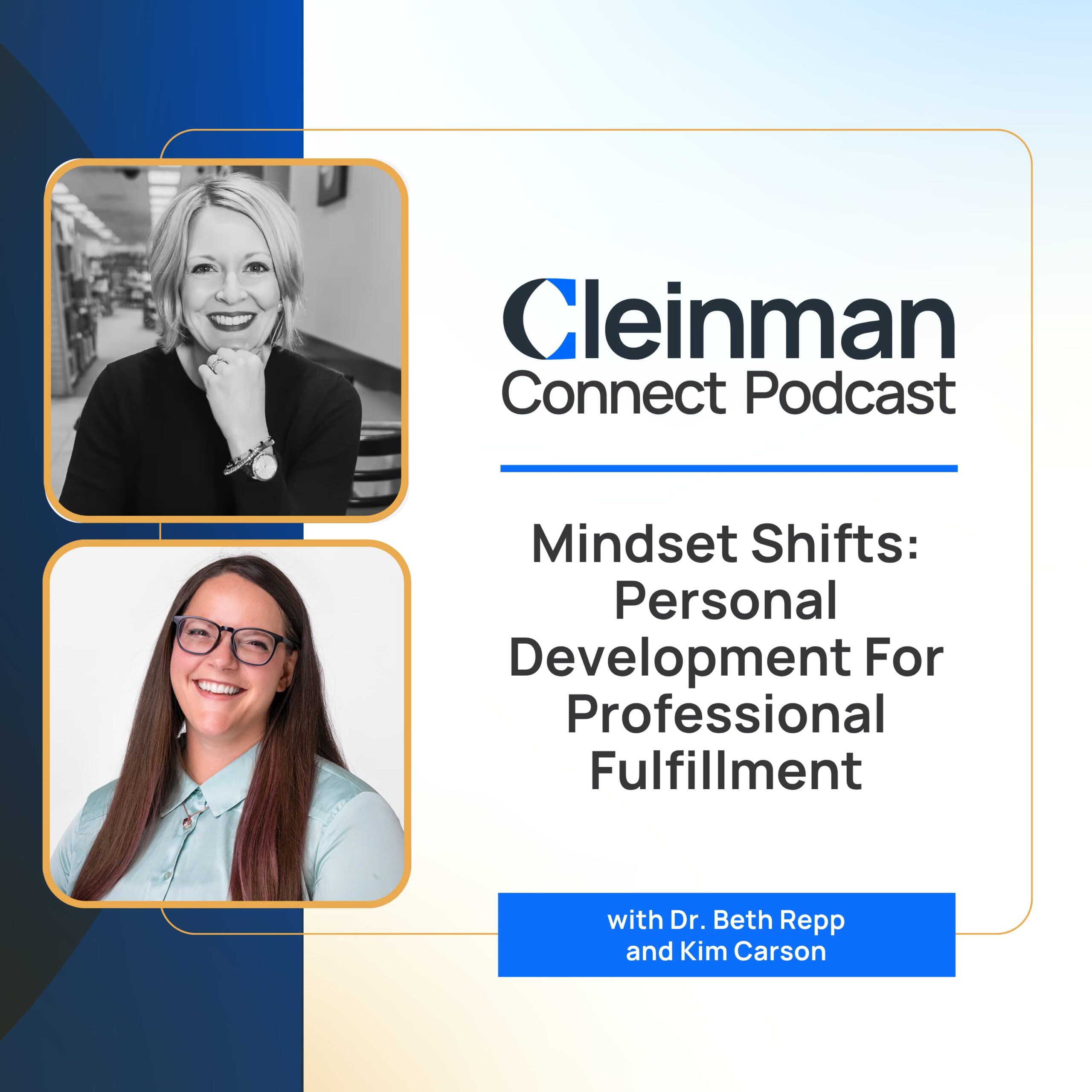

Dr. Beth Repp is the Medical Director, Cataract Surgeon, and General Ophthalmologist at Eye Surgeons Associates, a comprehensive eye care practice serving the Quad Cities and surrounding communities. In her clinical work, she treats cataracts and provides care for retinal conditions, including intraocular injections. Dr. Repp also started Beth Repp Coaching, where she helps overextended professionals and high achievers manage their minds and lives, and she hosts Up and Not Crying, a podcast about mindset, personal growth, resilience, and intentional living.
Here’s a glimpse of what you’ll learn:
- [3:43] Dr. Beth Repp’s journey from ophthalmology into life coaching and personal development
- [6:55] How Dr. Repp balances different professional roles and priorities
- [12:58] Why high achievers can feel overwhelmed even when they’re accomplishing a lot
- [15:44] Practical ways to simplify schedules, delegate responsibilities, and create more breathing room
- [20:21] Dr. Repp’s approach to focusing time and energy on what matters most
- [22:58] How small daily mindset practices can lead to greater intention and less reactivity
- [25:56] Dr. Repp’s experience creating more sustainable routines for personal well-being
In this episode…
Professional fulfillment can be hard to find when your schedule is packed, and your instinct is to keep doing more. For high achievers and healthcare professionals, constant productivity can make it difficult to separate meaningful work from obligations that drain time and energy. What intentional mindset shifts could make work and life feel more fulfilling?
Dr. Beth Repp, an eye care professional and life coach, believes greater fulfillment often starts with doing less, not more. She encourages people to look closely at their schedules, responsibilities, and goals, then cut or delegate what no longer aligns with their values while making more room for the work and activities that energize them. Dr. Repp also recommends a simple morning mindset practice: take 5-10 minutes to review the day ahead, decide how you want to show up, and move through the day with more intention instead of constantly reacting. These personal development strategies can help reduce overwhelm, support a better work-life balance, and create a stronger sense of purpose.
In this episode of the Cleinman Connect Podcast, Kim Carson talks with Dr. Beth Repp, Medical Director, Cataract Surgeon, and General Ophthalmologist at Eye Surgeons Associates and Life Coach at Beth Repp Coaching, about mindset shifts for greater professional fulfillment. Dr. Repp shares how doing less, aligning priorities with your values, and starting the day with intention can reduce overwhelm. She also discusses delegation, sustainable routines, and creating space for what matters most.
Resources mentioned in this episode:
- Kevin Wilhelm on LinkedIn
- Kim Carson on LinkedIn
- Marketing4ECPs
- Cleinman
- Dr. Beth Repp: Website | Facebook | Email
- Up and Not Crying
- Eye Surgeons Associates
- Vision Center, P.C.
- “Elevating Your Practice Through Virtual Team Members” with Cory Pinegar on the Cleinman Connect Podcast
- “How Digital Awareness Ads Can Influence Your Patients of Tomorrow” with Tyler Kemp on the Cleinman Connect Podcast
- Weight Loss for Busy Physicians
- Martha Beck
- Katrina Ubell, MD, on LinkedIn
- Teem
- The Life Coach School
- International Coaching Federation (ICF)
Quotable Moments:
- “What you need to do is less because they’re all convinced they’re not doing anything.”
- “These people are always still busy but busy in a way that is fulfilling to them.”
- “And what you want to do is take back the control; you want to direct your life.”
- “And then you’re much more intentional throughout the day after that; you’re not just reacting all day.”
- “It sounds amazing to just kind of help people with their own personal development and personal improvement.”
Action Steps:
- Eliminate commitments that no longer align with your values: Removing unnecessary meetings, obligations, and responsibilities creates more space for meaningful priorities and greater satisfaction.
- Delegate tasks that drain your energy: Outsourcing chores, sharing responsibilities, and reducing unnecessary workload can ease overwhelm and protect your time for what matters most.
- Focus your energy on what genuinely fulfills you: Prioritizing activities that light you up helps you build a life that feels purposeful rather than exhausting.
- Start each workday with 5-10 minutes of intention: Reviewing your schedule and deciding how you want to show up can help you respond thoughtfully instead of being reactive all day.
- Build supportive routines gradually: Creating consistent habits around movement, work, and personal well-being makes positive changes easier to maintain over time.
Sponsor for this episode…
This episode is brought to you by Marketing4ECPs.
Working with them is like hiring a full-time marketing professional who knows the industry and understands your goals. Except, instead of one experienced marketer, you get a whole team in your corner.
Whether you’re an optometrist, ophthalmologist, or optician, they can help you grow your business with a plan that’s completely customized for you. Learn more here.
Powered by Rise25 Podcast Production Company
Episode Transcript
Intro: 00:07
Welcome to the Cleinman Connect Podcast, where we discuss marketing, ownership, growth strategies and everything else surrounding the business of optometry. Cleinman is Optometry’s trusted business partner for over 35 years. Hello, I’m Kim Carson hosting Doctor Beth Repp on this episode of the Cleinman Connect Podcast. Past guests of the show include Cory Pinegar of Teem and Tyler Kemp from Marketing4ECPs. You can listen to those episodes and so many more now at cleinman.com or wherever you like to get your podcasts.
This episode is brought to you by Marketing4ECPs. Working with them is like hiring a full time marketing professional who knows the industry and understands your goals. Except instead of one experienced marketer, you get a whole team in your corner. Whether you’re an optometrist or ophthalmologist or optician, they can help you grow your business with a plan that is completely customized for you. You can learn more at marketing than the number four easy.com, and I am joined today by Dr. Beth Repp of Rural Northeast Iowa.
She attended college and medical school at the University of Iowa and earned her BA in biochemistry as well as her MD. She complete. Oh sorry. She completed her ophthalmology residency at Mayo Clinic and has been with Eye Surgeons Associates in the Quad Cities since 2015. She has life coaching certifications through the Life Coach School, Martha Beck Inc and the International Coaching Federation.
She is the host of Up and Not Crying podcast. Please go check that out. And she often says that a dream real. That it is a dream realized to be able to help like minded individuals find their way to their best selves. Thank you so much for joining me.
Kim Carson: 01:52
Oh, this is such a pleasure, Kim. Thank you for having me. Wonderful. I love it, of course.
Dr. Beth Repp: 01:57
Yes, yes. And I do want to say to the title of your podcast? I love it when I saw that you were hosting that, I was like up and not crying. Like, yeah, check Mark. Indeed.
Kim Carson: 02:06
Yes, exactly, exactly. So you’re familiar with the saying. Are you familiar with the saying up and not crying? So it is. When I was looking for the name of the podcast, I was trying to like set the tone for the podcast.
And I was thinking, you know, what would be kind of the tone of something my very down to earth Midwestern grandmas would say, you know, what advice would they give? So I started googling, what would a German grandma say? What would a Norwegian grandma say? And that’s when I landed on it. So up and not crying is a Norwegian phrase.
It’s translated to English, of course, but a Norwegian phrase that you would give in response to saying, hey, how are you doing today? You’d say, I’m up and not crying. So far so good. You know, it’s keeping it real.
Dr. Beth Repp: 02:52
Oh my gosh. Okay. It’s like, it’s like our version of like, you know, I’m, I’m not below ground.
Kim Carson: 02:57
So that’s right, that’s right. Exactly. I’m above ground. Yeah.
Dr. Beth Repp: 03:02
Oh my gosh. Well, I you know what? I did not know that when I read the title, I was like, yeah, I mean, if I’m looking for small wins, small wins and not crying certainly is one of them.
Kim Carson: 03:12
There you go. We’re going to start with a small win. It’s only going to get better from there.
Dr. Beth Repp: 03:16
Yeah, exactly. Yeah. Oh that’s great. Well I guess yeah. Many meetings then.
Kim Carson: 03:20
That’s right, that’s right.
Dr. Beth Repp: 03:23
I want to know like, you know, you you have this podcast, you have these life coaching certificates and you know, you want to help, you know, people like you or like minded individuals kind of realize who they want to be. Yes. How does eye care and ophthalmology play into that?
Kim Carson: 03:43
Yes. So I will say I have kind of always gravitated towards just that section of the bookstore. You know, the personal development, personal improvement sell. It used to be called self-help. You know, even in in college, that’s what I would read for fun.
I was just always gravitating towards that. And then when I was doing my intern year, my intern year was in Minneapolis. I remember sitting at a Barnes and Noble, and I was reading an Oprah magazine. And in Oprah, she had a monthly column by Martha Beck, who is a life coach. So she has this wonderful academic pedigree.
And then she kind of went on to be a life coach. And I thought, what in the world is this? This sounds so fun. It sounds amazing to just kind of help people with their own personal development and personal improvement. So I just kind of tucked it in the back of my mind because I was knee deep into training, you know, years had years to go, but I kind of just paid attention and read Martha’s books.
And then fast forward years later, in 2017, after I had my daughter, I was looking to lose some baby weight. Okay, so I found this podcast, which was done by a physician and life coach, which was the podcast at the time. She no longer does. It was Weight Loss for Busy Physicians. And so I came across this woman and I thought, wait, she did it.
She is a physician and also became a life coach and is combining those two interests. So, so from then on, I kind of started thinking about how am I going to do this? So I completed the circle and did Martha Beck’s coaching training. And then I did the same coaching training that the podcast podcaster did, Katrina Ubell. I did her same training.
And then what just became kind of a natural mix. There was I, I know I care and I know medicine and I know patient care, so that’s just who I can naturally communicate with and naturally help. So I can kind of get the, the trials of Managing a bustling schedule and managing employees, and managing patient expectations, and trying to balance a busy career with your home life and trying to prevent burnout and and remember your purpose and all of those things. So it just became kind of a very natural thing that that’s who I was able to talk to and, and help.
Kim Carson: 06:19
Yeah, yeah. It’s almost one of those scenarios where, you know, maybe someone is going to see a therapist and they’re like, well, just do these five things and you’ll be totally fine. Right. And you’re like, okay, but like, you don’t understand when I say like patient load, like you don’t get what that means. Like that’s right.
That’s right. That means something different. So you’re able to kind of see them from both sides.
Dr. Beth Repp: 06:40
Exactly, exactly. I viscerally understand the challenges. Yes, exactly.
Kim Carson: 06:47
Yeah. And so then how does ophthalmology now like come into your world? So you still are a practicing surgeon.
Dr. Beth Repp: 06:55
I am so I practice part time, so I now only work in ophthalmology two full days a week. So I’m in a multi-specialty eye care group, which is is wonderfully efficient for the specialists. So I do a full day of procedures, meaning half a day of cataract surgeries, and then half a day of intraocular injections, and then a full day of clinic. And I am helped by a group of wonderful optometrists who do most of the co-managing with me. So they kind of take take over a lot of that post-op care, which allows me to focus more on the pre-op, cataract, cataract appointments, and then also on those retina patients who are either new to me or I’m kind of following up after a few injections and making a new plan.
So it’s been really it works wonderfully because in two days per week, I’m able to see a lot of patients because everybody around me is so efficient in building that silo.
Kim Carson: 08:01
Yeah. I wonder how much you know about like, or like how much you were involved with building that system. Were they just, you know, maybe looking for someone with your skills or were you like, you know, I want to pursue this and, and I need, I need things to go down to two days. So like, let’s come up with a system. Like, how did this great support team get built around you?
Dr. Beth Repp: 08:24
Yes. Great question. So I work for Eye Surgeons Associates in the Quad Cities. And I will say just they have a history of being and I don’t know, you know, where this came from. If they if they have used consultants or coaches in the past.
But the way they’ve always looked at it is we’re going to have our practitioners kind of be a silo in what they are best at so that it improves efficiency for everybody. So we’re going to have, you know, the glaucoma person, see most of the glaucoma. We’re going to have the pedes person see all the double vision. We’re just going to have whoever is the best at that, do that all day, every day so that it makes it a streamlined, efficient system. And for many years, I was full time there, and I did go one and a half days a week to a satellite clinic, which I just love.
So that’s the Muscatine Vision Center in Muscatine, Iowa. I love them. And so I was already working a day and a half there. And then when I decided to cut back, when I my coaching practice started and I developed the, the LLC, I decided to cut back to two days a week. And so I decided to just keep my satellite clinic.
And then we developed it into a busier satellite clinic in those two days. So before that, I wasn’t doing as much of the intraocular injections. I think we were doing a little, but it’s just gotten busier in those two days.
Kim Carson: 09:50
Yeah, yeah. Do you have like a favorite part of of what you do? Like, is it the injections? Is it the cataract procedures or.
Dr. Beth Repp: 09:59
I think all the procedures. I really do love the procedure and probably everybody can relate to this. I think at the time that you’re doing a procedure, you know, that patient. Well, you know, and so it’s, it’s for, for someone who likes doing procedures, it’s actually more relaxing, you know, than having 31st dates than meeting people over and over and over again and having that one on one conversation with them over and over and over again. That to me can be a little more exhausting.
Where the full day of procedures, one of my co-residents from Mayo used to call it this is kind of like a day of arts and crafts. It’s just so fun. It’s a day of arts and crafts. So yeah, I would say the procedures feel very satisfying and very fun.
Kim Carson: 10:44
Yeah. Thank you for putting the arts and crafts into that’s, that’s terms that I get. I, I have a BFA in drama.
Dr. Beth Repp: 10:51
There we.
Kim Carson: 10:51
Go. Your cataract surgeries are my arts and crafts. I love it. I’m on the same page.
Dr. Beth Repp: 10:56
I love it, I love it. You know, it gives you that little creative boost. You know, something you can do with your hands? It’s great. Yeah.
Kim Carson: 11:03
Yeah. For sure. You can get like, mostly out of here and onto something real.
Dr. Beth Repp: 11:07
Exactly, exactly. Yes.
Kim Carson: 11:10
Oh, great. Well, moving more into the life coaching side of, of your world, you when we talked before, you did mention that a lot of the, the people that have partnered with you and our clients of yours are in eye care. Yes. Are you open to it being not that like, is there a world.
Dr. Beth Repp: 11:36
Yes, absolutely. So I kind of you know, my when I first set up the LLC in 2023, I thought, you know, I was thinking all kind of health care providers. So physicians of all types, dental of all types, you know, physical therapy, any type of healthcare provider. But honestly, I think this stuff is so relevant to any human being. I mean, basically the thing that we talk about, you know, with when I talk in front of groups or talk one on one, it’s kind of just timeless philosophical principles that you can use to kind of get just give your whatever’s happening in your life a framework that can give you a little relief from any angst or frustration or suffering.
So it’s really open to anybody really. You know, I think it’s been the people that have found me are in I care just because that’s what I do and that’s immediately what I can connect with. But absolutely, I would be open to talking to anybody.
Kim Carson: 12:45
So with seeing quite a few or all of your client base currently them being in the same field as you and I care, what are some of the more frequent conversations you’re having with with them?
Dr. Beth Repp: 12:58
Yes, there are a few. So thankfully, you kind of let me know. That might be a question you would ask. So I was really, I was pondering this over the last couple of days, and I would say there are some themes that repeatedly come up. So one is almost always when I talk to someone one on one on their first conversation, it’ll go something like this.
I just feel like I’m not getting enough done. I, you know, I, I get through the day and I’ve been busy all day, but I’m not getting enough done and I need to get my butt in gear. I feel stuck, I’m not doing enough. There’s so many things I need to be doing better. I need to lose £30 and I need to make more money, and I need to see more patients.
And there’s this whole list of things. And I start laughing because this is true of every single person that I talk to at first. And I tell them, no, what you need to do is less because they’re all convinced they’re not doing anything. Okay? And you’ve got, without fail, someone who is hyper motivated, very driven, who has succeeded in everything they’ve done in life, and they hold themselves to this really high level of perfection, okay, this unattainable level of perfection.
So they’re saying, you know, I need to be in the top tier of income and I need to be getting the best reviews and I need to be looking absolutely perfect. And I need to be seeing more patients and doing this and doing that. No, what you need to do is take a deep breath and start cutting as much out of your schedule as you possibly can, because the more we can really constrain the things that we’re focused on, then you can start making a lot of progress and you can start feeling so much more satisfied. So the first thing I start to gently coach them on is, no, you are pushing yourself so much that you get to the end of the day and you can’t even see that you’ve been going since 5 a.m. and you haven’t. You feel like you haven’t accomplished anything, and yet you’ve been busy all day long, so we need to start cutting out the things that don’t matter to you anymore, that don’t make sense anymore.
That you’ve said yes to, you know, a month ago, ten years ago that you’re still doing, but it doesn’t make sense anymore. And we need to start really getting clear about what your goals, your values are and cut out everything that isn’t that. So we’re going to do less, which is hard to convince people of at first, but it can make a huge difference.
Kim Carson: 15:28
Yeah. So yeah.
Dr. Beth Repp: 15:30
Yeah.
Kim Carson: 15:31
So sorry. I was just a very quick follow up. Like how, how, if they’re feeling this way, like, how do they cut out things like through delegation through. Yes. What are those next steps?
Dr. Beth Repp: 15:44
Great question. So I would say the first thing is to and none of this is quick. So I like people to just kind of ponder it. And then, you know, a week later we come back and we talk about it. But, you know, over time, just really look at your schedule first and say, okay, what does each day have in it that I could cut out?
So what meetings do I have scheduled that don’t need to be a meeting? What am I volunteering for that I no longer really feel passionately about? Like I’m doing this basically to make other people happy, or because I thought it was going to market my business, or because at one time I really felt I really felt motivated to do this and that felt that this was important to me. But at this point in my life, I don’t have the bandwidth for it. So what are the things?
Volunteer work, extra meetings, anything that’s on my schedule that is not speaking to me anymore. And I’m going to start to at least put that in a different column on my to do list. Okay, so I’m just going to make a list of these things that I want to ultimately get rid of. And then I’m going to look at my home life and say, okay, what can I get rid of? Or start to delegate?
So am I cooking four nights a week? And is that exhausting? Can we do something different here? Can I, like you said, outsource it. Can I hire someone to cook my family three meals a week?
Could I get meal delivery services? Could I do something that delegates that because. Is that a major, exhausting sticking point? What about carpooling? What about having, you know, one person in my neighborhood take the kids one night to this practice or whatever.
So looking at all the personal life things that are adding up, all the extraneous meetings, volunteering that we’re doing, and then finally looking at your actual work day and saying, okay, what needs to change here? So I’m going in, I’m starting to see patients at eight in the morning, and I am sometimes finishing up at 515 and I didn’t get a lunch break. What do we need to do here? What can I cut out? Is there a certain diagnosis that I no longer want to see that my partners would.
Can I, can I talk with them and cut out these diagnoses or these particular types of patients? Can I so that in that way you’re kind of delegating, you know, you’re kind of saying, I’m not going to do this anymore. Or can I decrease my overall patient load? So maybe you’re seeing 30 patients a day. Can I cut out two in the morning and two in the afternoon and just see how that feels.
Can I cut out five in the morning and five in the afternoon and see how that feels. And people are always very resistant to doing this, very resistant. But I always tell them, you can always go back. No one, no one is ever going to say no to you. Seeing more patients ever, ever.
You know, if you say for a while, I’m not going to work on Fridays, okay? I just need to get my feet under myself and just get it. Get going for a while, you know, see what I need to change for a while. I’m not going to work on Fridays. And people are so resistant to that.
And when I tell them is do it for six months. Okay. And then if you want, go back and work a full day of Fridays after that, no one’s ever going to say to, you know, we really don’t want you seeing more patients, you know, yeah, there’s.
Kim Carson: 19:11
Always Friday back.
Dr. Beth Repp: 19:13
That’s right, that’s right. So just try it for a while just to give yourself time to breathe, you know, cut, cut down on a few patients here or, you know, maybe just do one thing at a time. So, so at least cut out your volunteering that you’re no longer passionate about to get yourself a little freedom in your, in your home schedule, then start to delegate a couple things from home. If you don’t have someone cleaning your house and that’s a major stressor, have someone clean your house, you know, so all, all these things that could be delegated or cut back on or hired out, consider in order to just do less.
Kim Carson: 19:54
Yeah. I like your you’re emphasizing to in this and please correct me if I’m totally on the wrong track. Yeah. You’re emphasizing like the stuff that doesn’t bring you any joy. So this isn’t for this isn’t for the people who, you know, like, don’t cut out cooking.
If that’s right, is your reprieve. If it, if it fills your cup. That’s right. And you like to do it, that’s not a place to cut from. Like that’s you’re emphasizing the stuff that is exhausting you.
That feels like a chore.
Dr. Beth Repp: 20:21
That’s exactly right. So, so align yourself with what lights you up with what you deeply value and put your energy into those things and cut like ruthlessly cut out the rest, ruthlessly cut it out and focus on what you really need to focus on right now.
Kim Carson: 20:41
And then would you encourage to like once, once that step is done, and let’s say this person who came to you at first and was like, I am overwhelmed, I’m I, but I need to be doing more still, I, need to have it all.
Dr. Beth Repp: 20:55
Yes.
Kim Carson: 20:56
Once they have done this step and they’ve been ruthless with the stuff that doesn’t fill them up or, you know, feels terrible to do. Yes. What do they fill that time with? Like, should they schedule stuff out? Should it just be free time?
Like it’s it’s depends person to person maybe.
Dr. Beth Repp: 21:12
Yeah. I think it’s person to person. These people are always still busy but busy in a way that is fulfilling to them. So it’s like, it just brings so much relief when you can, when, when you can start to feel like you are living your life instead of your life living you. Yeah.
Where you’re just like at Mayo Clinic, out outside of one of the main clinics, there is a sculpture of a little boy like riding the tail of a dolphin, I believe it is so like the dolphin is going and he’s like, just holding on for dear life. Right? And I feel like that’s kind of the way that our lives can get sometimes, where we’re just holding the tail of the dolphin, holding on for dear life. And what you want to do is take back the control. You want to direct your life.
You want to live your life. And I’ve never had someone kind of come back and say, yeah, I’m kind of bored, you know, I need more to do. So usually, you know, people are have so many interests and so much going on that it’s just we’re cutting back, we’re cutting back to full time. Basically, we’re cutting back to full time work instead of way over time.
Kim Carson: 22:24
Yeah.
Dr. Beth Repp: 22:25
Yeah.
Kim Carson: 22:26
If you and it doesn’t sound like this has come across your desk. Yeah. Yeah. But someone who maybe is like a set it and forget it mindset, or they want to do something once and never do it again. Like, what do you, you know, maybe, maybe just someone to, to say it more clearly, like someone who lacks motivation.
Yes. What would you say to them in this case, like their like I, you know, I don’t want to, I don’t want to do all these things, but like, I don’t have another choice.
Dr. Beth Repp: 22:58
Yes, yes. So, so I, I think because it, it can seem overwhelming to think about making all these personal improvements and life improvements and you’re like, I’m already exhausted. Like, am I really going to do some personal coaching and improve my life in 40 different ways? But the thing that I would say that is the easiest to do and very powerful is to sit down for 5 or 10 minutes in the morning before your work day, just have a quiet space to sit down for 5 or 10 minutes, and even just sit and look at the calendar for a minute. So, you’re becoming aware of the day that it is the date and kind of where you are in time and place like, okay, I’m in clinic today.
This is what my day looks like. And this is going to be how I run my day. This. I’m going to do what’s most important to me. How am I going to show up?
If I chose one word to describe how I’m going to show up today, what is it? So maybe that’s going to be with energy. So you’re going to think of that all day long. You know, today my word of the day is energy today. And these are really simple things that can make a huge difference.
So just sitting down in the morning, taking five minutes to kind of look at your calendar, center yourself and say, okay, what am I going to bring to work today? And what am I going to leave home? Like I am now going to work? I’m leaving all this other these other worries and concerns at home. And I’m going to go, how can I be my best self today?
How can I show up, be my best self and then and then do the same thing the next day. And each day is going to look a little bit differently. Each day is you might have a different word or a different thought in mind about how you’re going to make that day flow, or how are you going to show up as your best self. But I think when thinking about a practice, because self-improvement and coaching is a practice when thinking about that, to make it less overwhelming and accessible for any human being, it’s basically just five minutes in the morning of how do I want to show up? And then you’re much more intentional throughout the day after that, you’re not just reacting all day.
Kim Carson: 25:15
Yeah, yeah. You’re coming into a situation with something not like meeting it empty handed. That’s right. Feeling scrambly.
Dr. Beth Repp: 25:23
That’s right, that’s right. Yeah. Yes.
Kim Carson: 25:25
Okay. Yeah. I kind of want to know. And I, I did not give you a heads up on this question. It’s coming to me now.
Dr. Beth Repp: 25:32
This is fun.
Kim Carson: 25:33
I would love to know something that you personally, maybe you’ve started it recently, or maybe even this could be an example of something you used to do in your daily practices or but you don’t do any longer. Like what is something that you have either evolved into or evolved from in your kind of self-fulfillment journey?
Dr. Beth Repp: 25:56
Yes. I would say for a long, long time, it was really hard for me to to really and these are all excuses. Okay. But really get any movement in any physical movement in because I was just felt like I was so overwhelmed with working and being a mom and all of these things that I wasn’t able to consistently move my body. And so that has been, that has definitely been a process.
And I feel like now I’ve really kind of gotten to this point where like, okay, I feel like I’ve, I’ve getting a few days, a three days a week in, of lifting a few weights and then a few days where I’m walking and I just feel like that’s such a huge accomplishment. You know, for so many years I struggled with, oh, I should be, I know I feel better if I go for a walk. I know I do, but it took me, it was a process to get here, but now I feel like I’ve got a really good schedule and now it’s just kind of locked in. You know, that’s what I do now on Monday. On Tuesday, I do this on Wednesday, I do this and it’s kind of locked in.
Kim Carson: 27:01
Yeah.
Dr. Beth Repp: 27:02
Yes.
Kim Carson: 27:02
Thank you. Yes. Thank you for sharing. I yes, didn’t give you the heads up on that. So thank you for sharing and also for having an answer.
Dr. Beth Repp: 27:09
Absolutely, absolutely.
Kim Carson: 27:12
Well we’re nearing the end of our show. I would like to, if you don’t mind. You know, some places that people can find you, they can find out more information about you if you want to share websites or social media handles.
Dr. Beth Repp: 27:26
You bet. So I have a website which is bethrepp.com, BETHREPP as in pizza, P as in pizza.
Kim Carson: 27:35
Pizza, pizza.
Dr. Beth Repp: 27:36
Pizza, pizza, that’s rep.com. And then they can email me at hello@bethrepp.com. And then the Facebook page is Beth Repp Coaching so they can find me there. And then the podcast, of course, is Up and Not Crying up and crying, which is on Apple and Spotify.
Kim Carson: 27:57
Amazing. I’m also really happy that that was your last one that you wanted to add there, because I do have a final question for you.
Dr. Beth Repp: 28:04
Yes.
Kim Carson: 28:05
And before I ask it, I will point people to our sponsors again or to our sponsor again. And that is marketingfirst.com. And my final question for you is, do you have a favorite episode of Up and Not Crying that you would like to recommend to anyone listening? If you know, if it’s the first time they’re going to hear your podcast, what would be the one episode that you’re like, this will be good for you. I love this episode.
Please listen to this one. Yes.
Dr. Beth Repp: 28:33
I would probably say if you’re just going to listen to one, probably the first episode because I called it the appetizer appetizer tray. I went through three different life coaching tenants. So basically three different main categories of what we’re going to kind of dive into and talk about more later. But if someone wants some kind of high yield, okay, I kind of get what she does and what she’s going to talk about and how I can start to use this in my life. I’d probably just start with number one.
Kim Carson: 29:01
Yeah. Okay, great. Sometimes I don’t overtime. That answer might change, but I’m glad to know that you still hold that first episode strong.
Dr. Beth Repp: 29:10
Exactly. Now, certainly I’m growing. You know, you don’t judge the audio, don’t judge the ums and ahs. But if you’re just looking for the content and something to take away, I’d say start with number one.
Kim Carson: 29:24
Yeah. Okay.
Dr. Beth Repp: 29:25
Yeah.
Kim Carson: 29:25
And is there anything you want to add to our conversation today? Anything that I have missed that you want anyone to know?
Dr. Beth Repp: 29:33
Well, I just so appreciate the opportunity, Kim. And I will tell you that as a professional, I listen to a ton of podcasts. So do not underestimate what you’re doing to help all of your people, really, because, you know, you’re with them in the car and on their walk and on their lunch break when they need a little bit of respite and they need a little bit of motivation and inspiration. So I just think it’s really great what you’re doing and thank you.
Kim Carson: 30:01
Oh my gosh. Thank you.
Dr. Beth Repp: 30:04
Of course. Thank you.
Kim Carson: 30:05
So much. Yes. Thank you for joining me today. And that’s our episode. If you want to hear more of the Cleinman Connect Podcast, you can at cleinman.com and wherever you like to listen.
And please go listen to Up and Not Crying by Beth Repp. And thank you so much. We’ll talk to you next week.
Dr. Beth Repp: 30:21
Sounds great. Thank you Kim.
Outro: 30:27
Thank you for listening. At Cleinman, we take pride in helping our partners unlock their full potential. Subscribe to get the newest episodes or visit us anytime at cleinman.com.