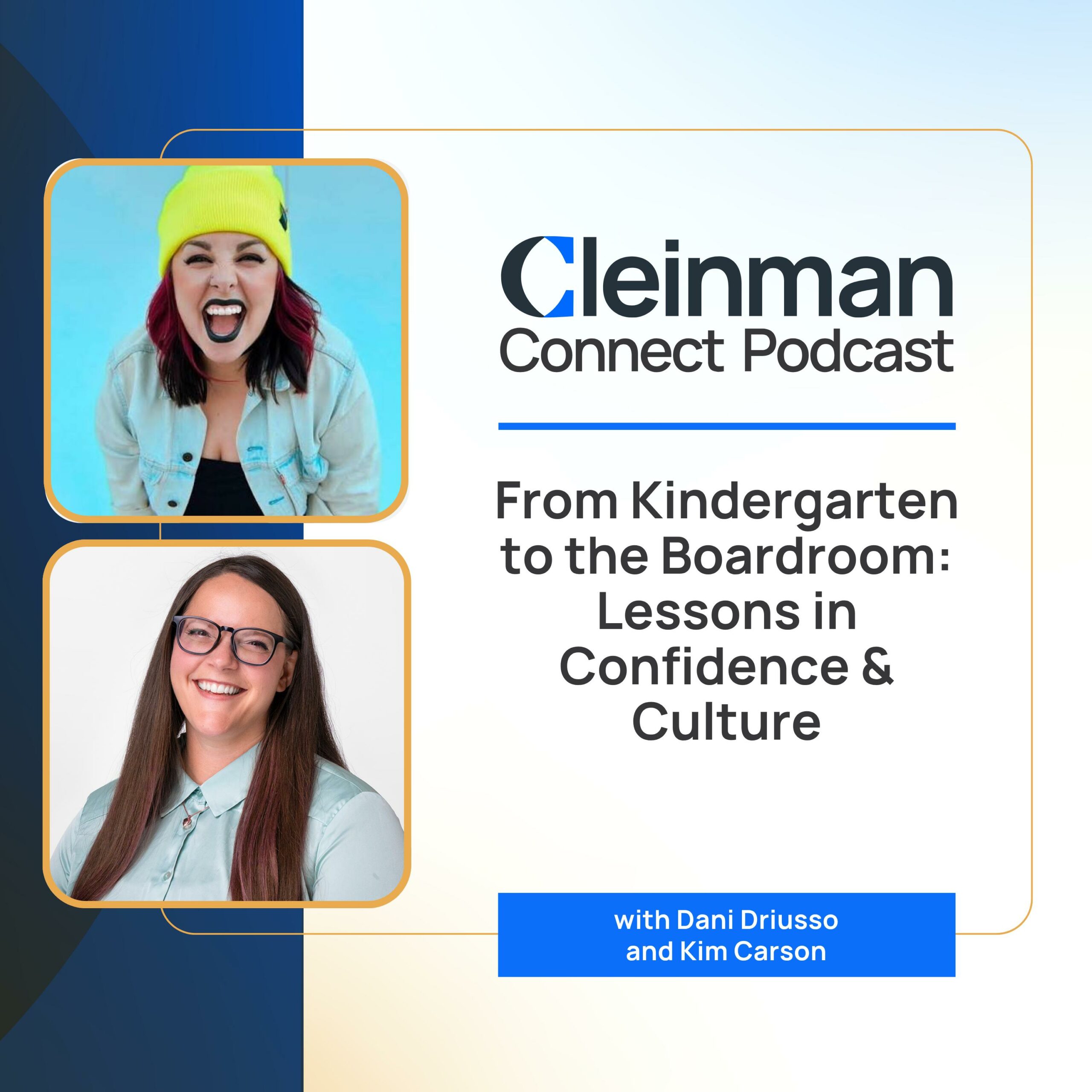

Dani Driusso is a speaker, consultant, author, and educator specializing in sustainable confidence, ethical leadership, communication, and community building. Through her work with organizations, she helps leaders and teams strengthen collaboration, build trust, and create more supportive workplace cultures. Dani has connected with more than 400 leaders and educators through her initiatives, speaks nationwide on sustainable confidence and compassionate leadership, and is the author of Get Off Your A$$ & Into Your Life.
Here’s a glimpse of what you’ll learn:
- [2:09] Dani Driusso’s work with children, adults, and the shared dynamics that shape confidence and leadership
- [6:24] How perspective, communication, and curiosity can strengthen collaboration
- [10:00] Why Dani sees trust, accountability, and the ability to repair mistakes as essential to strong leadership
- [14:33] Dani’s view of collaborative leadership, team culture, and leading by example
- [19:39] What clear communication and visibility can do for personal and professional growth
In this episode…
Kindergarten classrooms and boardrooms have more in common than they seem. In both, confidence, communication, trust, and the ability to recover from mistakes shape how people work together. What can those shared dynamics teach us about building stronger workplace cultures?
According to Dani Driusso, an educator and consultant specializing in confidence, leadership, and community building, adults and children thrive under many of the same conditions: clarity, trust, and space to learn together. Rather than assuming people should already understand expectations, leaders can communicate more clearly, stay curious about different perspectives, and treat team members as collaborators instead of subordinates. Dani also emphasizes that strong leadership means admitting when you are wrong, repairing trust when it is damaged, and working alongside your team when challenges arise. These habits help create cultures where people feel safer contributing ideas, taking risks, and finding meaning in their roles.
In this episode of the Cleinman Connect Podcast, Kim Carson talks with Dani Driusso, speaker, consultant, author, and educator, about what kindergarten can teach us about confidence and workplace culture. Dani explores clear communication, collaborative leadership, and rebuilding trust after mistakes. She also touches on finding meaning in your role and showing people what you have to offer.
Resources mentioned in this episode:
- Kevin Wilhelm on LinkedIn
- Kim Carson on LinkedIn
- Marketing4ECPs
- Cleinman
- Dani Driusso: Website | LinkedIn
- Get Off Your A$$ & Into Your Life: Overcome your fears, take action, and stop apologizing for living your dream life by Dani Driusso
- “Part 1: Taking Ownership of Your Optical Boutique” with Michele Self on the Cleinman Connect Podcast
- “Part 2: Taking Ownership of Your Optical Boutique” with Michele Self on the Cleinman Connect Podcast
- “Driving Growth In Independent Practices With Amanda Van Voris” on the Cleinman Connect Podcast
- Everything Is Figureoutable by Marie Forleo
- Katie Kurtz
Quotable Moments:
- “And it’s so interesting because yes, we’re all just big kids walking around.”
- “It’s interesting how much more knowledge you gain, the more understanding that you have that you don’t know at all.”
- “My motto is everything might go terribly wrong, and we’ll figure it out.”
- “If your chariot gets stuck, you’re in the trenches with your team pulling the chariot out.”
- “If you are written into a script, you better believe there’s meaning for it.”
Action Steps:
- Communicate expectations clearly: Assuming people should just know creates confusion, while straightforward explanations help teams work from a shared understanding.
- Treat team members as collaborators: Seeing people as equals rather than subordinates builds stronger community, reduces controlling behavior, and encourages shared ownership.
- Make repair part of your leadership culture: Admitting mistakes and addressing them directly helps rebuild trust and shows your team that problems can be worked through together.
- Work alongside your team when challenges arise: Strong leaders do not leave others to clean up problems; they stay involved and help find the solution.
- Help people find meaning in their role: Connecting even small tasks to a larger purpose can increase motivation, engagement, and a stronger sense of contribution.
Sponsor for this episode…
This episode is brought to you by Marketing4ECPs.
Working with them is like hiring a full-time marketing professional who knows the industry and understands your goals. Except, instead of one experienced marketer, you get a whole team in your corner.
Whether you’re an optometrist, ophthalmologist, or optician, they can help you grow your business with a plan that’s completely customized for you. Learn more here.
Powered by Rise25 Podcast Production Company
Episode Transcript
Intro: 00:07
Welcome to the Cleinman Connect Podcast, where we discuss marketing, ownership, growth strategies and everything else surrounding the business of optometry. Cleinman is Optometry’s trusted business partner for over 35 years.
Hello, I’m Kim Carson, hosting Dani Driusso, author, speaker, and educator, on this episode of the podcast. Past guests of this show include Michele Self and Amanda Van Voris, who you can listen to in those episodes and so many more at Cleinman.com or wherever you like to get podcasts.
This episode is brought to you by Marketing4ECPs. Working with them is like hiring a full time marketing professional who knows the industry and understands your goals. Except instead of one experienced marketer, you get a whole team in your corner. Whether you’re an optometrist or ophthalmologist or optician. They can help you grow your business with a plan that is completely customized to you. Learn more at Marketing4ECPs.com.
I’m joined by Dani, who has over ten years of experience specializing in topics of sustainable confidence, ethical leadership skills, and cultivating strong communities through connection and play. Thank you for joining me today.
Dani Driusso 01:25
Thank you. I’m so happy to be here.
Kim Carson 01:27
Yay! For all of you listening, you should know that Dani is one of my very dear, close best friends. And there might be a couple extra giggles in this episode. I can’t help it. We can’t help it.
Dani Driusso 01:43
Can’t help it. We’re fun people having a fun time.
Kim Carson 01:45
We’re fun people having a fun time. So please enjoy this episode. I know that I will and you know, I’ll I’ll start right off. Dani, something noticeably missing from your bio is the work that you do surrounding kids and the arts. I would love to know. How does your work in theater education help in confidence coaching that you do for adults?
Dani Driusso 02:09
Thank you so much for noticing. I do not necessarily feature that as much on my bio. And the reason why is really that it does inform a lot of my work, but oftentimes I’m working with like vulnerable sectors. It’s not something that I highlight the most up front, but I work with a lot of arts institutions across where we live in Alberta, and I love working with kids. I get to work with kids all over the province in multiple different ways, and through theatre education and helping build good humans with good human values through theater education, which is so close to my heart.
And it’s interesting because a lot of the work that I do with kids, I also do with adults, and it’s very similar, just in different ways of describing things or different ways of play. It looks a little bit different, but I will walk into a kindergarten class and I will see the same dynamics and the same leadership quirks and things in a kindergarten classroom that I see in a boardroom every time. And it’s so interesting because yes, we’re all just big kids walking around. We oftentimes have our own, whether it’s your emotional capacity or your tolerance for stress or your ability to communicate, or maybe you have English as a second language or something, there’s a bunch of different barriers that show up in boardrooms, in like business structures that also show up in education all the time, because we’re just a bunch of humans trying to figure it out. So I love that I get to do both because it truly gives me a fresh lens working with adults because I don’t take it too seriously, because I know it’s just how we are as humans, and it’s less of how can I be perfect?
And it’s more of how can we use process to figure this stuff out together because everyone is so different. So you’re going to find your own flavor of doing things. And I just get the privilege that I get to do that with children too, who literally have no filter. And so we get to figure out everything that is going on in their brains right away in the classroom, which is fun, which is the classroom is so much more similar to a boardroom than you would think.
Kim Carson 04:17
Yeah. I would go out on a limb and think too, that needing to explain, you know, some type of process or, or if there is, you know, this leadership quirk or this dynamic happening in a kindergarten class that you can look at that situation, kind of assess it and guide it. But then also you can use that exact same blueprint, so to speak, and, and kind of like simplified way of explaining what you need from these kindergarten class kids to also go ahead and say that to an adult. And it’s not condescending. It’s just very like simple and straightforward because you’ve had to use it on children as well.
Dani Driusso 04:57
Absolutely. And it’s surprising. There’s a lot of times leaders will come to me and they’ll say, but I don’t want to explain everything. And I’m like, well, if you don’t tell them, they don’t know. They are not in your own brain as you are in your own brain, like you are consumed with your own thoughts.
They have no idea what’s going on for you. So to assume that someone should just know is really not going to be the most productive thing, because you don’t also know the nuances of their lived experience that shapes their understanding of the world around them. So if you’re going in and you’re saying, everyone should know exactly what I know, you’re going from a very narrow perspective. So it really helps when I get to work with kids of all different walks of life from like kindergarten to grade 12, and then I go work with adults, I have a greater understanding that everyone’s economic system is different. Like everyone’s status in different realms of your life are different, which means that the way that you see things are different, which means the way that you need to have things explained to you will be different.
And it sounds more complicated. Like, I know there’s probably someone listening to this saying, well, that’s not my job to try to try to explain it different to every single person I like come in contact with, but it’s less about you putting yourself out in order to explain things. And it’s more of you understanding that no one knows everything. You just know what you know. It’s like Plato’s cave theory.
I don’t know if you’ve heard of it, but do you know Plato’s cave theory?
Kim Carson 06:23
Please know. Lay it on me.
Dani Driusso 06:24
Oh my gosh, it’s my favorite one. I’m pretty sure it’s Plato’s cave theory, but you can people can fact check me on this for sure, but check you.
Kim Carson 06:30
And then if it isn’t right, it won’t end up in the podcast. And none of this will make sense.
Dani Driusso 06:35
Oh my gosh. Perfect. So Plato’s cave theory is essentially that if you’re born in a cave. So imagine you’re born in a cave underground. This is very paraphrased way of saying it just for timing.
So I don’t spend the whole episode talking about this. But if you’re born into a cave, the only walls that you see are those cave walls, and it’s dark there. And so you only have the understanding of what your world looks like in the dark. And then you might see that there’s like a little crack kind of on a ledge, and one person one day is going to think, I wonder what’s beyond that wall. And so they’re going to go and they’re going to look and they’re gonna say, oh my gosh, there’s fire.
Like I think the first one is that they’re in a cave. The second one is that there’s fire under the cave on the other side of the wall or something. There’s a diagram that you can look at too, that’s all over the internet. But and then they’re going to come back to those people who are in that cave and they’re gonna say, I just saw fire. And those people are going to say, you’re crazy.
That doesn’t exist. Even though you have a different understanding. Those people who have only seen those cave walls will not believe you. They’re not going to think that that has any merit to it. So then there’s also going to be someone who goes beyond those cave walls and they see that fire, and then they see, they look up and they see another crack where they see sky.
They’re like, I think there’s something up there. And the people around them, with the understanding of the fire still underground, will say, you shouldn’t do that. It’s scary. Don’t go that far. All those things, right?
All this fear mongering that normally happens when a different perspective is entered into someone’s understanding. And so someone’s going to say, I want to go see what that is, and they’re going to go up to the surface and they’re going to look around and they’re going to realize, I don’t know anything, actually. So everything that I believe might have a different understanding based on the perspective that I’m looking at, and I love that metaphor, if, if you will, because it’s interesting how much more knowledge you gain, the more understanding that you have that you don’t know at all. So I love learning so much from people because it helps me understand that I don’t have all the answers, and I don’t need to have all the answers because I’m working with the people in front of me. So it’s less like I have to put myself out in order to get them to understand my point of view.
It’s I just have to look over the cave wall and just see what they’re talking about. But I just have to see what their perspective is on some way, shape, or form. And it might even alter my understanding of what I’m talking about, which is really exciting because then I get to also grow with that. So looking at your team or whoever you’re collaborating with and working with, understanding that you don’t have all the answers and understanding they don’t have all the answers, but you guys can work together to form a new understanding is what I think creates teams that really feel solid. Yeah.
Kim Carson 09:15
Yeah, I think so. I really like that theory and I.
Dani Driusso 09:19
Hope it’s real.
Kim Carson 09:20
I hope it’s real. It will be linked in the podcast episode if it is, but I like it too, because it’s not the person that’s changed. Like the person’s understanding is changing in the theory, right? So I, if I was in the cave, then I see the fire, I’m still me, I’m still Kim. But now I have this experience, I have this understanding.
And then I see this guy and I’m like, wow, it turned out I didn’t know anything. And it doesn’t make Kim that was in the cave a bad person or.
Dani Driusso 09:53
No.
Kim Carson 09:53
Like an idiot. It just means that I hadn’t seen it yet, and I hadn’t experienced it yet, and I just didn’t know.
Dani Driusso 10:00
And one of the strongest. It’s called the allegory of the cave. The allegory of the cave allegory is what it’s called allegory of the cave. And I think the greatest thing a leader can have is the ability to say that they’re wrong and to figure it out, because repair is always available. And I did this course with this woman, Katie Kurtz, who, like really specializes in trauma informed leadership.
And she always said two things. Number one, she said trust is never assumed. Just because you’re in a position of power. It is built over time. And I think that’s so true.
And then you can lose it quickly and you have to rebuild it over time. I teach kids that too, all the time, because the minute you lose someone’s trust, you have to do the repair work. And the second thing she always says is repair is always available. So you can always say, I messed up. It’s always available.
And if you know that repair is always available, and then if everyone knows that that’s the standard that you hold, it’s the theater version. The theater version is instant forgiveness. The work version is. Repair is always available because if something. If you end up messing up in some way, shape or form, you can always rectify it.
And to know that you can always figure it out like everything’s figureoutable. I think that I can’t remember who said that. I’ll figure that out for you for later. But everything, I.
Kim Carson 11:15
Mean, everything is figureoutable.
Dani Driusso 11:16
So it is everything is figureoutable. And even that, having a team where you can say, we will figure this out no matter what, everything is figureoutable in some way, shape or form. Like my motto is everything might go terribly wrong and we’ll figure it out. Like worst case scenario, everything goes terribly wrong and we figure it out. And what does that give me as a gift when I’m working with a team, is that literally anything could happen, and I can look up at my team, even if I’m leading teams because I often train artists, I often train educators, I train teachers how to teach in their classrooms, too.
And I can look up at anyone who’s in the room. And I know that we all have each other’s backs. And the problem solving is so much quicker and the recovery time is so much quicker from any problem. Marie Forleo.
Kim Carson 12:05
Marie Forleo. Yeah.
Dani Driusso 12:06
Yeah. Marie Forleo.
Kim Carson 12:08
Yeah. Pop off. I would love to know, you know, from the kindergarten classroom to boardrooms to I mean, anywhere. What are some signs that you see of a good future leader you’ve touched on? Repair is available and admitting when you’re wrong.
What are maybe some other signs that you would pinpoint as like you’re, you’re going to be a good leader. You’re going to be an effective leader.
Dani Driusso 12:38
I would say instead of being the person, there’s two different ways. Like I focus on leadership to cultivate community. And in order to cultivate community, you need to see the people that you work with on the same level as you and as a collaborator. Because if you see yourself as higher, which normally actually comes from a sense of insecurity, like the most insecure leaders will be the ones who focus on control over anything, and they’re going to be the ones who are micromanaging. They’re going to be the ones who need to have things a certain way in order to justify them as a leader.
But like, I have to have this this specific way, and you have to act this specific way so that I feel good as a leader. That doesn’t work. It’s like you’re not sitting in the chariot and having your team pull you ahead. If your chariot gets stuck, you’re in the trenches with your team pulling the chariot out. And that’s what I see is the greatest leaders is if someone there’s I’ve had an experience recently where someone made a mistake and they’re.
And this is in a workspace, their way of dealing with it was to isolate and to avoid. And so right there, that kind of draws a flag for me because if there is an issue that has been caused, and even if you’re the one that caused it and you’re in a position of power to run away from that and to expect your team to clean it up or to enforce your team to clean it up, takes you out of it. Now you’re not leading anything. You’re hiding, if anything. But the most strongest leaders that I look up to, even personally, they’re the ones that can admit that they’re wrong and they are fixing the problem alongside their team.
Kim Carson 14:25
Yeah, I think the term, and I maybe have said it before on this podcast, but I would never ask my team to do something that I wouldn’t do.
Dani Driusso 14:33
Absolutely. And I say that all the time too. When I’m training people, I say, I’m never, ever going to ask you to do something that I would not be willing to do that myself. I also say that when I teach teenagers, because if anyone has teenage kids or teenagers, is that they are unwilling to engage because they think you’re making them do something. But if I say, hey, I’m here with you and we’re doing it together, you see them soften and they become kids again, and you see them willing to take risks and willing to be a part of the team more than they would if you just told them to do something.
And I see the same things in grown adults. I see the same things when I work with boards that have often different generations, like when I’m working with a board of directors, sometimes it’s some people are 20, some people are 30 and some people are 60, some people are 80 on this one board. And so everyone’s not going to see eye to eye because they have different perspectives from life that they had and also just other nuances of their experience. But I see them work together the most when whoever is the chair or something says, hey, I’m doing this with you. I’m not above you.
Yeah, yeah.
Kim Carson 15:48
This honestly makes me think recently there was a like junior ball. Like, I don’t know, it was baseball. My my husband is very into sports. And he does play by play. And it was the dogs it was held at.
It was the road to Okotoks. And it’s, you know, national games. And these teams of young men have traveled across the country to be here for this tournament. And Peter, name drop. That’s my husband.
He went to you know, he had an early morning game and he had been working, you know, back to back to back to back to back on these games. He goes in for 8 a.m. and he’s kind of like dragging his feet. And he walks into the stadium. And the president of the Dogs Baseball Club is picking up garbage from the night before in the stands. And he was like, wow, what a perspective that I have.
And in that whole academy, like I, I have seen some of their framework and they are doing all parts of it. If you go to an Okotoks Dogs game, you are seeing younger players in the academy selling 5050 tickets. You are seeing them empty garbages throughout the game. So if they’re not playing, or even if someone is of age to be on the team that’s playing and they’re injured, or they just can’t play that night like they are down there with the team, they’re helping the bat boy, the bat girl, they’re doing stuff like that. And it’s all ingrained in that same mindset of like, I wouldn’t ask you to do something that I wouldn’t do.
Like we are all a team in this, like regardless of our age or our status, like the president is literally picking up garbage. So I think that you can too.
Dani Driusso 17:36
Yes, I love that. And even in theater, like I drill home for any kids because I also direct shows with 14 to 18 year olds and all that stuff. So when I’m directing a show, I make it very clear that there is no, you know, like the whole there’s no small roles, just small actors or whatever. I, I personally hate that saying, but what I will tell kids because I also do playwriting, right, is that I’ll tell kids that you wouldn’t be there on like your role would not actually exist unless you were important to the story. And the reason why is because in any form of theater, they’re going to try to pay the least amount of people as possible.
So if you are written into a script, you better believe there’s meaning for it. So there if you are there, there is meaning for and I always say mining for meaning, like you got to mine for meaning sometimes in your purpose in every realm of life. But even if it’s a role, if you have a small role mine for meetings, meaning mine for your own meaning of what that role is and why it’s important to you. Like you have to get yourself hyped on that. Like even in workflow, if there’s something that you have, you got to make it mean something to you so that you are actually motivated and have your heart in it.
No. That’s great.
Kim Carson 18:54
Like any small task, it’s like, oh, this is like, why do we do this? Why do we have this? And, you know, maybe there are some processes that could be more efficient. There are some things that like genuinely aren’t needed. But a lot of the time it’s like those little things like I think about, you know, some, some of the optometric practices that Clement has worked with, like I go to their social media pages first and foremost, and there’s a post from four years ago and I’m like, I know it seems small.
I know it seems annoying, but guess what? Like it is important. It’s there for a reason. There’s so much emphasis on having an online footprint for a very big reason.
Dani Driusso 19:39
Because if you don’t tell people they don’t know, they literally have no idea. People oftentimes with their businesses too. And whether it’s a personal brand or a company, they think that, oh, if they pay for ads, it’ll be enough. Or if they pay or if they, I mean, you know this, but they just expect like someone to come off the street and be like, wow, I just thought of your company. I just thought of it and I love it.
Where you have to tell the people what you have to offer and be shameless about it, because if they like, they don’t know unless you tell them. And it’s not that you’re soliciting them, you’re actively giving them informed consent. This is what I talk about when I talk about social media. Consent is I truly am like, run your social media like you are giving people informed consent to follow you and to buy from you because you got to tell them who you are. And then they get to make the decision and choice.
And if you tell them exactly who you are and what you’re there for and what is available, they will choose the people who are your people, who will buy from you, will follow you.
Kim Carson 20:43
Yeah. And they want to see your stuff. They want to see your content. They want to see what you have to offer. That’s why they clicked follow.
Dani Driusso 20:52
Exactly. They definitely would not. Unless they like. If they didn’t care, they wouldn’t click it.
Kim Carson 20:57
No.
Dani Driusso 20:58
No. But you gotta give them something to care about.
Kim Carson 21:01
That’s true too. You do have to continue to do that. And that is the cliffhanger. I will leave you on for the week. Please come back next week to get part two of “From Kindergarten to the Boardroom: Lessons in Confidence & Culture With Dani Driusso.”
Outro: 21:01
And in the meantime, if you’re looking to catch up on episodes of the podcast, you can Cleinman.com or wherever you like to listen. Thank you for listening. At Cleinman, we take pride in helping our partners unlock their full potential. Subscribe to get the newest episodes or visit us anytime at Cleinman.com.