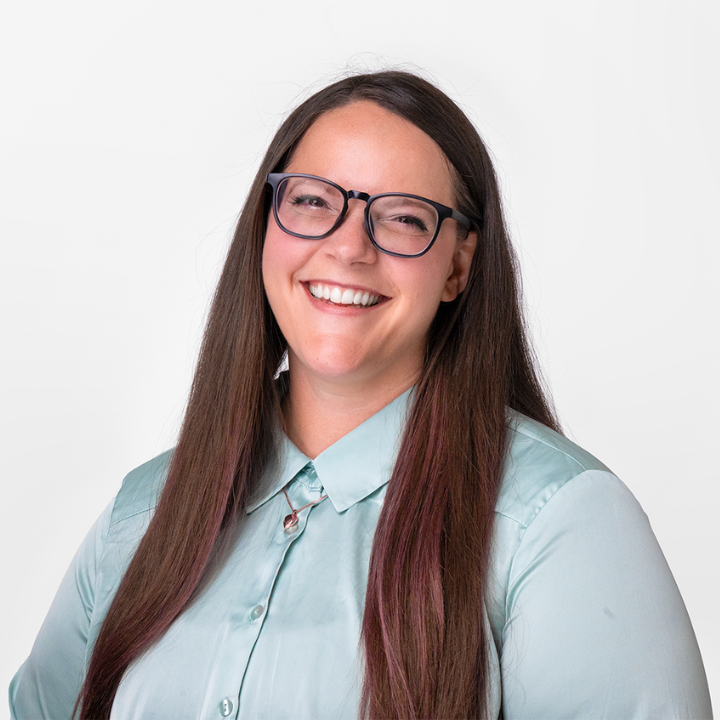
Kim Carson is the Marketing & Communications Lead for Cleinman, a POD Marketing company that has supported independent optometry practices for over 35 years. She also hosts the Cleinman Connect Podcast, interviewing eye care professionals and industry experts about practice ownership, marketing, patient experience, and leadership. Drawing on more than a decade in radio, Kim uses engaging conversations to share practical insights and highlight partnerships that help eye care professionals strengthen their practices and better serve patients.
Here’s a glimpse of what you’ll learn:
- [1:15] Kim Carson reflects on her first year hosting the Cleinman Connect Podcast and her transition from radio
- [5:45] What Kim learned about aiming high and defining ideal outcomes in practice exit planning
- [9:45] How clear patient communication and doctor-driven dispensing help build trust
- [12:00] Improving the patient journey, from online appointment booking to the in-office experience
- [15:00] Why Kim emphasizes monthly performance metrics, email marketing, and digital awareness advertising
- [21:20] Kim’s biggest takeaways about sharing knowledge, strengthening leadership, and building meaningful partnerships in eye care
In this episode…
Growing an eye care practice means thinking beyond the exam room. Everyday decisions shape how patients feel, how teams work, and how businesses grow. What can a year of conversations with industry experts teach us about making those decisions count?
Kim Carson, a communications professional and podcast host with over a decade in radio, has learned that eye care practices depend on clear communication, consistent tracking, and strong partnerships. That means explaining care in everyday language, guiding patients smoothly from the exam room to the optical department, and making online booking simple. Kim also highlights the value of monitoring performance each month, using email and digital ads to stay connected with patients, and seeking staff feedback before making changes. Together, these habits help build trust, improve the patient experience, and support sustainable practice growth.
In this episode, host Kim Carson, Marketing Lead at Cleinman, reflects on a year of the Cleinman Connect Podcast. Kim highlights the importance of setting ambitious practice transition goals, creating a smoother patient experience, and strengthening trust through effective communication and meaningful partnerships. She also touches on benchmarking, marketing, team engagement, and leadership in eye care.
Resources mentioned in this episode:
- Kevin Wilhelm on LinkedIn
- Kim Carson on LinkedIn
- Marketing4ECPs
- Cleinman
- Otto Optics
- Aloha
- Defocus Media
- 4theRecord
- “Driving Growth in Independent Practices With Amanda Van Voris” on the Cleinman Connect Podcast
- “The Basics of Planning Your Exit From Optometry” with Al Cleinman and Megan McCarthy on the Cleinman Connect Podcast
- “From Science to Sales – Educating Patients on Treatment Plans” with Dr. Kimberly Friedman on the Cleinman Connect Podcast
- “Why You Should Consider Doctor-Driven Dispensing in Your Practice” with Michelle Kelley on the Cleinman Connect Podcast
- “How Your Online Presence and Automations Improve Patient Loyalty and Sales” with Dylan Cunningham on the Cleinman Connect Podcast
- “Creating the Ideal Patient Experience” with Jenn Denham on the Cleinman Connect Podcast
- “The Importance of Tracking Data, Using KPIs, and Having Accountability in Your Practice” with Meagan Staab on the Cleinman Connect Podcast
- “Digital, Traditional, and Best Practices for Marketing in Optometry” with Kate Virzi on the Cleinman Connect Podcast
- “How Digital Awareness Ads Can Influence Your Patients of Tomorrow” with Tyler Kemp on the Cleinman Connect Podcast
- “Unleashing the Optometrist & the Pursuit of Process in Eye Care” with Dr. Trevor Miranda on the Cleinman Connect Podcast
- “[Optometrist Unleashed] Healing the Ocular Surface” with Dr. Julian Prosia on the Cleinman Connect Podcast
- “The Power of Engagement Surveys” with Jenny Rowell and Olivia Leduc on the Cleinman Connect Podcast
Quotable Moments:
- “If it could be a magic wand and it could be perfect and true for you, ask for it.”
- “Expand the reaches of your mind, ask for the world, and maybe … you get a little bit of something in return.”
- “If you limit yourself in what you think you deserve or what you need to have for a project, then the answer you get back is also going to be limited.”
- “Sharing your knowledge with others enhances your standing as a leader.”
- “Simply asking is maybe a somewhat obvious route to take, but that it is definitely underutilized.”
Action Steps:
- Ask for the most and scale back from there: Starting with your ideal outcome prevents self-imposed limits and creates more room for meaningful opportunities.
- Simplify complex information for your patients: Using clear explanations and relatable analogies helps patients understand recommendations and builds greater trust in your expertise.
- Experience your practice from the patient’s perspective: Testing every step of the patient journey can uncover barriers that make scheduling, communication, and care more difficult.
- Track important metrics consistently: Reviewing performance data more frequently helps practices identify problems sooner, make quicker adjustments, and measure progress more effectively.
- Strengthen the partnerships within your practice: Investing in relationships with your team, patients, technology, and service partners creates greater trust and supports long-term growth.
Sponsor for this episode…
This episode is brought to you by Marketing4ECPs.
Working with them is like hiring a full-time marketing professional who knows the industry and understands your goals. Except, instead of one experienced marketer, you get a whole team in your corner.
Whether you’re an optometrist, ophthalmologist, or optician, they can help you grow your business with a plan that’s completely customized for you. Learn more here.
Powered by Rise25 Podcast Production Company
Episode Transcript
Intro: 00:07
Welcome to the Cleinman Connect Podcast, where we discuss marketing, ownership, growth strategies and everything else surrounding the business of optometry. Cleinman is Optometry’s trusted business partner for over 35 years.
Kim Carson: 00:28
Hello, I’m Kim Carson, hosting well myself. On this episode of the podcast, past guests of this show include Michelle Kelley and Amanda Van Voris, two wonderful ladies who you can listen to in those episodes and so many more now at Cleinman.com or wherever you like to get podcasts.
This episode is brought to you by Marketing4ECPs. Working with them is like hiring a full time marketing professional who knows the industry and understands your goals, except instead of one experienced marketer, you get a whole team in your corner. Whether you’re an optometrist or ophthalmologist or optician, they can help you grow your business with a plan that is completely customized for you. Learn more at marketing4ecps.com.
So like I said, this episode is going to be a bit of a different one. I have officially been hosting this podcast for over a year. Yay! I know I’ll, I’ll pause for applause. But it has been truly a wonderful year. I am so thankful to, you know, anyone who hit subscribe, anyone who has downloaded a single episode, anyone who listened and you know, just thought to themselves, dang, I liked that. I’m just so, so very grateful to have been given this opportunity. For the past year. And I want to keep it going.
And I wanted this episode to be kind of just a review in not so many words about the year that was. I know that we’re not quite into the holiday season where we’re all reminiscing on the promises that we set in January. But because this is my, you know, one year of hosting this podcast, I thought, well, why not do it now? And, you know, beat the holiday rush. So it also occurred to me that perhaps I have not introduced myself very well.
So I would love to tell you a little bit about me, the person that you have listened to ask questions for the past 52 ish weeks. So I do have a radio background. I know that maybe that’s not super surprising to anybody. The surprising part might be that I was not on air. I did do some, you know, commercials.
I was a which I’m totally happy to send that 32nd commercial with my witch voice to anybody who asks Kim Carson at Cleinman.com. Go ahead. I will send it out, I promise. But I was in the background. I started kind of as the person who hands you a sticker.
If you come up to the radio station tent and I say, thank you for listening. So that was where I started. And then I just kind of fell in love with radio and kind of the fun of it. But I do have a Bachelor of Fine Arts with a major in drama that is, you know, even less surprising, that is from the University of Calgary. And, you know, who do I do it all for?
I do it for my family. I do it for the fun. I did have someone look at a resume of mine oh, so long ago. And they expressed, wow, you really have had a lot of very fun things in your career. And you know, my while bank account may suffer some days, fun is definitely something that I, I do it for and my family And, you know, to help people live better.
When I left radio, I was definitely scared. But most things in life do make you feel that way. I think you feel a little bit of fear in the unknown and in taking some of those leaps. But I was really scared that I would no longer have fun. And then somebody said, why don’t you host the comedy podcast?
But, you know, one of my biggest reasons for leaving was just that I wasn’t helping people in maybe the way I wanted to with radio. You know, you give someone $10,000 and they can go and renovate a kitchen or whatever they want to do with that. But there’s not kind of this tangible change in their lives. Maybe some of the concerts that, you know, I helped host or some of the experiences, those will, those will stay with people. But there certainly was a kind of a lack of helping people live better long term.
And overall, with what I was doing in radio. So, you know, I saw the position with the pod and, and now I’m with Cleinman. And I honestly think that it’s for the absolute best. So this episode will be about the things that I have learned in the past year of hosting. So anyone that is listening or has listened, you know, and myself, we can all use a reminder of this.
I think maybe I’ll start with a radio lesson. I do have a couple. I was in that industry for over a decade, so hopefully learned more than one thing. But one of the big things was ask for the most and scale back from there. If you limit yourself in what you think you deserve or what you need to have for a project.
Then the answer you get back is also going to be limited. You know, expand the reaches of your mind, ask for the world, and maybe, you know, you get a little bit of something in return. That’s actually a lesson that Al Cleinman and Megan McCarthy way, way back, I think maybe they were my third episode. They reiterated that to me when it came to exit planning. It was in that context.
You know, I, I kind of ask a lot of questions that has the answer of it depends. And Al Cleinman certainly does not mind giving. It depends answers. So he said to me, you know, I, I had asked the question of like, well, what, when someone wants to exit plan on a practice, what do they what happens first? And he said, well, I would sit them down and I would ask them if I waved a magic wand.
And I made all your wishes for retirement. And this exit come true. What would that look like? And now let’s see how we can make that happen for you. So I think that is a huge, huge lesson.
Not just in exit planning, but in anything we ask for in life. If it could be a magic wand and it could be perfect and true for you, ask for it. I also want to touch on an episode that I did with Doctor Kimberly Friedman. You know, she wants to make sure that your clients know and you definitely know your stuff as an optician optometrist, as a manager of a practice. But sometimes your patients don’t know.
And sometimes the people that you are fitting glasses on or trying to fit into an appointment or, you know, whatever your task at hand may be, they might not know what is needed for them. And so through analogies, simplifying, you know, smarter science or even the instruments that you’re using on someone by simplifying what is happening and making recommendations that are, are going to help them, you can kind of transfer your knowledge to them, so to speak. So, you know, sometimes we hear acronyms and we don’t get an explanation on what those are until the sentence is already passed and you’re like, well, now I don’t know what that sentence meant because you just gave me an acronym and I lost the plot immediately afterwards. So, you know, don’t be afraid to really explain things to your patients and, and find analogies, you know, if, if there is a new drop or a new wipe or a new anything for your patients that you can be prescribing for them. And Dr. Kimberly Friedman also used that term with prescribing because you are doing that for your patients, you’re not just recommending in a lot of times you are prescribing it to them.
And that also gives you some authority in the space. But if you make a prescription and they’re like, well, why do I need this and explain this to me? Like, you can use an analogy to say, well, you know, this is like a blank, blank, blank for your problem. So that was a big lesson from her. She is so incredibly smart.
That episode is in the depths of the recordings. But if you haven’t subscribed to the podcast, you can. And then you can just download all the episodes all at once. And isn’t that such a nice thing? I think Doctor Driven dispensing another kind of authoritative or authority building move came in an episode with Michelle Kelley Sellers.
She’s the director of theological materials at the Southern College of Optometry and doctor driven dispensing was. When the doctor walks you right back out to, you know, the front of the office and passes on their knowledge and says, you know, Kim just had her appointment and she needs this or she is interested in getting fitted for this. And here was her prescription and she, you know, needs these contacts and she needs dailies or whatever they might say, but they leave you in the care of somebody else. You don’t walk through the office alone. And that is also another big authority building move that you can do.
And it doesn’t cost you anything. It just makes your patients trust everybody in the practice more. You know, there’s many lessons also in the patient journey that came from episodes with Amanda Van Voorhis that came from episodes with Dylan Cunningham, from Otto, from Gen Denim, from Aloha. And that is the patient journey and the patient experience that cannot be understated. The one from Amanda’s episode was to just walk into your practice instead of going through the back door like you normally might have to walk through the front door, stand at the front desk, see our sightlines?
Good. Can I see the optical booth two. Can I see the reception desk where I should be going whereas someone tucked off to the side? Or does it seem, you know, messy in here? Just walk through your front door.
And that is part of the patient journey just as much as sitting in your chair is. Same with, you know, Jenn Denham’s episode with Aloha. It was a full masterclass on how to make the patient journey so much better, so much easier. Remove barriers, but still get what you need as a practice to help service that patient. And it starts before they walk in the door.
It starts when they google my eyes hurt online and what kind of, you know, experience that someone might be looking for is this, you know, a 10 p.m. Google search and it’s a mother who needs to book an appointment for her kid, and she needs to book it online because she’s laying in bed or something like that. Like, how do we remove barriers from booking and just booking appointments with you? It could be so simple and, and even just doing a quality check, like maybe you’re sitting here being like, yes, I do have that. Like you can book appointments online. It sends them an email.
They fill out the information. Bada boom, bada bing. Appointment is booked. Okay. Go click it.
Does it work right now? Is there something going on with your website? Have. When was the last time you tested that? And another question.
Do you have someone in charge of checking that or is that on you? Is that something that you could delegate away to someone in the practice to make sure that that kind of stuff is up and running. So all just parts of the patient journey and making sure that when, before they get to you, they know that they are going to be in good hands when they get to you, that they feel like they are in good hands. And after they leave, a reminder that they can continue to get care from you and your practice. I also want to touch on something that Meagan Staab said in her episode.
She’s the director of client success here at Cleinman, and I wrote this one down because she has so many data points, and I really didn’t want to mess this one up. So in the episode with Meagan Staab, she, you know, kind of reiterated that as a Cleinman member, practices are required to enter metrics so that there is benchmarking that can happen. And you can see where you were, where you’re at and where you want to go. So those are requested either monthly or quarterly from our members and the monthly people who entered those numbers after 28 to 31 days found that there they were 8% outperforming their quarterly input counterparts. So she attributed that to being more agile, maybe correcting issues more quickly.
And then just a reminder that what you measure moves. Unfortunately, I cannot give credit to Meagan Staab for saying what you measure moves, but she is definitely someone who believes it and who lives by it. And it obviously is true in the results. If 8% of Cleinman members compared monthly to quarterly in checking and tracking their metrics have an improvement like that, I mean, the numbers have to speak for themselves, I also want to talk about episodes with Kate and Tyler Kemp of marketing for great conversations with them. With Kate, it was about email marketing.
She is a true believer in email marketing. I am too, and I think most marketers are. It’s a great tool to use to. To not only tell people about a trunk show you may be having, but to remind them that you are a doctor that knows things or you are a practice that cares. It can be something as simple as, you know, the birthday reminders and upcoming patient or not patient.
Pardon me. An upcoming appointment reminder. Just email these people and if it goes to a spam folder, then it goes to a spam folder. But you’re better to have emailed a patient to remind them of your practice and the care that you can give or a sale that you’re having, or that they need to refill something. It is so much better to do that than to not do that.
And it just keeps your practice more top of mind. And then the conversation with Tyler about digital awareness ads, that’s DAA ads, you know, both of those things D A and email marketing, they target extremely different areas of the aforementioned patient journey. But with d a, a ads again, digital awareness ads, you know, you’re, you’re targeting those patients of tomorrow, your getting those patients that are just beginning or maybe don’t even know yet that they’re beginning a patient journey with you. And when they do need to come to an expert that they know the name of and that they can Google, more likely it’s going to be you if you run ads like that. Very ingenious way.
Of course, as you all know and love Doctor Trevor Miranda has his special edition episodes monthly with Optometrist Unleashed. Those are very great. I love listening to those. Generally, I’m a silent partner on those. I think I’m, you know, revealing behind the curtain a little bit here.
But I sit on those calls. I just mute myself. So I can’t interject when they’re, you know, talking about amniotic membrane replacements and healing the ocular surface. I go on mute so that I keep all of my not optometrist thoughts to myself. And we can hear from Trevor and his wonderful guests.
So that’s really great for me because it is more listening. So Trevor has amazing ideas on building more of an experience for patients. And then in his conversation with Doctor Julian Prosia on implementing new services in your practice. This was really interesting because I thought that Doctor Parusia was going to I mean, and he did blow me away with all of his knowledge and just how fantastic he is. But then within that podcast, there was this moment where he and Trevor talked about implementing, you know, not even specific to Doctor Paracha’s expertise, but just implementing anything in a practice, anything new.
And he kind of, you know, went in a direction of always leading with curiosity and sharing knowledge with others. And it really relates, you know, to, to the way that I think like, I’m, I’m very much a, a rising tide lifts all boats kind of thinker and doctor was saying that sharing your knowledge with others enhances your standing as a leader And within your practice it. It makes you a better leader to the people that are directly working with you and also to the outside world. And I think that that’s not something you would inherently think when you, you know, teach somebody how to, how to use a certain instruments or how to do something. But it definitely does it.
It again, is lending your expertise to them, giving them the confidence to do it. And people see that from the outside. And that’s always a good feeling. You know, this also will get you buy in from your team because they’re like, well, you know, that doctor doesn’t hoard everything and he lets us do or, you know, they let us do fun things. But that is also something that Olivia Leduc, who is the manager of strategic HR services here at Cleinman, kind of getting buy in from the team is something that she has focused on in her episodes.
She’s also appeared on 4theRecord, I’m Marketing4ECP’s podcast with Tyler Kemp. That podcast, actually, now that I’m thinking about it, is with Defocus Media, who has fantastic podcasts. And if you are craving more knowledge, I would really point you over in their direction. Or, you know, the Cleinman Connect’s archives, but also Defocus both can be true. Olivia reminds us that simply asking is maybe a somewhat obvious route to take, but that it is definitely underutilized.
So when it comes to engagement surveys in your practice, performance reviews, feedback all of those are ways to simply get more information and know an answer. And I think we all know what they say about assuming something Olivia never assumes. A main lesson that I, I want to kind of say in the closing of this podcast because I don’t want to ramble on forever. I mean, you all know me, I can, I can go for a bit, but a main lesson in reflection of this last year, it’s not, and I’m really sorry to Annelise Cannon and Matthew Hickory from the transitions Department at Cleinman. It is not EBITDA for me and it is not clean data, which are important.
But it is about partnerships in eye care. In a lot of my conversations with doctors, with, you know, businesses that run in the eye care space, I can tell that you are all so passionate about eye care and about helping people live better. And, you know, if you were truly in it for just the money, I think you would have just been a lawyer or something. But you’re not in it for just that. You’re in it for the partnerships it brings.
And I use partnership as a word. That could be held with many reasons behind it, a partnership with, you know, a business partner. Maybe that business partner is your actual partner, your spouse, your significant other, your partnerships with the reps that put frames on your boards, your partnerships with your team, your partnerships with your goals and what you have set for yourself, your partnerships with the services that you have in your practices and the technology that you trust. Your partnerships. Even with something like AI and I cannot express enough how happy I am to have a partnership with you via the Cleinman Connect Podcast, or if you have played my silly games at a Cleinman Performance Network meeting.
But that is a big one that I would love to end this episode on is talking about and having you, you know, think about the partnerships that you have within your practice and with the practice itself. I think that that’s not something that maybe really, or at least I don’t really think of very often. And it is something that’s, I mean, not to make it sound too intense here, but it’s something that is kind of sacred when you decide to have a new technology, a new service, a new specialty in your practice, you are making a partnership to that and your patients, and you’re asking them to trust you as much as you trust the technology, the providers, the services, everything. So thank you again for a wonderful year of podcasts. I truly have learned so much.
I hope you have too. And thank you so, so much for continuing to have this partnership with me and with Cleinman. If you want to download more episodes where it’s not simply just me talking of the Cleinman Connect Podcast, you certainly can get those at Cleinman.com and wherever you’d like to listen. Thank you for joining me today.
Outro: 24:00
Thank you for listening. At Cleinman, we take pride in helping our partners unlock their full potential. Subscribe to get the newest episodes or visit us anytime at Cleinman.com.